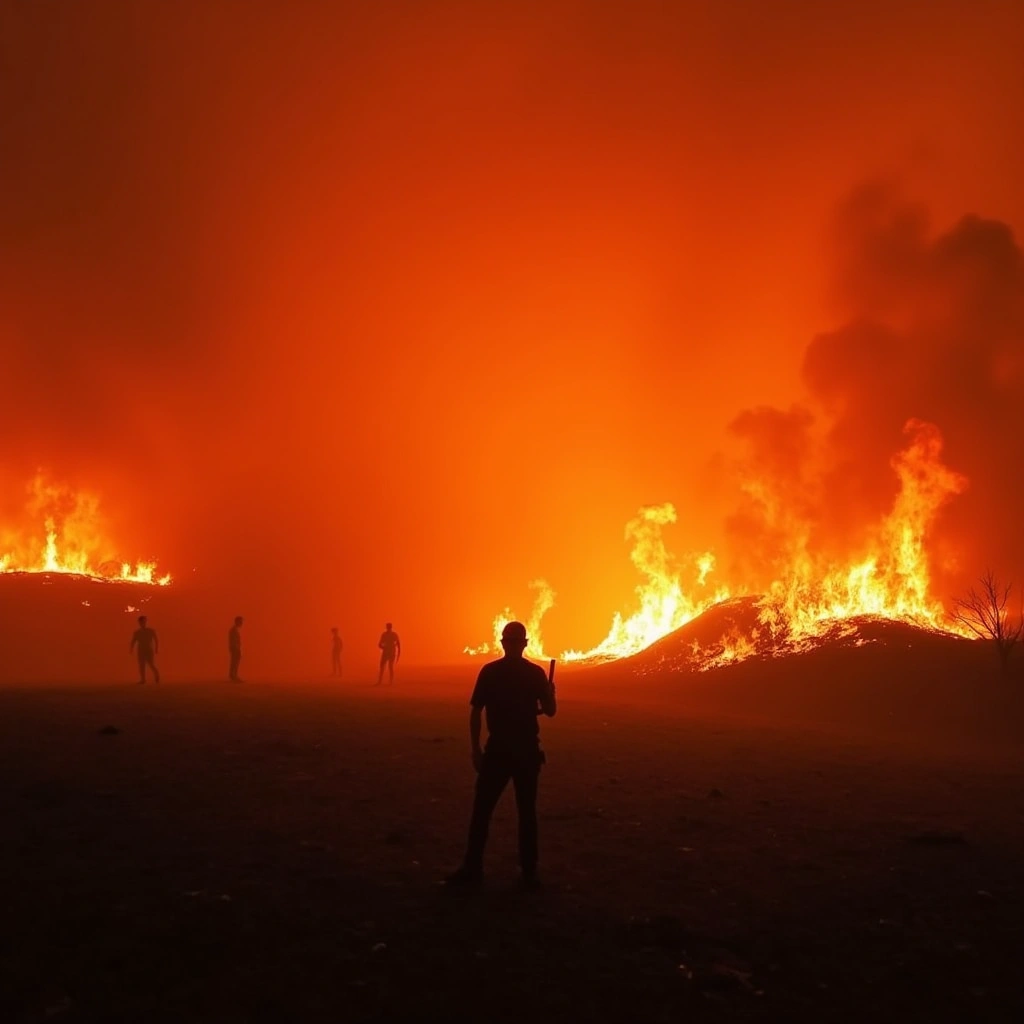
Scientists studied this data over a 21-year span and found that extreme wildfires have become more frequent, more intense, and larger . The largest increase in extreme fire behavior was in the temperate conifer forests of the Western U.S.
So, it seems like 2023 is the year we decided to turn up the heat—literally. With a staggering 50,000 wildfires reported across the United States this year, we’re not just lighting up campfires; we’re igniting a full-on inferno. If you thought your summer BBQ was smokey, think again!
Now, before you start packing your bags for a one-way ticket to a non-flammable planet, let’s break this down. Wildfires are a natural phenomenon, but the sheer number we’re seeing is a clear signal that something is off. Climate change is not just a buzzword; it’s the fiery elephant in the room, and it’s time we acknowledge it.
These wildfires don’t just pop up out of nowhere. They require the perfect storm of conditions: dry weather, high winds, and, of course, some human activities that may or may not involve a little too much fun with fireworks (seriously, folks, save it for the Fourth of July!). The combination of climate change and human error is like that one friend who always brings the drama to a chill gathering. And guess what? The drama is getting worse.
So, what’s causing all these fires? Well, climate change is like that annoying relative who shows up uninvited to every family gathering. Rising temperatures lead to drier conditions, which means that when a spark occurs—whether from a lightning strike or a poorly thought-out campfire—it can catch like a toddler with a new box of matches.
The consequences of these wildfires are not just limited to the charred remains of forests (which, let’s be honest, is a pretty sad sight). We also see a spike in air pollution, which leads to health issues for many. If you’ve ever tried to breathe through a straw while running a marathon, you’ll understand the struggle. And for those of us who enjoy the great outdoors, it’s hard to appreciate nature when half of it is going up in smoke.
And do you want to know the cherry on top of this flaming sundae? The firefighting efforts are straining resources. Firefighters are working overtime, battling blazes that seem to multiply like rabbits on a sugar high. And while we all appreciate their hard work, it’s a little concerning when they’re stretched thinner than a slice of pizza at a kids’ party.
So, what can we do about it? First off, let’s all agree to stop playing with fire—literally. That means being vigilant about fire safety and adhering to local guidelines. Second, we can push for policies that address climate change. Yes, it’s a bit of a tall order, and no, it won’t happen overnight. But just like a fire needs a spark, change needs a little bit of effort from all of us.
In conclusion, while we can’t control the weather, we can control our actions. Let’s not wait for the next wildfire to remind us of the impact of climate change. Fifty thousand wildfires in one year is not just a statistic; it’s a wake-up call. So, grab your metaphorical fire extinguisher and let’s put out the flames of climate change before we find ourselves in an even hotter situation!
Inspired by: “50,000 Wildfires Have Hit US This Year” (r/climatechange)