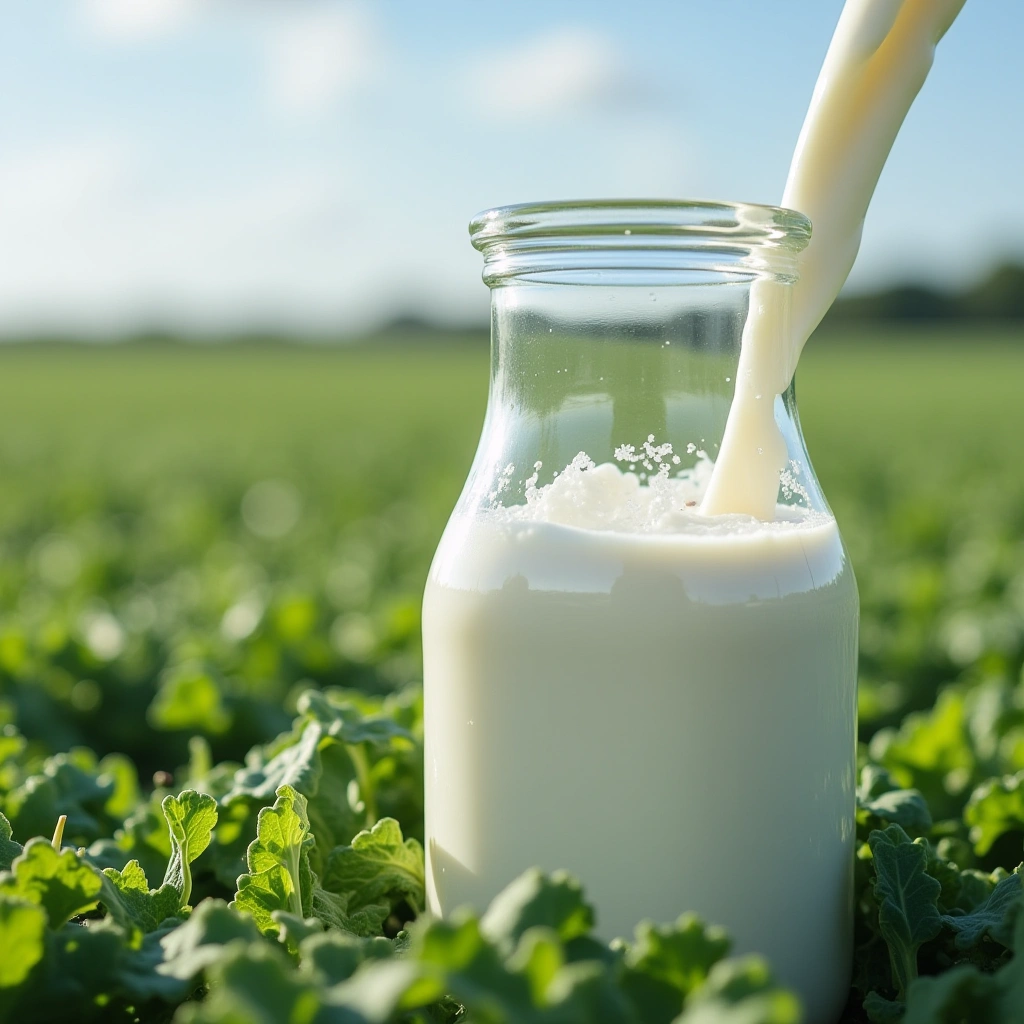
Precision fermentation (PF) is a technology which uses genetically engineered microbes to produce ingredients such as dairy proteins. Few studies have quantified PF’s land-sparing potential. Using the UK as a case study, we assess the land use implications of scaling up the production of PF milk (plant-based milk containing PF dairy protein), by calculating and summing land footprints (area/mass) of PF milk’s individual components.
Ah, the age-old question: how can we milk our resources without milking our cows? Well, folks, buckle up because the future of dairy might just be a bit… unconventional. According to a recent discussion on Reddit, replacing traditional cow’s milk with precision fermented milk could potentially free up a whopping 80% of the UK’s cropland. Yes, you heard that right—80%! That’s like finding out you can eat cake for breakfast without the guilt.
So, what exactly is precision fermented milk? In short, it’s milk made from fermented ingredients that mimic the taste and nutritional profile of cow’s milk without involving any of those adorable, but oh-so-hungry bovines. This tech-savvy approach uses microorganisms to produce proteins and fats that are found in milk, making it a game-changer in the dairy industry.
Now, let’s talk numbers. The UK has a significant amount of land dedicated to dairy farming. Cows need to eat, and to eat, they require crops—lots of them. This means that vast swathes of land are being used to grow feed for cows instead of food for humans or for biodiversity. Imagine if all that land could be repurposed! We could grow more fruits, vegetables, or even set up a massive sunflower field for the ‘gram.
But wait, it gets better! By adopting precision fermentation, we could not only reduce the environmental impact associated with traditional dairy farming but also cut down on greenhouse gas emissions. Cows are notorious for their methane emissions (thanks to their, um, digestive processes), which are a significant contributor to climate change. So, if we can swap a few cow pastures for some high-tech fermentation tanks, we might just be doing Mother Earth a favor.
Of course, there are skeptics. Some people may argue that nothing beats the taste of fresh cow’s milk. And to that, I say: have you ever tried oat milk? Or almond milk? Or coconut milk? The list goes on and on. The dairy aisle is practically a United Nations of milk alternatives these days.
The transition to precision fermented milk won’t happen overnight, though. It requires investment in technology, infrastructure, and a bit of consumer education. After all, we wouldn’t want anyone to think they’re drinking some kind of science experiment. “Is this milk or a chemistry project?” is not the tagline we’re aiming for.
In conclusion, while the thought of saying goodbye to traditional cow’s milk might make some folks weep into their cereal, the potential benefits of precision fermented milk are hard to ignore. Not only could we free up a significant amount of land, but we could also pave the way for a more sustainable future. So, the next time you pour a glass of milk, just think: it might not be coming from a cow, but it could still be udderly delicious.
Now, if only we could find a way to make chocolate milk from this process, we’d really be onto something!
Inspired by: “Replacing UK’s cow’s milk with precision fermented milk could release more than 80% of UK’s cropland” (r/climatechange)