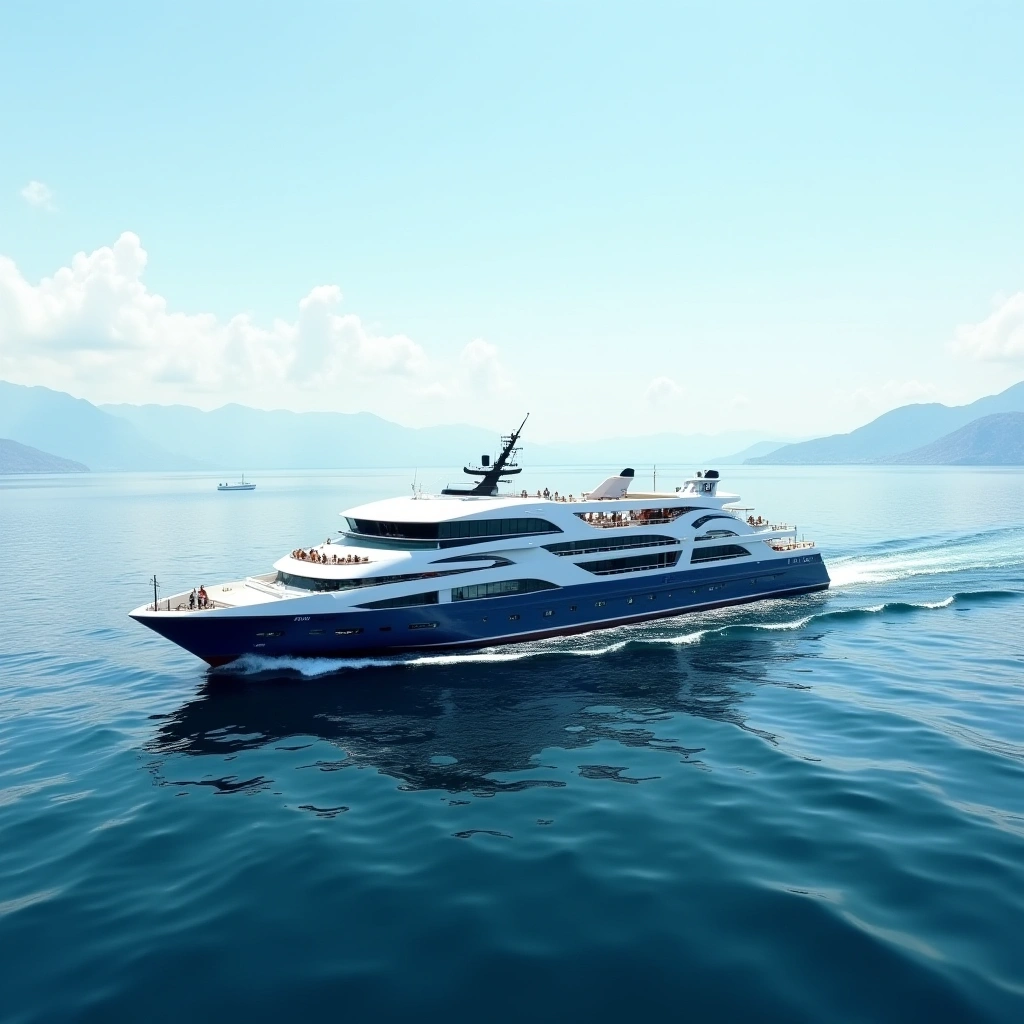
The Ning Yuan Dian Kun departs from Ningbo-Zhoushan Port for Jiaxing Port, both located in East China's Zhejiang province, on Wednesday. XINHUA · The delivery of the nation's first and the world's largest intelligent container ship powered …
China has officially announced plans to replace a whopping 20,700 diesel-powered inland cargo ships with electric versions over the next three years. Yes, you heard that right—20,700! That’s like replacing every single diesel ship in the country with a fleet that’s as quiet as a librarian on a caffeine detox.
Now, before you roll your eyes and say, “Oh great, more electric stuff that won’t work,” let’s take a moment to appreciate the sheer scale of this initiative. China isn’t just dipping its toes into the electric waters; it’s diving in headfirst, wearing a full-on wetsuit and a pair of stylish goggles.
You might be wondering, why the sudden shift? Well, let’s face it: the air quality has been about as pleasant as a skunk at a garden party. Diesel engines are notorious for spewing out more pollutants than a toddler after a sugar rush. So, it’s about time someone decided to swap out those smoky giants for something a little more, how should we say, breathable?
Electric ships, while still a bit of a novelty, are like that trendy vegan restaurant that suddenly pops up on every corner. You might be skeptical at first, but then you realize they have a pretty good avocado toast. Similarly, electric cargo ships promise lower emissions and quieter operations—because who doesn’t want to sail the rivers without the roar of engines drowning out the sweet sounds of nature?
But let’s not forget the logistics of this grand plan. Transitioning from diesel to electric isn’t as simple as switching on a light bulb. It’s more like a game of Jenga where one wrong move could send everything crashing down. The infrastructure for charging these ships will need to be developed, and let’s be honest, we can’t have them just plugging into the nearest power outlet like they’re charging their phones.
And speaking of power, China will need to ensure that it’s sourcing this electricity from renewable resources. It would be ironic if these electric ships were powered by coal-fired plants—like putting a salad on a cheeseburger.
Now, the skeptics out there might be thinking, “Sure, this sounds great, but what about the actual performance?” Good question! Electric ships need to prove they can handle the heavy lifting without running out of juice halfway through a journey. Imagine a massive cargo ship just drifting aimlessly in the river, like a teenager who forgot to charge their phone before heading out.
But if China can pull this off—if they can turn the tide on pollution and lead the charge (pun intended) towards a more sustainable future—it could set a precedent for other countries to follow suit. After all, if the world’s largest cargo fleet can go electric, maybe we can start seeing electric cars that don’t require a degree in astrophysics to operate.
So, here’s to hoping this ambitious plan isn’t just a flash in the pan. Let’s keep our fingers crossed that in three years, we won’t just have 20,700 shiny new electric ships but also clearer skies and cleaner waterways. Because if we can’t have that, what’s the point of all this electric excitement? Stay tuned, folks—this is one boat we’re all hoping doesn’t sink!
Inspired by: “China plans to replace 20,700 diesel-powered inland cargo ships with electric versions in the next…” (r/climatechange)