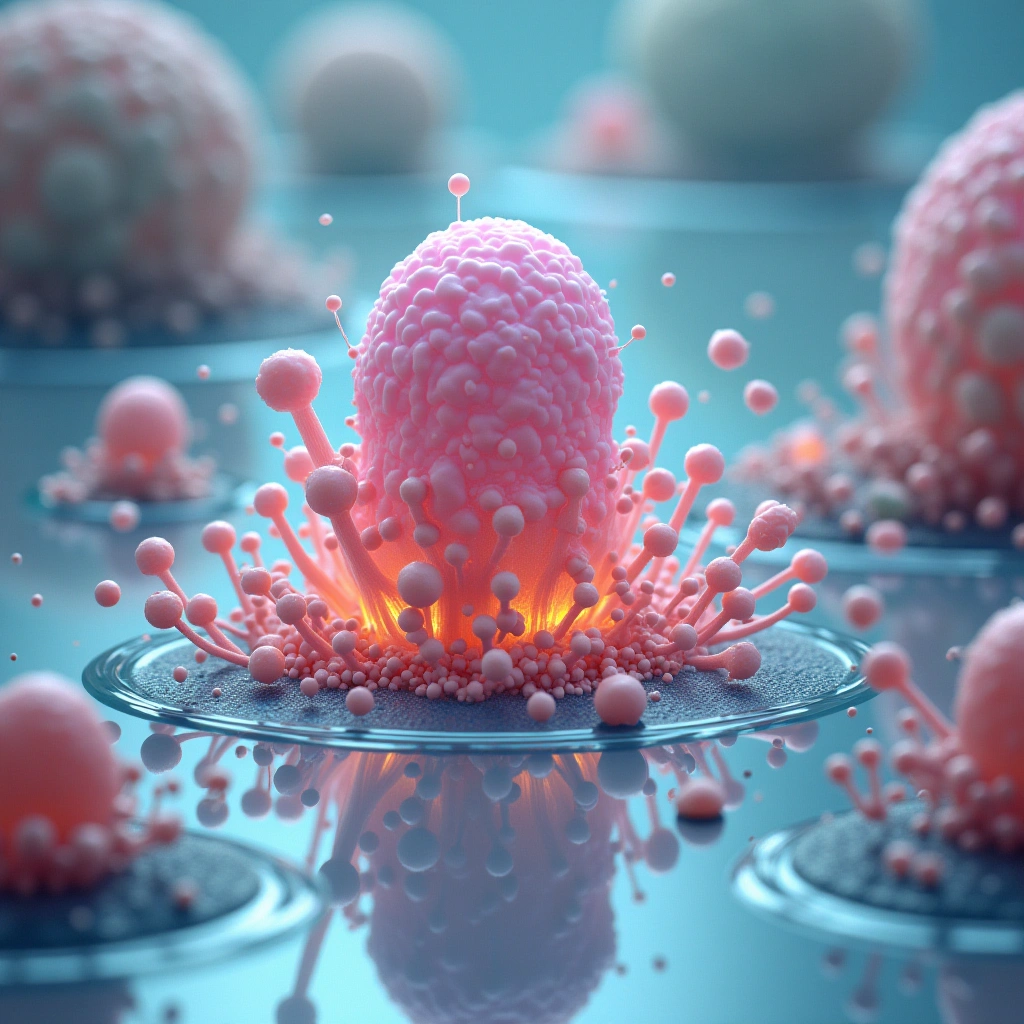
Have you ever looked at a piece of tissue and thought, “Wow, that could probably run a small country”? No? Just me? Well, let me introduce you to the wild and wacky world of organoid intelligence!
The convergence of brain organoids and artificial intelligence (AI) has driven the development of organoid intelligence (OI), a new paradigm for constructing human-level cognitive models.
So, what exactly is organoid intelligence? In simple terms, it’s the creation of miniaturized, simplified versions of organs, particularly brains, from stem cells. These tiny brain-like structures, known as organoids, are not just blobs of tissue; they are capable of exhibiting some remarkably complex behaviors. Think of them as the brain’s less famous cousin who still manages to impress at family gatherings.
The rise of organoid intelligence has been fueled by advancements in stem cell research and 3D bioprinting technologies. Scientists have been able to grow these organoids in the lab, and they are starting to show signs of activity that resemble the workings of a real brain. Imagine a tiny brain that can learn, adapt, and maybe even play chess. I mean, who needs Kasparov when you can have a petri dish that can checkmate you?
But before you start picturing a world where organoids take over the chess championships, let’s temper those expectations. While organoids can exhibit some neural activity, they’re not exactly about to start their own tech startup or run for public office. They lack the full complexity of a real brain, and as such, they don’t possess consciousness or self-awareness. I know, disappointing, right? No cute organoid politicians to vote for in the next election.
One of the most exciting applications of organoid intelligence is in the field of medicine. Researchers are using these organoids to study brain diseases like Alzheimer’s and Parkinson’s. By observing how these brain-like structures react to various treatments, scientists can gain valuable insights that could lead to more effective therapies. It’s like having a mini lab assistant that doesn’t complain about coffee breaks.
Furthermore, organoid intelligence could redefine how we approach artificial intelligence. Imagine if we could create AI systems that learn and adapt like a human brain, but without all the messy emotions. You know, just pure logic and reasoning. It sounds like the perfect solution for all those awkward social interactions we humans dread.
However, with great power comes great responsibility. The ethical implications of organoid intelligence are profound. As we create these brain-like structures, we must ask ourselves: at what point do they become sentient? Do we owe them rights? Will they demand a salary? These are questions we need to ponder before we end up in a sci-fi movie scenario where organoids are leading protests for their rights.
In conclusion, the rise of organoid intelligence is an exciting frontier in science that holds immense potential for medicine and technology. While we’re not quite at the stage where organoids are running for office or challenging us to a game of chess, the research is promising and could lead to groundbreaking discoveries. Just remember, if you ever find yourself talking to a petri dish, maybe it’s time to take a break from the lab and get some fresh air.
So, keep an eye on organoid intelligence, folks. Who knows? One day, those little brain blobs might just surprise us all!
Inspired by: “The Rise of Organoid Intelligence” (r/technology)