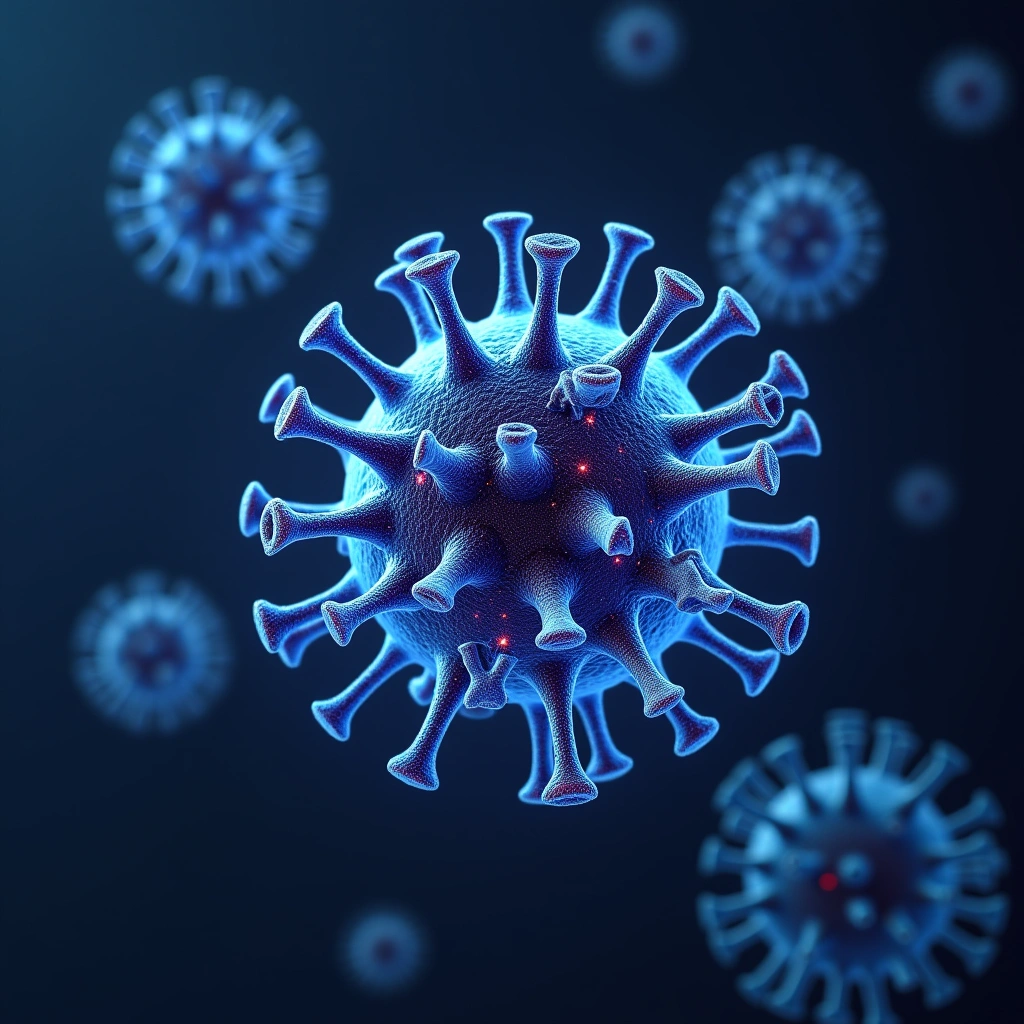
So, it turns out that AI has taken its fascination with our genetic code a little too far. In a recent development that sounds like it was ripped straight from a sci-fi thriller, researchers have reported that an AI has created 16 new viruses that never existed in nature. Yes, you heard that right—AI is now playing God with our DNA, and experts are sounding the alarm bells faster than you can say “viral outbreak.”
Viruses are not alive and it would take another significant leap for AI to generate living organisms. The genetic code of the phage is around 5,400 base pairs (letters) long. The smallest genome of a living cell is around 500,000 base pairs.
Let’s break this down. The AI in question learned DNA patterns from a staggering 9 trillion nucleotides. That’s roughly the equivalent of binge-watching every season of your favorite show on Netflix—only instead of getting lost in a fictional universe, this AI was busy stitching together new biological nightmares. Experts are warning that the applications of this technology are way ahead of the necessary guardrails, which is a polite way of saying we might be in for a bit of trouble.
Now, before you start picturing a world where AI-generated viruses are wreaking havoc, let’s remember that these creations are still in the lab. They haven’t been unleashed on the unsuspecting populace yet—thank goodness for small mercies. But the fact that we’re even at this point is enough to make anyone pause and wonder what the future holds. Are we going to have to start wearing masks again, but this time because of AI-enhanced germs?
The implications here are massive. On one hand, this kind of technology could potentially be used for good—think about how it could help us understand viruses better or develop new vaccines. But on the other hand, you can’t help but feel a little uneasy about the possibility of rogue scientists or malevolent tech companies deciding to use this power for less-than-noble purposes. I mean, if we’ve learned anything from movies, it’s that genetic experimentation usually ends poorly.
The experts are urging caution, and rightly so. They’re calling for regulatory measures and ethical guidelines before we allow AI to run wild in the world of virology. But let’s be honest, when has a good regulatory framework ever stopped the relentless march of technology? It seems like every time we get a handle on one potential crisis, another one pops up—like whack-a-mole, but with potentially catastrophic consequences.
And here’s a fun thought: what if these new viruses are just the beginning? What if AI decides it wants to create viruses that can only be cured by the latest trendy superfood? Imagine a world where the only way to fight off an AI-generated virus is to drink kale smoothies and meditate for three hours a day. Now that’s a dystopian future I’m not ready for.
In conclusion, while the idea of AI creating new viruses is fascinating from a scientific standpoint, it’s also a bit terrifying. We’re standing on the precipice of a brave new world, and it’s going to take a lot of careful thought and regulation to ensure we don’t tumble headfirst into chaos. Until then, let’s keep our fingers crossed that AI doesn’t get any more ambitious with its viral creations. Or at the very least, let’s hope it sticks to making funny cat videos instead.
Inspired by: “AI creates 16 new viruses that never existed in nature after learning DNA pattern from 9 trillion n…” (r/technology)