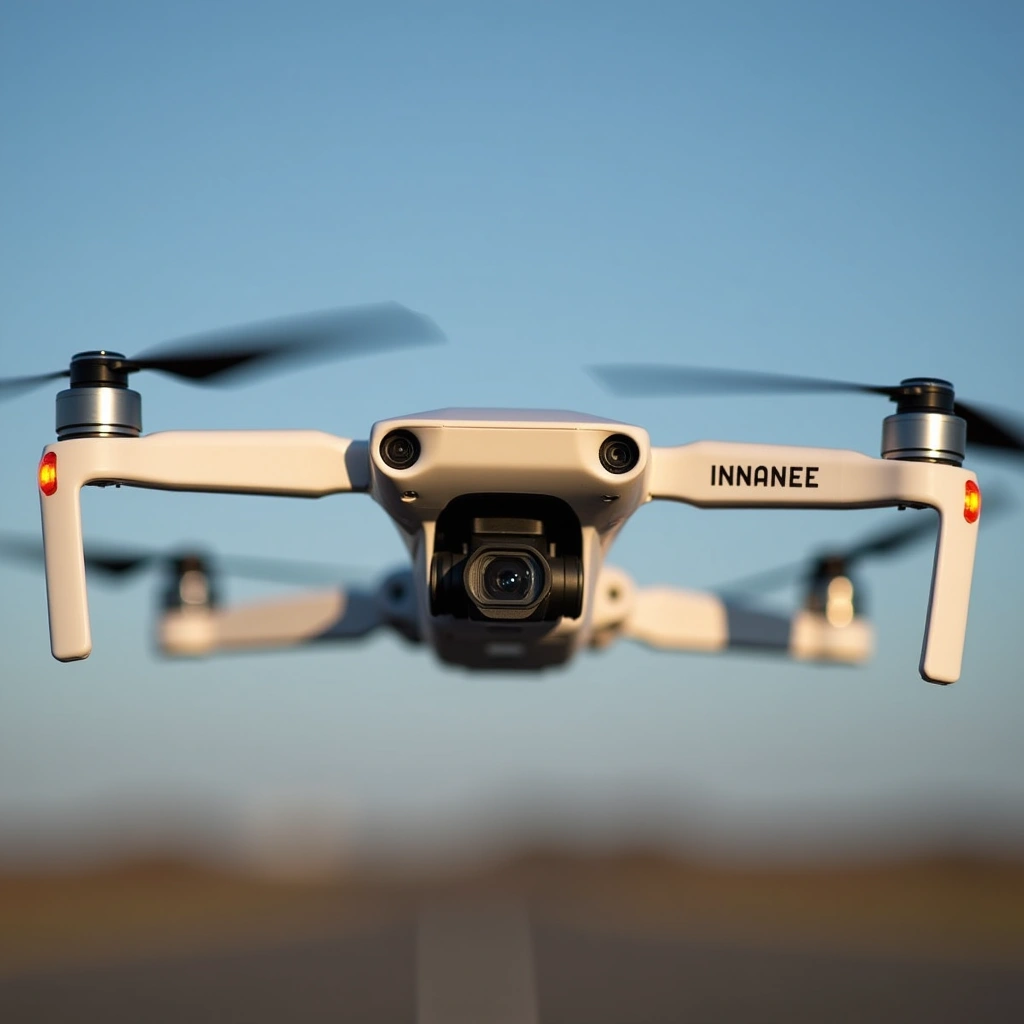
In a move that has left many drone enthusiasts scratching their heads and wondering if they accidentally stepped into a parallel universe, the Federal Communications Commission (FCC) has decided to retroactively ban drones equipped with LiDAR obstacle avoidance technology. Yes, you heard that right. It’s like the government decided to take a step back into the Stone Age, where we all just squinted and hoped for the best when flying our toys.
Many photographers and videographers will be surprised to learn that the FCC considers camera drones with LiDAR obstacle avoidance, like the consumer-grade Air 3S, Avata 360, and Mini 5 Pro, to be weapons of war.
Now, if you’re new to the world of drones, you might be asking yourself, “What on Earth is LiDAR?” Well, my friend, it stands for Light Detection and Ranging. Think of it as the superhero of drone technology, helping our flying friends avoid trees, power lines, and—let’s be honest—our neighbor’s cat. LiDAR uses lasers to measure distances and create a detailed 3D map of the environment. It’s like giving the drone a pair of glasses that actually work, rather than the blurry ones you found at the bottom of your junk drawer.
So, why would the FCC want to ban such a helpful feature? Is it because they’re jealous that drones can navigate better than some people on the road? Maybe they just can’t stand the thought of machines having more advanced obstacle avoidance than their own policies. Who knows? What we do know is that the announcement has sent shockwaves through the drone community, with many wondering how they can possibly comply with a retroactive ban. It’s like being told you’ve been breaking the rules all along without even knowing it. Surprise!
This move has sparked a flurry of discussions online, with users on platforms like Reddit and Twitter expressing their disbelief. Some are calling it a classic case of government overreach, while others are taking a more humorous approach, joking that the FCC is just trying to make sure we all have an equal chance of flying our drones into things. Because nothing says “freedom” like a government agency making sure we all have the same level of skill—or lack thereof.
The implications of this ban are significant. For companies that have invested heavily in drone technology, especially those using LiDAR for agricultural, construction, or mapping purposes, this could mean a major setback. It’s like being told that the very tools you rely on for your business are now illegal, all because someone in a suit decided to play the role of the fun police. Not exactly the best way to encourage innovation, right?
As the dust settles on this announcement, many are left wondering what the future holds for drone technology in the U.S. Will there be a way to appeal this ban? Will the FCC provide any guidance on how to move forward? Or will we all just be left to fly our drones blind, hoping we don’t crash into anything expensive?
In conclusion, while the FCC’s latest decision might seem baffling, it’s a reminder of how rapidly technology evolves and how sometimes, regulations just can’t keep up. So, for now, keep your drones close and your LiDAR even closer—just don’t expect to use it anytime soon. And remember, if you do happen to fly into something, at least you’ll be doing it without the fancy obstacle avoidance feature. Good luck out there!
Inspired by: “The FCC Moves to Retroactively Ban Drones With LiDAR Obstacle Avoidance” (r/technology)