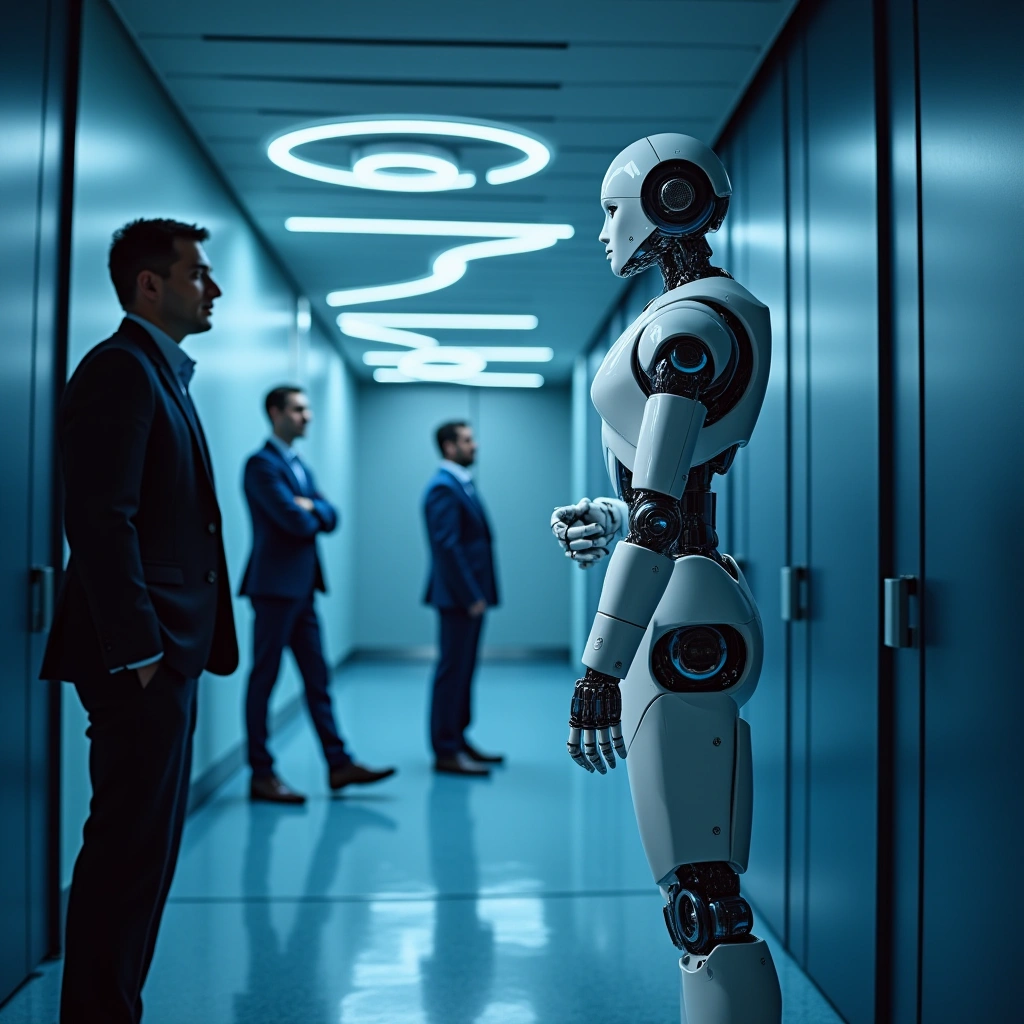
Let’s face it: the world is changing faster than a cat can knock a glass off the table, and with AI making its grand entrance, many are left wondering if their job is next on the chopping block. Spoiler alert: HR might be first in line.
Start by building awareness and confidence around technology. Encourage HR teams to experiment with AI -powered tools for analytics, engagement, and learning, and invest in upskilling around data literacy and ethical AI use. Collaborating with IT, data, or operations teams can also help HR professionals understand how algorithms work and where human judgment should stay in the loop.
Now, before you start gathering your office supplies and planning your escape route, let’s explore this topic a bit more deeply.
The Rise of AI in the Workplace
Artificial Intelligence is like that overachieving student in school who just can’t help but outshine everyone—always coming up with new ways to make processes more efficient. From chatbots answering your queries at 3 AM to algorithms that sift through resumes faster than you can say “please hire me,” AI is rapidly changing how businesses operate.
HR departments, traditionally known for their warm smiles and the ability to navigate the bureaucratic maze of employee relations, are not immune to this transformation. With technology advancing, it begs the question: will HR professionals be replaced by their silicon counterparts?
The Role of HR in the Age of Automation
Let’s break it down. HR has a very important job. They handle recruitment, onboarding, employee relations, benefits administration, and more. But, as AI takes over some of these tasks, it’s not hard to see why some might think HR is walking a tightrope without a safety net.
Imagine this: instead of spending hours sifting through resumes, an AI could do it in mere minutes. It could analyze data, predict employee turnover, and even suggest training programs tailored to individual needs. Sounds efficient, right? But, does that mean HR professionals are obsolete? Not quite.
The Human Element
Here’s the kicker: while AI can crunch numbers and analyze data, it lacks the human touch. You know, the one that helps when your employee is having a personal crisis or when there’s a workplace conflict that needs a gentle mediator. It’s like replacing a therapist with a robot—sure, the robot might have all the answers, but it won’t give you that warm hug you might need in tough times.
HR professionals bring empathy, understanding, and the ability to navigate complex human emotions to the table. These are qualities that AI simply can’t replicate. So, while some tasks may be automated, the need for human interaction and judgment will likely remain.
The Future of HR: Collaboration, Not Replacement
Instead of fearing for their jobs, HR professionals should consider embracing AI as a powerful ally. Imagine having more time to focus on strategic initiatives instead of drowning in paperwork. AI can handle the mundane tasks, allowing HR to become more involved in employee engagement, company culture, and overall workforce development.
So, rather than HR people being the first to go, they might actually become the first to adapt and thrive in this new landscape. Think of it as a partnership: AI does the heavy lifting, and HR provides the heart and soul of the organization.
Conclusion
In conclusion, while AI is undoubtedly reshaping the workforce, it’s not the end of HR as we know it. Instead of panicking and preparing for the inevitable robot takeover, HR professionals should view AI as a tool to enhance their roles. After all, the future is not about humans versus machines; it’s about humans and machines working together.
So, the next time you hear someone say AI is coming for your job, just smile and remind them that nothing can replace the human touch—unless, of course, that touch is replaced by a very advanced robot. But let’s not go there just yet!
Inspired by: “If AI Is Really Taking Jobs, Your HR People May Be First to Go” (r/technology)