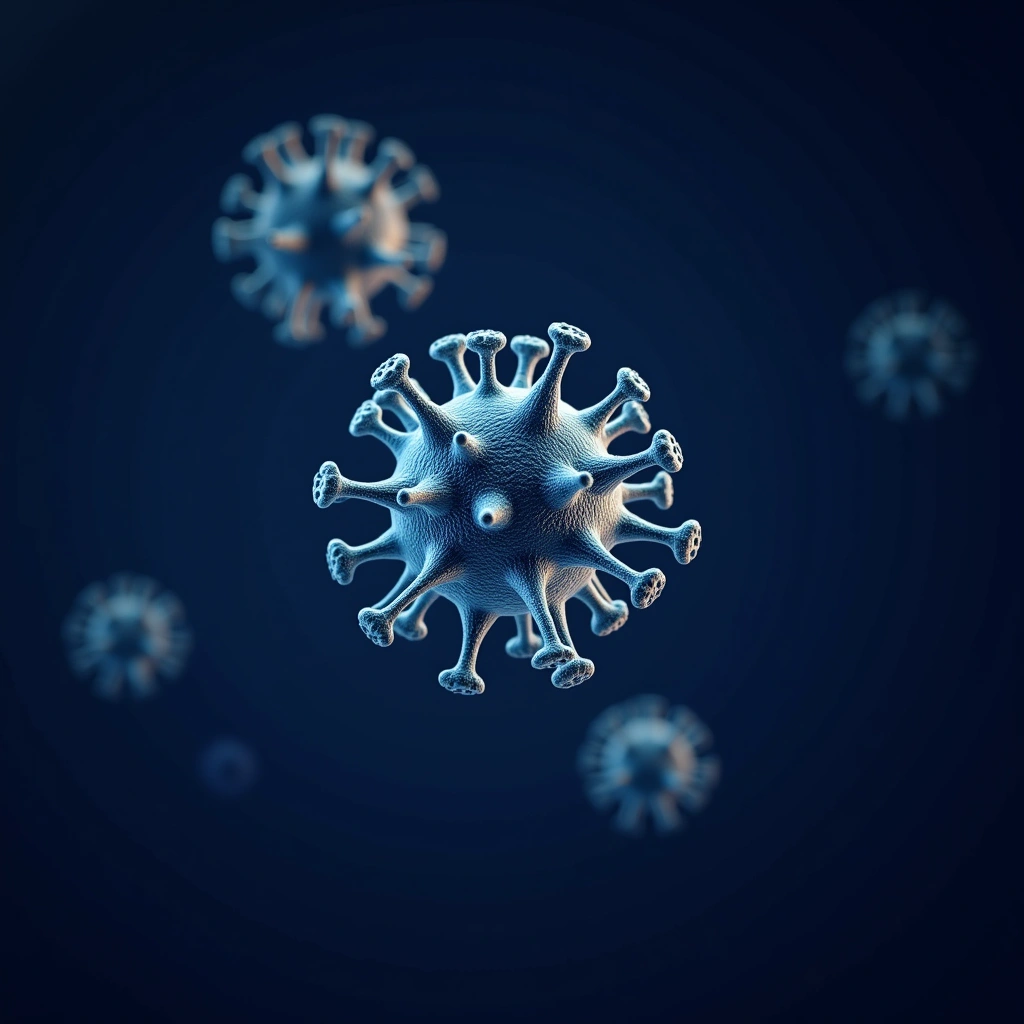
Have you ever had one of those days where you wondered, “What if I could design my own virus?” No? Just me then? Well, buckle up, because scientists are actually doing just that, and it’s not as terrifying as it sounds—mostly.
Perhaps the most significant invention of life is a genetic system that has an extensible capacity for inventiveness, something that likely will not be achieved soon for synthetic biological systems. However, once informational macromolecules are given the opportunity to inherit profitable variation through self-sustained Darwinian evolution, they just may take on a life of their own.” · This is not hyperbole. All the key barriers to the artificial synthesis of viruses and bacteria have been overcome, at least on a proof-of-principle basis.
Recent developments in genome modeling have opened the door to designing new viruses. Yes, you heard that right. Researchers are using large genome models to create synthetic viruses, and while this sounds like the plot of a dystopian sci-fi movie, it’s actually rooted in some pretty cool science.
So, what exactly are large genome models? Imagine a super detailed map of a city that not only shows you where the coffee shops are but also lets you design your own coffee shop based on popular trends and consumer behavior. In the realm of genetics, these models allow scientists to visualize and manipulate the genetic code of viruses. They can tweak various components to study how these changes affect the virus’s behavior—sort of like playing God, but with a much more ethical twist.
Now, why would anyone want to design a virus? Well, there are a few reasons, and no, it’s not just for fun or to take over the world (at least, not in a malicious way). One of the primary applications is in vaccine development. By understanding how viruses work and how they can mutate, researchers can create more effective vaccines. It’s like preparing for a game of chess; you want to anticipate your opponent’s moves before they even happen.
Additionally, synthetic viruses could be used for gene therapy, targeting specific cells to deliver treatments directly where they are needed. Picture a tiny, microscopic delivery truck that knows exactly where to drop off the medicine—how neat is that? This could revolutionize how we treat diseases that currently have limited options.
Of course, with great power comes great responsibility. The idea of designing viruses raises ethical questions that are not easily answered. It’s one thing to create a virus for research, but it’s another entirely to ensure that these creations don’t escape the lab and wreak havoc on unsuspecting populations. Biosecurity measures are a must, and researchers are working hard to ensure that their creations are kept under lock and key (figuratively speaking, of course).
Now, before you start panicking and imagining a world overrun by synthetic viruses—don’t. The research is heavily regulated, and scientists are acutely aware of the potential consequences of their work. They’re not just throwing caution to the wind and saying, “Let’s see what happens!” (Though that would make for a thrilling movie plot.)
As we continue to explore the possibilities of genome modeling and synthetic biology, it’s essential to keep the conversation going about the ethical implications and safety measures in place. After all, we want our future to be bright and virus-free, not a scene straight out of a horror film.
In conclusion, while the idea of designing new viruses may sound like something out of a sci-fi novel, it’s a reality that could lead to significant advancements in medicine and biotechnology. So, the next time you hear about large genome models and synthetic viruses, remember: it’s not just science fiction, it’s science fact—and it could be the key to a healthier future.
And who knows? Maybe one day, I’ll be able to design my own coffee shop virus. Just kidding! Let’s stick to the science for now.
Inspired by: “Large genome models used to design new viruses” (r/technology)