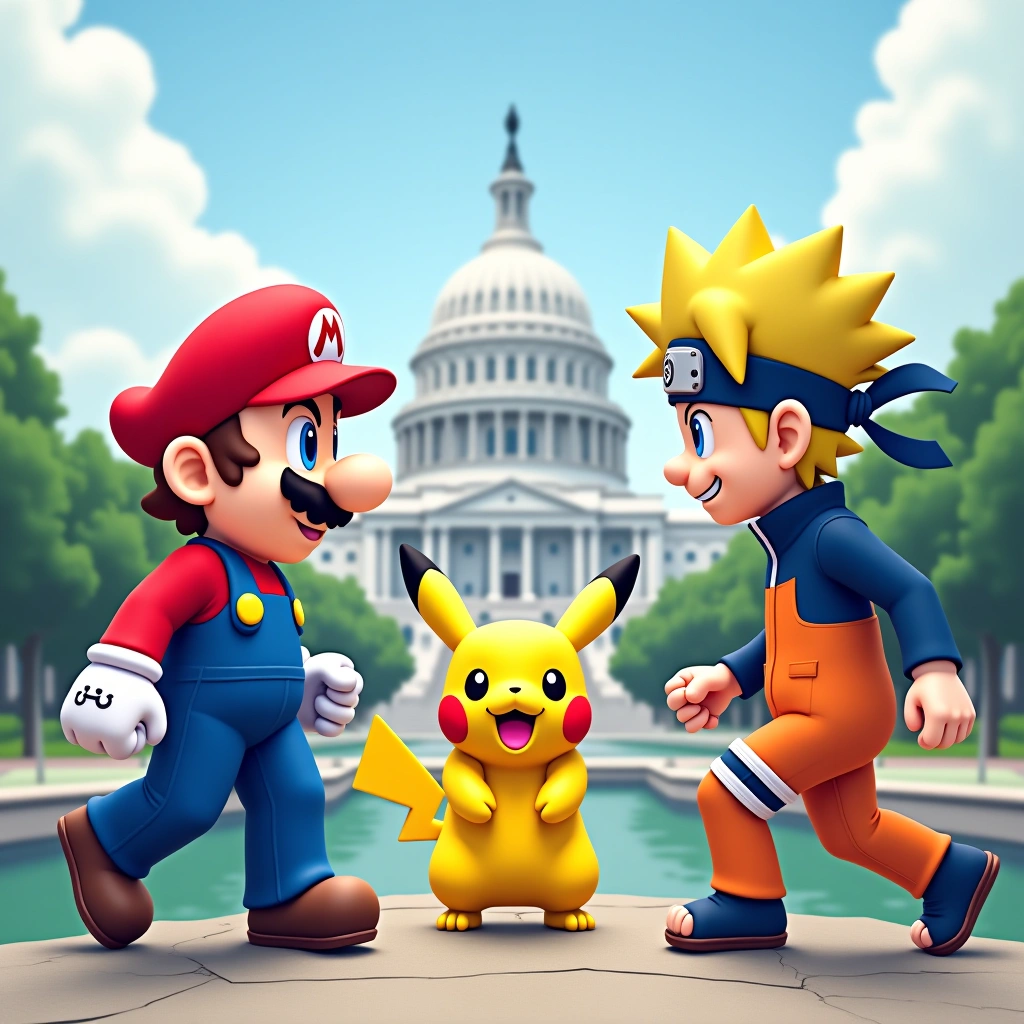
So, it seems that the U.S. government has taken a page out of the meme handbook, and it’s not just any memes—they’re diving headfirst into the worlds of Mario, Pokémon, and Naruto. Yes, you read that right. The same folks who bring you budget proposals and infrastructure plans are now apparently also trying their hand at meme culture. But hold your horses (or should I say Pikachus?), because Japanese officials are sounding the alarm. They’re not exactly thrilled about Uncle Sam’s dabbling in their beloved franchises.
… Renewed backlash was triggered in June, when President Trump shared an AI-generated video depicting himself as Naruto, the protagonist of the popular manga and anime of the same name, on Truth Social.
Now, let’s unpack this, shall we? The U.S. government has been known to use popular culture to connect with younger audiences. Who doesn’t love a good meme? They can be funny, relatable, and sometimes even educational. But when it comes to iconic franchises like Mario, Pokémon, and Naruto, things get a little dicey.
Imagine Mario jumping over budget cuts or Pikachu warning us about climate change. On the surface, it sounds like a delightful mash-up of gaming and governance, but Japanese officials are raising eyebrows and, dare I say, raising their hands in protest. Their concern? That these memes could tarnish the reputations of these franchises and potentially affect their bottom lines.
Now, let’s be real. We’ve all seen how quickly memes can turn from wholesome to cringe-worthy. One moment you’re enjoying a cute Mario meme about healthcare, and the next, you’re staring at a bizarre Naruto meme about taxes that makes you question your life choices. The risk of misinterpretation is high, and the last thing these franchises need is to be associated with a government that can’t seem to agree on a lunch order, let alone a budget.
Japanese officials are understandably protective. These franchises are not just characters; they are cultural icons that have been carefully crafted over decades. Mario has been saving princesses since the 80s, and Pokémon has been capturing hearts (and Pokémon) since the late 90s. These aren’t just games; they are a part of a legacy that resonates with millions worldwide. So when the U.S. government starts using these characters for memes, it’s like someone decided to put a mustache on the Mona Lisa. Sure, it might get some laughs, but it also might offend a lot of people.
Moreover, the government’s foray into meme culture could backfire. If the memes don’t resonate or, heaven forbid, go viral for the wrong reasons, it could lead to a backlash that no amount of PR can fix. Imagine a scenario where a meme makes fun of a serious issue but is tied back to Mario. The outrage would be palpable, and suddenly, Mario is no longer the lovable plumber we know, but a symbol of governmental incompetence. Yikes!
In conclusion, while memes are a fun way to engage with younger audiences, the U.S. government should tread carefully when it comes to beloved franchises like Mario, Pokémon, and Naruto. They might want to leave the meme-making to the professionals—like teenagers on TikTok. After all, these franchises are more than just characters; they represent a rich cultural heritage that deserves respect. So, let’s keep our memes funny, our government memes-free, and let Mario stick to saving princesses, not politics.
Inspired by: “The U.S. Government’s Mario, Pokémon and Naruto Meme Posting Could Damage These Franchises, Japanes…” (r/technology)