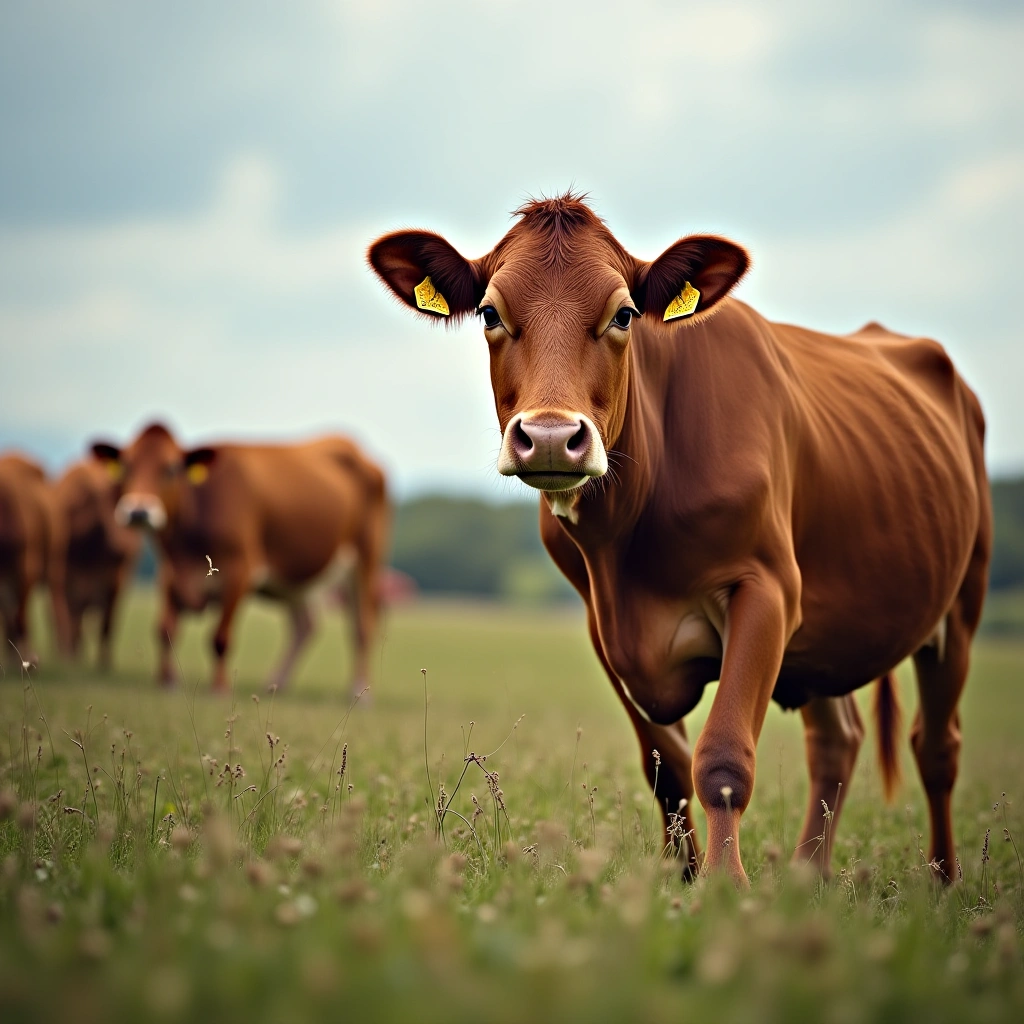
In the age of technology, one might think that cows are just grazing in the field, blissfully unaware of the digital revolution happening around them. But hold your horses—or cows, in this case—because thanks to LoRaWAN, our bovine friends are getting a taste of the Internet of Things (IoT) too! Yes, you heard that right. Cattle are now part of the tech-savvy crowd, and it’s all thanks to a low-power networking protocol that’s making waves in agriculture.
Smart farming GPS Ear Tag by mOOvement allows tracking and finding the cattle (or any other animal) across large distances, even without mobile coverage, thanks to LoRaWAN.
So, what exactly is LoRaWAN? No, it’s not a new breed of cow or some fancy cheese. LoRaWAN stands for Long Range Wide Area Network, and it’s a protocol designed to connect devices over long distances with minimal power consumption. Think of it as the wireless network that’s perfect for remote areas where traditional internet connections might be as scarce as a snowstorm in July.
Now, you might be wondering, why on Earth would we want to connect cattle to the internet? Well, let’s just say that farmers are tired of playing hide and seek with their livestock. With LoRaWAN, ranchers can easily monitor the health and location of their cows from the comfort of their homes (or maybe while lounging on a beach in Hawaii—who knows?). By using GPS trackers and health sensors that communicate through LoRaWAN, farmers can ensure their cows are happy and healthy without having to chase them down like a scene out of a cowboy movie.
Imagine this: a farmer wakes up in the morning, grabs a cup of coffee, and checks his smartphone to see a map of where all his cows are grazing. He can easily spot if one of them has wandered off to the neighbor’s field—or worse, into a corn maze. With real-time data at their fingertips, farmers can make quick decisions to keep their herd safe and sound.
But wait, there’s more! LoRaWAN isn’t just a one-trick pony; it can support a whole range of agricultural applications. From soil moisture sensors to weather stations, the possibilities are endless. Farmers can optimize their irrigation systems, monitor crop health, and even predict when to plant or harvest based on data collected by these smart devices. It’s like having a personal assistant that doesn’t require coffee breaks and can work 24/7.
Of course, there are skeptics who might argue that this is just another tech fad—like fidget spinners or the infamous selfie stick. But let’s face it, the agricultural industry is in dire need of modernization. With the global population continuing to rise, we need to find smarter ways to produce food and manage resources. LoRaWAN offers a solution that’s not only efficient but also scalable, making it easier for farmers of all sizes to adopt these technologies.
And let’s not forget the environmental impact. By using low-power devices that rely on renewable energy sources, farmers can reduce their carbon footprint while still staying connected. It’s a win-win situation—cows get to roam freely, and farmers can keep tabs on them without exhausting their resources.
In conclusion, LoRaWAN is not just for tech enthusiasts or urban dwellers; it’s revolutionizing the way we connect with our livestock. So the next time you see a cow in a field, just remember that it might be more connected than you are. Who knows, it might even have its own Instagram account, sharing its daily adventures of grazing and mooing to its followers. Moo-ving forward, the future looks bright for both farmers and their four-legged friends, thanks to the wonders of low-power networking protocols. Now, if only we could get them to start tweeting about their favorite pastures!
Inspired by: “Moo! LoRaWAN makes it easier to connect more things to the low power networking protocol—even cattle” (r/technology)