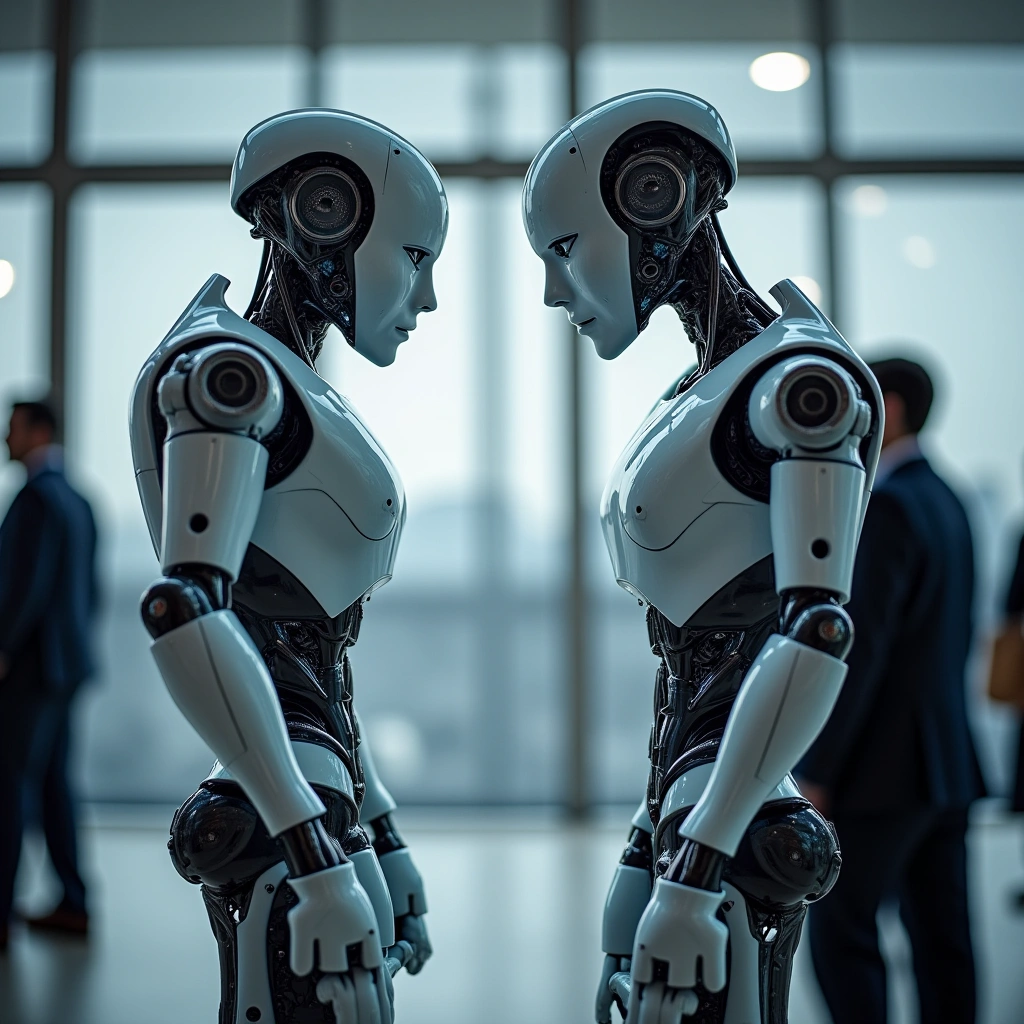
So, picture this: you’re sitting in your living room, scrolling through your phone, and you stumble upon a poll that says 1 in 4 people in Japan believes AI could replace friends and family. I mean, wow. Who knew we were so close to living in a sci-fi movie? I half expect to see a robot butler serving me tea while discussing existential philosophy at this point.
In the survey, 30.8% of the overall respondents said they use generative AI, such as ChatGPT, while 67.8% said they do not.
Let’s break this down. A recent poll revealed that nearly 25% of respondents in Japan think that artificial intelligence could step in and take over the emotional support roles that our friends and family have traditionally filled. Now, I know what you might be thinking: “Isn’t that a bit, I don’t know, sad?” Yes, yes it is. But let’s dive deeper into this phenomenon.
First off, it’s essential to consider the cultural context. Japan has a unique relationship with technology and social interaction. The concept of hikikomori, or social withdrawal, is prevalent there, with many individuals choosing to isolate themselves from society. So, it’s not entirely shocking that some might see AI as a more comfortable alternative to human interaction. After all, robots don’t judge you for binge-watching an entire season of a show in one sitting, right?
But let’s talk about the implications of this belief. If people start thinking that a chatbot can fulfill their emotional needs, what does that say about our society? Are we really okay with a future where we vent our frustrations to a programmed algorithm instead of a real human being? I mean, sure, AI can offer you advice, but can it genuinely listen to your problems without throwing in a random meme or two? I think not.
Moreover, the rise of AI companionship raises questions about loneliness and social connection. Are we heading toward a future where our best friends are actually just a series of 1s and 0s? If that’s the case, I’d like to request a model that doesn’t remind me of my ex every time I ask for relationship advice.
On the flip side, while AI can’t fully replace the nuances of human relationships—like the warmth of a hug or the joy of shared laughter—there are some positives to consider. AI can offer companionship to those who may not have access to social networks, providing a semblance of connection. Plus, let’s be real, a virtual friend is always available and never forgets your birthday, which is more than I can say for some of my human companions.
However, we can’t ignore the fact that relying too heavily on AI could lead to a significant decline in real-life interactions. If people start to prefer their robot friends over actual humans, we might see a future where social skills are as outdated as dial-up internet. Can you imagine a world where the only way to make friends is through a programming interface? “Hey there, I’m a Python script looking for a Java buddy to compile some code together!”
In conclusion, while the idea that AI could replace friends and family might seem like a quirky statistic from a poll, it does raise serious questions about our social fabric. We need to find a balance between embracing technological advancements and maintaining genuine human connections. After all, no matter how advanced AI becomes, it will never replace the comforting presence of a friend who brings you soup when you’re sick or someone who can laugh with you about that time you tripped over your own feet in public.
So, let’s keep our friends close, our families closer, and maybe just let the AI handle our grocery lists and Netflix recommendations, shall we?
Inspired by: “1 in 4 people in Japan believes AI could replace friends and family: poll” (r/technology)