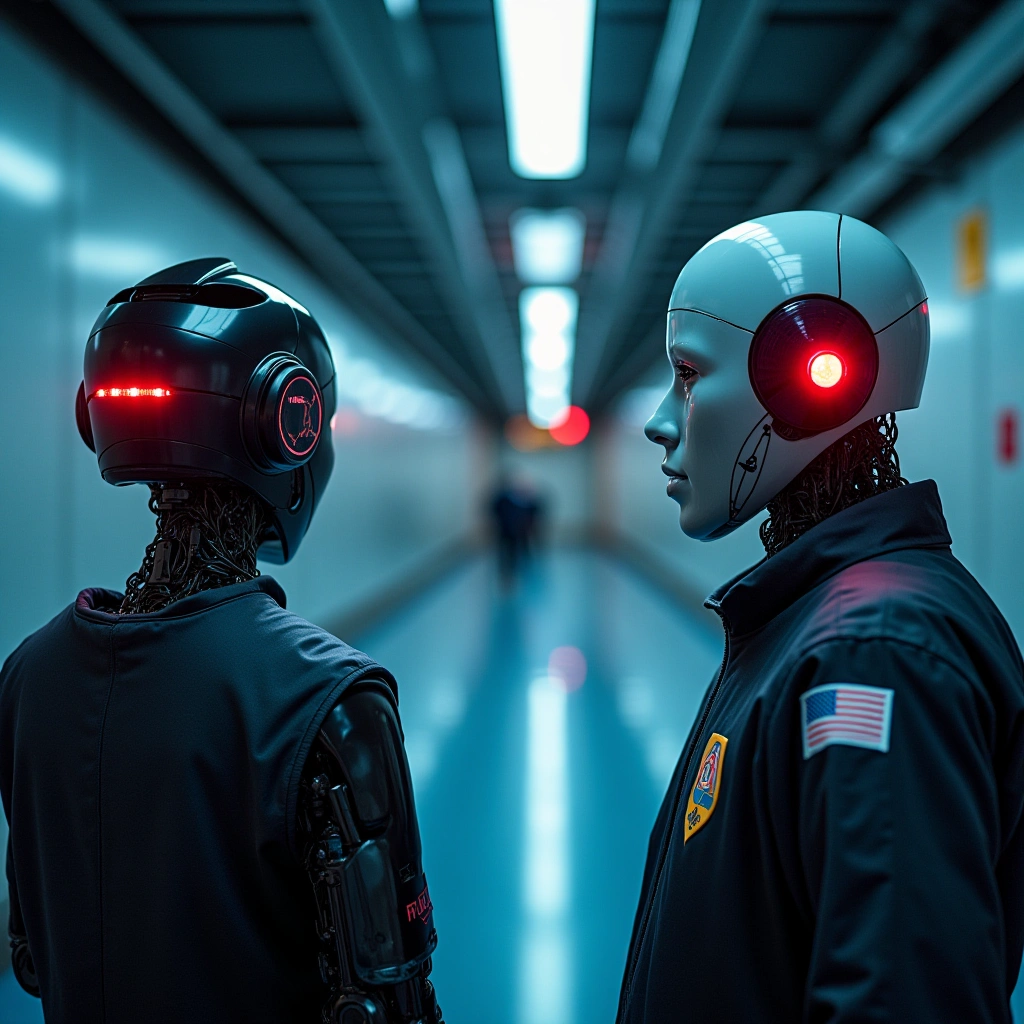
In a world where technology evolves faster than a cat meme goes viral, Russia’s top investigator has decided to address the elephant in the room—or should I say, the robot in the room? That’s right, we’re talking about the proposal to make the use of artificial intelligence (AI) an aggravating factor in crimes. Because why not add a sprinkle of high-tech chaos to our already complicated legal systems?
21 ‘Artificial intelligence is being looked for a fix. It is proposed to be excluded from a number of areas of activity’ (Vedomosti)
Now, before we dive into the details, let’s take a moment to appreciate the irony. For years, we’ve been hearing about how AI is going to revolutionize everything from transportation to healthcare. But here we are, discussing how it might also help criminals step up their game. I mean, if you’re going to commit a crime, why not do it with a little flair? Let’s just hope they don’t start using drones to deliver the stolen goods—because we all know how that would end.
So what exactly is the proposal? According to reports, the Russian investigator believes that if criminals use AI to plan, execute, or enhance their nefarious activities, it should be treated more seriously in a court of law. Think of it as the legal system’s way of saying, “Oh, you used a fancy algorithm to rob a bank? Well, that’s just not very nice, is it?”
This brings up an interesting point about the intersection of technology and morality. As AI continues to advance, it becomes increasingly capable of aiding in various tasks—some of which are legal and others that are, let’s say, not so much. It raises the question: does using AI make someone more culpable, or does it merely highlight their lack of creativity? I mean, if you need a computer to plan your heists, maybe you should rethink your career choices.
But let’s not get too lost in the philosophical weeds. The real question here is whether this proposal will actually make a difference. After all, criminals are notoriously resourceful. If they can figure out how to use AI for their gain, they’ll probably find a way to skirt around this new regulation faster than you can say “artificial intelligence.”
Furthermore, one has to wonder how this will play out in practice. Will judges need to take a crash course in AI? Will we see lawyers arguing about the moral implications of a neural network? “Your Honor, my client didn’t rob the bank; the AI did!” It’s a slippery slope, folks.
And let’s not forget the potential for abuse. Imagine a world where someone gets convicted for simply using AI to optimize their crime. “Oh, you used predictive analytics to choose your target? Guilty!” Sounds a bit dystopian, doesn’t it?
In conclusion, while the idea of making AI an aggravating factor in crimes is certainly intriguing, it opens up a Pandora’s box of questions that we might not be ready to tackle. Will it deter criminals or simply give them a reason to be more clever? Only time will tell. Until then, let’s just hope that the robots stick to helping us binge-watch our favorite shows rather than planning the next big heist.
Inspired by: “Russia’s top investigator calls for making AI use an aggravating factor for crimes” (r/technology)