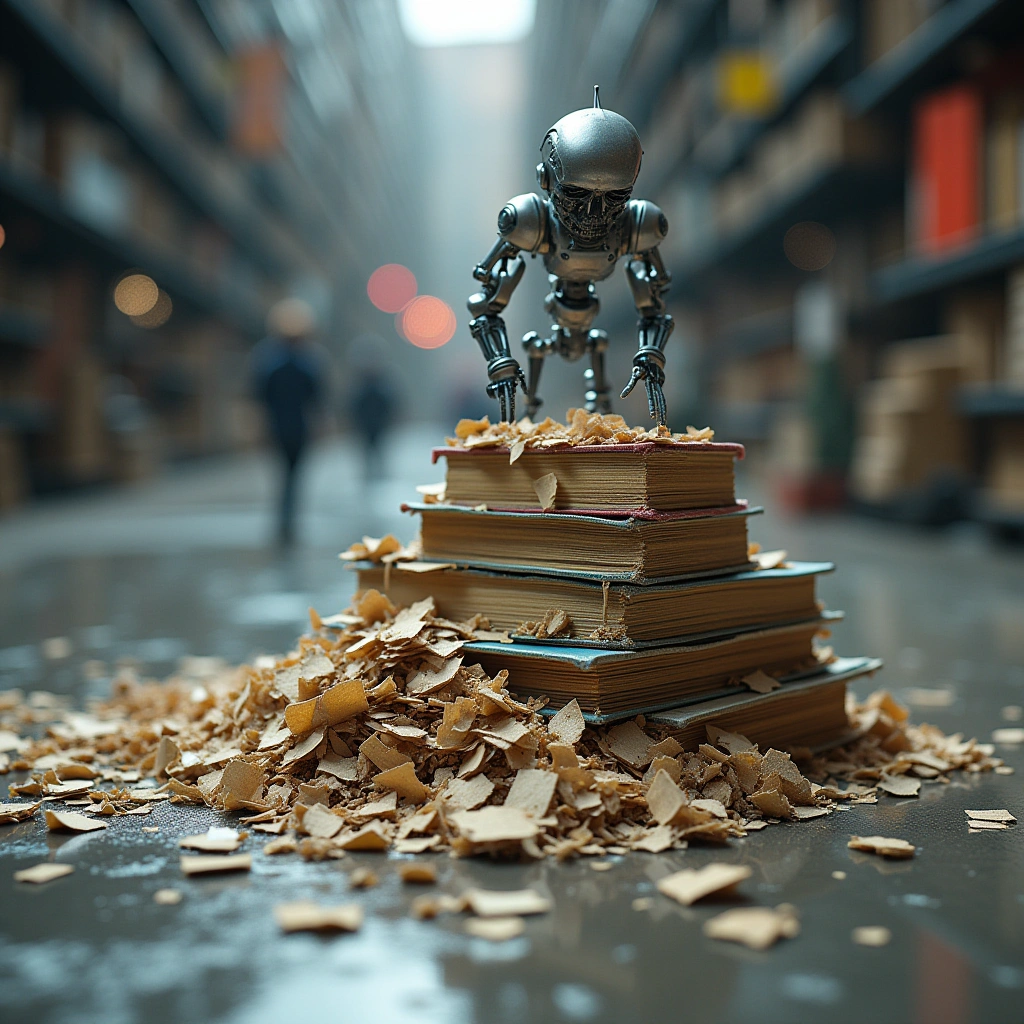
In a world where technology seems to be evolving faster than a toddler on a sugar high, it’s hard to keep up with the latest trends. Just when you think you’ve heard it all, news breaks that AI companies are buying up old books by the pallet and then… wait for it… shredding them. Yes, you read that right. They’re not just gathering dust on a shelf; they’re getting turned into confetti. Let’s dive into this bizarre phenomenon, shall we?
AI companies are quietly obtaining rare books, ingesting their contents, and then destroying them — even if they're exceedingly rare.
First, let’s address the elephant in the room: why on earth would anyone want to buy books only to shred them? It sounds like a plot twist in a dystopian novel where the government is trying to erase history. However, the reality is a bit less dramatic and a lot more techy. AI models require vast amounts of data to learn and improve, and books—especially older ones—are seen as a treasure trove of that data. But instead of carefully curating a library, it seems some companies prefer the ‘more is more’ approach, buying up entire pallets.
Now, you might be thinking, ‘But wait! Isn’t that a bit wasteful?’ And you’d be absolutely right. It’s like buying a gourmet meal and then tossing it in the blender for a smoothie. Sure, it’s efficient, but where’s the flavor? When these companies shred books, they’re essentially disregarding the very essence of literature. The stories, the history, the knowledge—poof! Gone in a puff of shredded paper.
One can’t help but wonder what titles are falling victim to this literary massacre. Are we talking about dusty encyclopedias from the 80s? Or are they getting their hands on classic novels? Imagine a world where future generations are deprived of reading ‘Moby Dick’ because it was shredded to make way for the next big AI breakthrough. I mean, who needs a whale of a tale when you can have an algorithm that can tell you where to find the best pizza in town, right?
But it’s not just about the books themselves; it raises questions about intellectual property and the ethics of data collection. If AI companies are treating literature like a disposable commodity, what does that mean for authors and their rights? It’s a slippery slope, folks. If we’re not careful, we might end up in a world where the only books left are those that have been approved by an algorithm. And let’s be honest, I’m not sure I trust an AI to curate my reading list.
So, what can we do about this strange trend? For starters, we can support local libraries and bookstores. Instead of letting these companies have their way with our literary heritage, we should be preserving it. Let’s make sure that the classics, the forgotten gems, and even the not-so-great titles find a home where they can be appreciated—not shredded.
In conclusion, while AI companies may think they’re being efficient by shredding old books, they’re missing out on the rich tapestry of human experience that literature provides. So next time you see a pallet of books being delivered, let’s hope they’re headed to a library, not a shredder. Because in the grand scheme of things, it’s not just about data; it’s about preserving the stories that shape our world. And who knows? Maybe one of those books holds the secret to the next great AI breakthrough. Or at the very least, a really good recipe for chocolate cake.
Inspired by: “AI Companies Are Still Buying Up Old Books by the Pallet – Then Shredding Them” (r/technology)