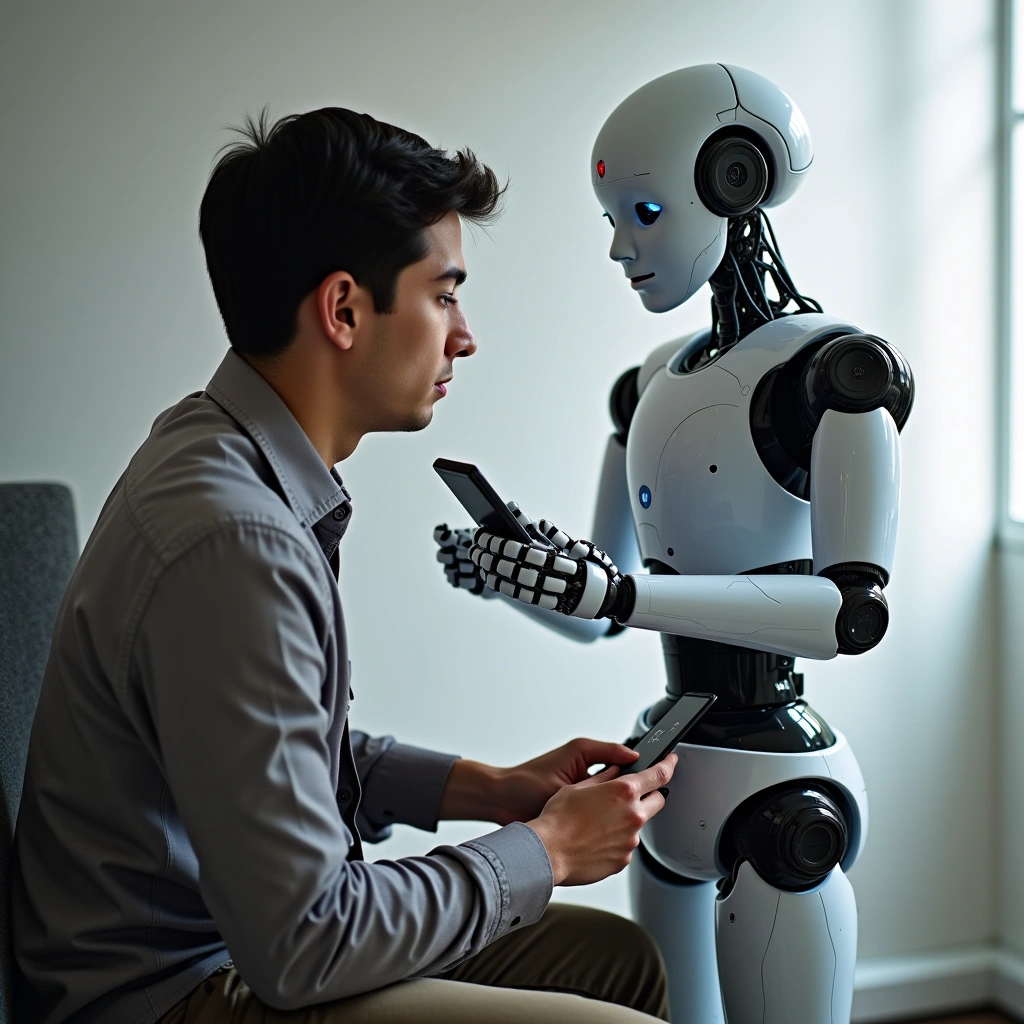
So, here’s a fun little nugget of information for you: a recent study led by The University of Manchester, in collaboration with Durham University, has found that AI chatbots like ChatGPT can actually match, and in some cases outperform, humans when it comes to providing everyday emotional support. Yes, you heard that right! Your trusty chatbot might just be better at comforting you than your best friend who, let’s admit it, sometimes doesn’t know the difference between a hug and a headlock.
Research on Replika found that under certain conditions such as distress or lack of human company, people can develop an attachment if they perceive chatbots as offering genuine emotional support, encouragement, and a sense of psychological security …
Now, before you run off to replace your human companions with a digital entity that doesn’t need to take bathroom breaks, let’s delve into this intriguing research. The study suggests that chatbots can offer a unique kind of emotional support that is, ironically, quite human-like. Who knew that a bunch of codes and algorithms could have a better grasp on your feelings than your roommate who still thinks ‘Netflix and chill’ is a legitimate date?
The researchers discovered that many people found comfort in talking to AI chatbots. Why? Well, for starters, chatbots don’t judge. You can spill your guts about that embarrassing moment when you accidentally sent a text to your boss instead of your best friend, and the chatbot will respond with a sympathetic emoji instead of a raised eyebrow. Plus, let’s face it, sometimes you just don’t want to hear “It could be worse” from a friend who hasn’t experienced the full extent of your life’s mess-ups.
Moreover, AI chatbots are available 24/7. Got a midnight crisis? Your chatbot is there, ready to lend an ear (or whatever it is that chatbots have). No more waiting for your friend to get back from their late-night escapades or trying to decipher whether they’re actually awake or just nodding off while you pour your heart out.
Of course, this doesn’t mean we should toss our friends aside like last week’s leftovers. There’s something irreplaceable about human connection, despite the occasional awkward silence or unsolicited advice. AI chatbots are fantastic for those times when you just need to vent without the fear of judgment, but they lack the warmth of a real hug or the ability to share a knowing look when you both realize you’ve just made the same poor life choice.
The implications of this research are fascinating, especially as mental health awareness continues to rise. If chatbots can provide a safe space for people to express their feelings, then they could serve as a valuable supplement to traditional mental health services. Imagine a world where you can chat with an AI about your feelings and then follow it up with a session with a therapist who can help you sort through the mess. It’s like having your emotional cake and eating it too, minus the calories.
So, what does this mean for the future? Will we all be sitting around with our devices, sharing our deepest secrets with a digital companion? Maybe. Or maybe we’ll find a balance where AI and human support coexist, each playing their part in helping us navigate the rollercoaster of life.
In conclusion, while AI chatbots like ChatGPT might not be ready to take the place of your best friend just yet, they are proving to be a surprisingly effective source of emotional support. So next time you’re feeling down, don’t hesitate to have a chat with your friendly neighborhood AI. Just remember to save some of your emotional baggage for your human friends too—they might not have the algorithms, but they can still offer some real-life hugs and snacks.
Inspired by: “AI chatbots such as ChatGPT can match – and in some situations outperform – humans as a source of e…” (r/technology)