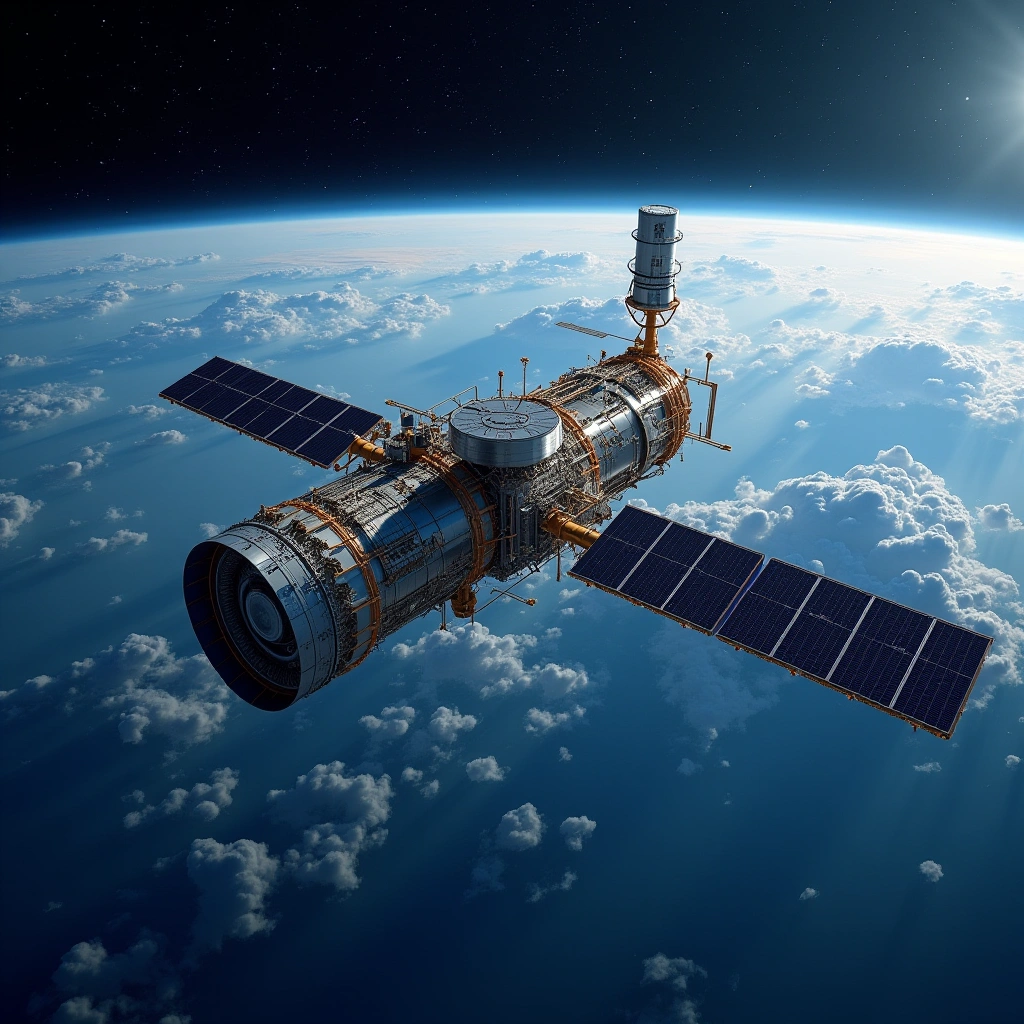
If you’ve ever looked up at the night sky and marveled at the stars, you might want to do it again—because soon, you might be staring at a whole lot more than just celestial bodies. With a staggering 16,000 satellites currently orbiting Earth, the prospect of adding another 100,000 to that mix is enough to make any space enthusiast (or environmentalist) raise an eyebrow. So, how on Earth—or rather, off it—are we going to manage this cosmic traffic jam?
Predictive models require extensive testing, such as checking them against historical satellite data, simulated faults and laboratory battery experiments before they are trusted in orbit. And any autonomous decision-making systems must be reliable enough for safety-critical applications while remaining under human oversight. The next great challenge of the new space age may not simply be launching another 100,000 satellites.
First, let’s take a moment to appreciate the sheer number of satellites already in orbit. That’s like having 16,000 cars in a single parking lot, and now someone’s suggesting we add 100,000 more. Sure, it sounds exciting, but have you ever tried finding a parking spot in a crowded lot? Good luck with that!
The first step in managing this impending satellite explosion is something called space traffic management (STM). Think of it as the air traffic control of the cosmos. Just as planes rely on air traffic controllers to avoid mid-air collisions, satellites will need a similar system to ensure they don’t end up crashing into each other. With the rise of mega-constellations—those large groups of satellites working together, like a very high-tech version of a school of fish—STM is becoming increasingly vital.
But why do we need so many satellites, you ask? Well, the answer is as complex as the technology itself. From improving global internet access to monitoring climate change, satellites play a crucial role in our daily lives. They help farmers know when to plant their crops, allow us to check the weather (and subsequently complain about it), and even help in navigation. So while we may grumble about the clutter in space, these little machines are doing a lot of heavy lifting.
Now, let’s talk about the elephant in the room: space debris. With so many satellites whizzing around, the risk of collisions increases exponentially. Imagine trying to navigate a crowded room filled with people who have no spatial awareness. It’s a recipe for disaster, and space is no different. Currently, there’s a growing concern about the amount of debris already floating around in orbit. This is where the concept of active debris removal comes in. Yes, you heard that right—there are plans to send robots up to clean up the mess. It’s like hiring a cosmic janitor to sweep up after the party.
Speaking of parties, let’s not forget about international cooperation. With so many countries launching their own satellites, it’s essential for nations to work together to create guidelines and regulations for space traffic management. After all, no one wants to be the neighbor who refuses to share the driveway.
In summary, while the thought of 100,000 additional satellites orbiting Earth might sound like a sci-fi movie plot, it’s a very real possibility. Managing this influx will require a combination of innovative technology, international collaboration, and a little bit of good old-fashioned common sense. So, the next time you look up at the stars, just remember: there’s a lot more going on up there than meets the eye. And who knows? Maybe one day, you’ll be able to say you were part of the generation that made space a little less cluttered and a lot more organized. Just don’t forget to bring your cosmic parking pass!
Inspired by: “There are already 16,000 satellites in Earth’s orbit. How will we manage the next 100,000?” (r/technology)