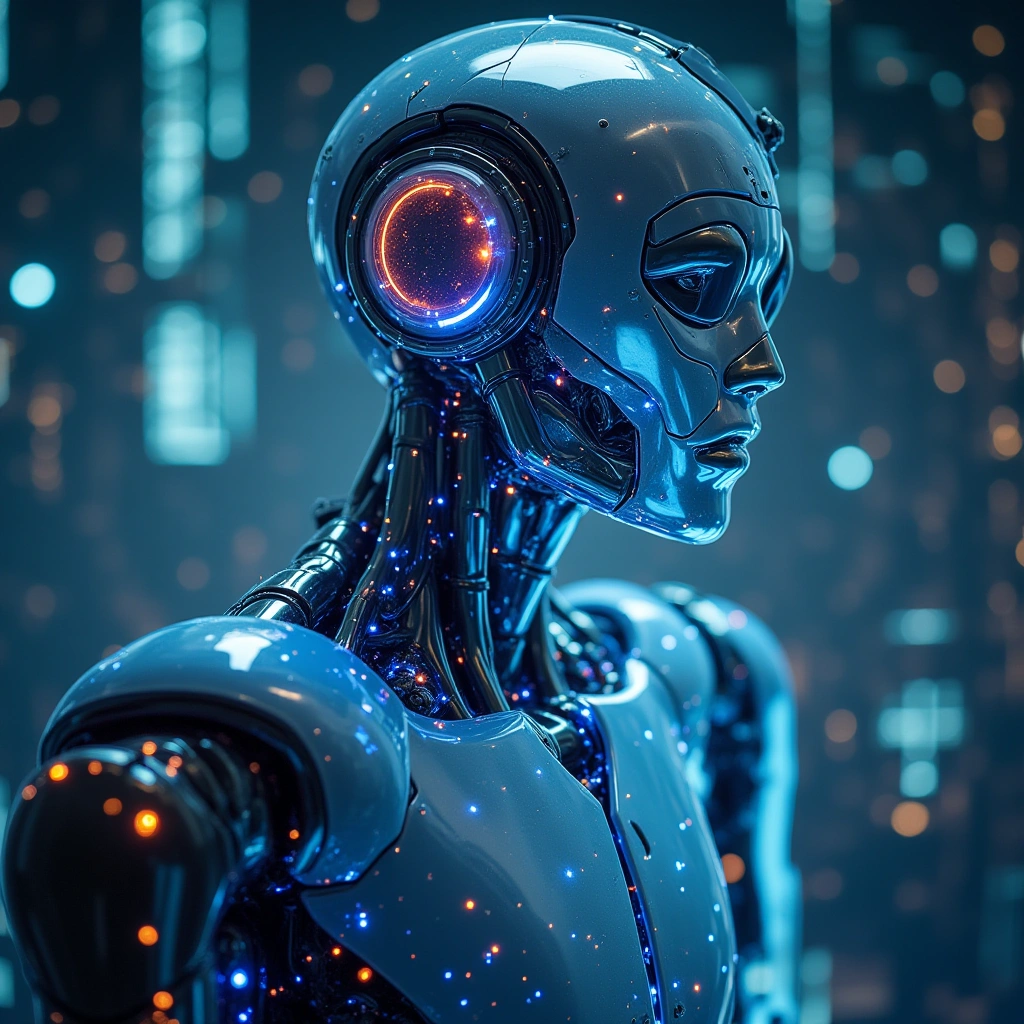
Ah, artificial intelligence—our shiny new toy that promises to revolutionize the way we live, work, and, let’s be honest, procrastinate. But as we dive deeper into this brave new world, it’s becoming increasingly clear that AI has a funny way of making the dumbest folks seem like rocket scientists while simultaneously turning the smartest minds into, well, let’s just say, less-than-genius versions of themselves. And the real kicker? It’s dragging the entire human average down in the process.
Machine learning uses algorithms to reduce the time required to make forecasts and increase model accuracy, which again is superior to the non-AI models that are used for this purpose.
Let’s talk about this phenomenon. You see, AI has this magical ability to make it seem like anyone can be a whiz at something, even if they’re just a few fries short of a Happy Meal. Need to write an essay? No problem! Just throw a few keywords into an AI text generator, and voilà! You have a masterpiece—at least until your teacher realizes you couldn’t spell “cat” without a prompt. It’s like handing a toddler a paintbrush and calling them Picasso; sure, they might create something colorful, but it’s probably just a mess of finger paints.
On the flip side, we have the intellectual elite—those who have spent years honing their craft, diving deep into the intricacies of their fields. You’d think they’d be the ones benefiting from AI, right? Wrong! Instead, they find themselves outsmarted by a program that can churn out data analysis faster than they can say “machine learning.” It’s like watching a chess grandmaster lose to a toddler playing checkers. The grandmaster is left scratching their head, wondering how they got outplayed by a glorified calculator.
This bizarre dynamic is leading to a curious trend: the average IQ of humanity is slowly but surely falling, thanks to our reliance on AI. It’s almost like we’re getting dumber by association. Why bother thinking critically when you can just ask an AI for the answer? It’s like outsourcing your brain to a silicon overlord. Sure, it saves time, but at what cost?
Now, I’m not saying AI is all bad. It has its perks, like helping us automate tedious tasks and providing us with recommendations for everything from what to watch on Netflix to which pizza place will deliver the fastest. But let’s not kid ourselves into thinking it’s making us smarter. We’re essentially training ourselves to be less capable, and that’s a slippery slope.
So, what’s the solution? Should we cast aside our digital companions and embrace the old-fashioned art of thinking for ourselves? Maybe. Or perhaps we just need to find a balance—using AI as a tool rather than a crutch. After all, it’s great to have a helpful sidekick, but we don’t need to let it take the lead in our lives.
In conclusion, while AI might give the illusion of intelligence, it’s essential to remember that true wisdom comes from critical thinking and experience, not just from typing a few words into a search bar. So, the next time you’re tempted to let AI do the heavy lifting for you, take a moment to ponder: is this really making me smarter, or am I just another cog in the machine? Because, let’s face it, nobody wants to be the one who gets outsmarted by a glorified toaster.
Inspired by: “Everybody’s Weirded Out by AI—Except the People Who Foist It on Us: AI makes the dumbest seem smart…” (r/technology)