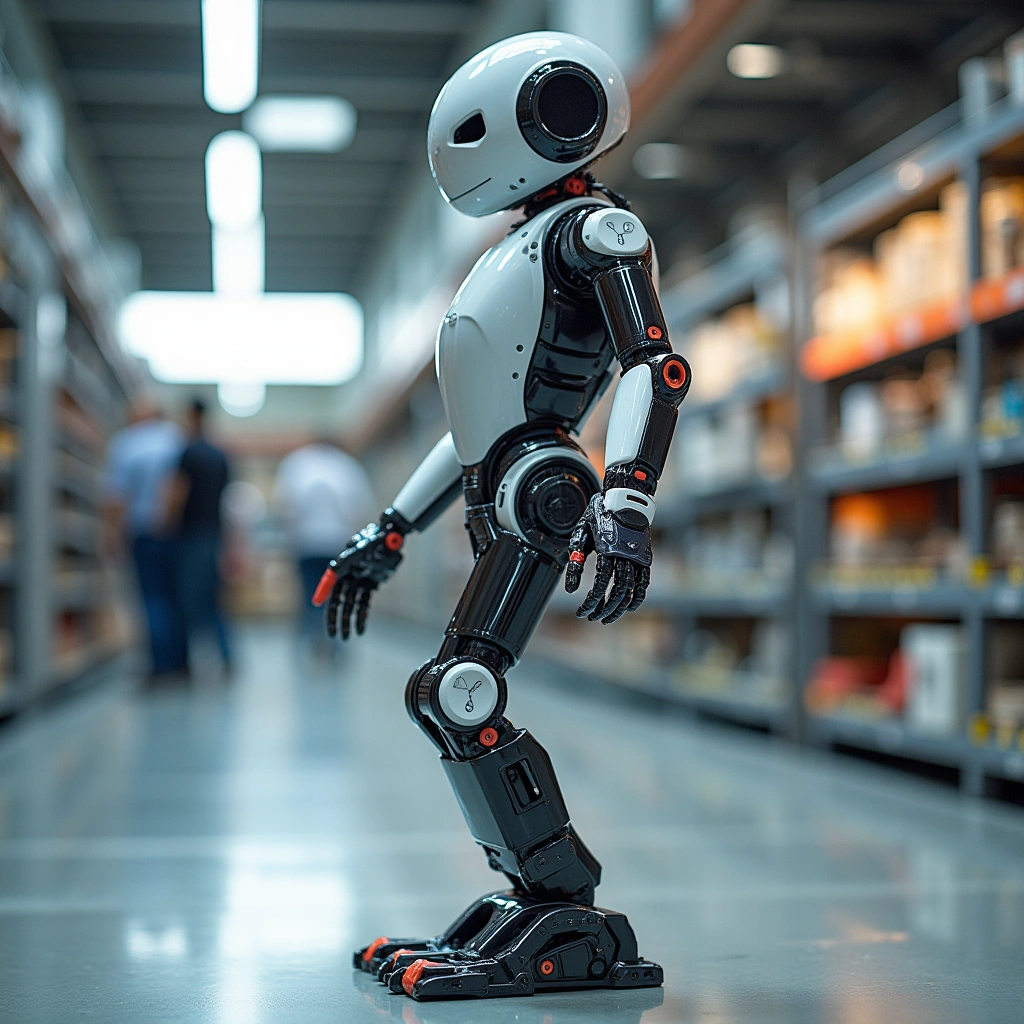
In a world where robots are no longer just the stuff of sci-fi movies, Walden Robotics has just made a splash with its recent launch of general-purpose robots that can learn and improve while actually doing work. And get this, they’ve kicked things off with a staggering $300 million in funding. You heard that right: three hundred million dollars! That’s enough cash to buy a small island or, you know, fund a few months of college tuition for your kids (if you have any, and if they’re not already too busy trying to figure out how to make TikTok videos).
Walden Robotics spun out from Toyota Research Institute with work by MIT professor Russ Tedrake on developing AI models to allow machines to operate in the real world — to help build cars or other items — without direct human control.
So, what exactly are these robots doing? Well, Walden Robotics aims to create machines that can adapt and improve their performance over time. Imagine a robot that can learn to make your coffee just the way you like it—no more burnt offerings or overly sweetened brews. Or perhaps a robot that can assist in manufacturing, learning from its mistakes and becoming more efficient with each passing day. The possibilities are endless, and that’s both exciting and a little terrifying.
Now, let’s talk about the money. $300 million is a lot of dough, and it’s coming from some serious investors who clearly believe in this technology. We’re not talking about your neighbor who invests in cryptocurrency every time he hears a rumor; these are folks who have done their homework. They see the potential in robots that can not only work but also evolve.
But here’s the kicker: while we’re all excited about the prospect of having a robot do our chores or take on menial tasks, we have to wonder about the implications. Will these robots take our jobs? Are we really ready to have a metal arm handling our daily grind? I mean, what happens to the barista when the robot learns to make the perfect latte?
And let’s not forget the ethical implications. Who’s responsible if a robot makes a mistake? Do we hold the company accountable, or do we just start throwing shade at the robot itself? “Hey, Robo-Barista, you call that a macchiato?”
On a lighter note, just think about the possibilities for entertainment. Imagine a robot stand-up comedian, learning from its audience reactions, continuously refining its jokes. “Why did the robot cross the road? To optimize its path to the other side!” (Okay, maybe it needs some work.)
In conclusion, Walden Robotics is stepping into the future with its ambitious plans for general-purpose, learning robots. They’ve got the funding, the technology, and hopefully, the ethical considerations in mind. As we watch this space, let’s just hope these robots remember who their human overlords are and don’t take over the world—or at least, not before we’ve had our morning coffee.
Inspired by: “Walden Robotics: General-purpose robots that continuously learn & improve while performing real wor…” (r/technology)