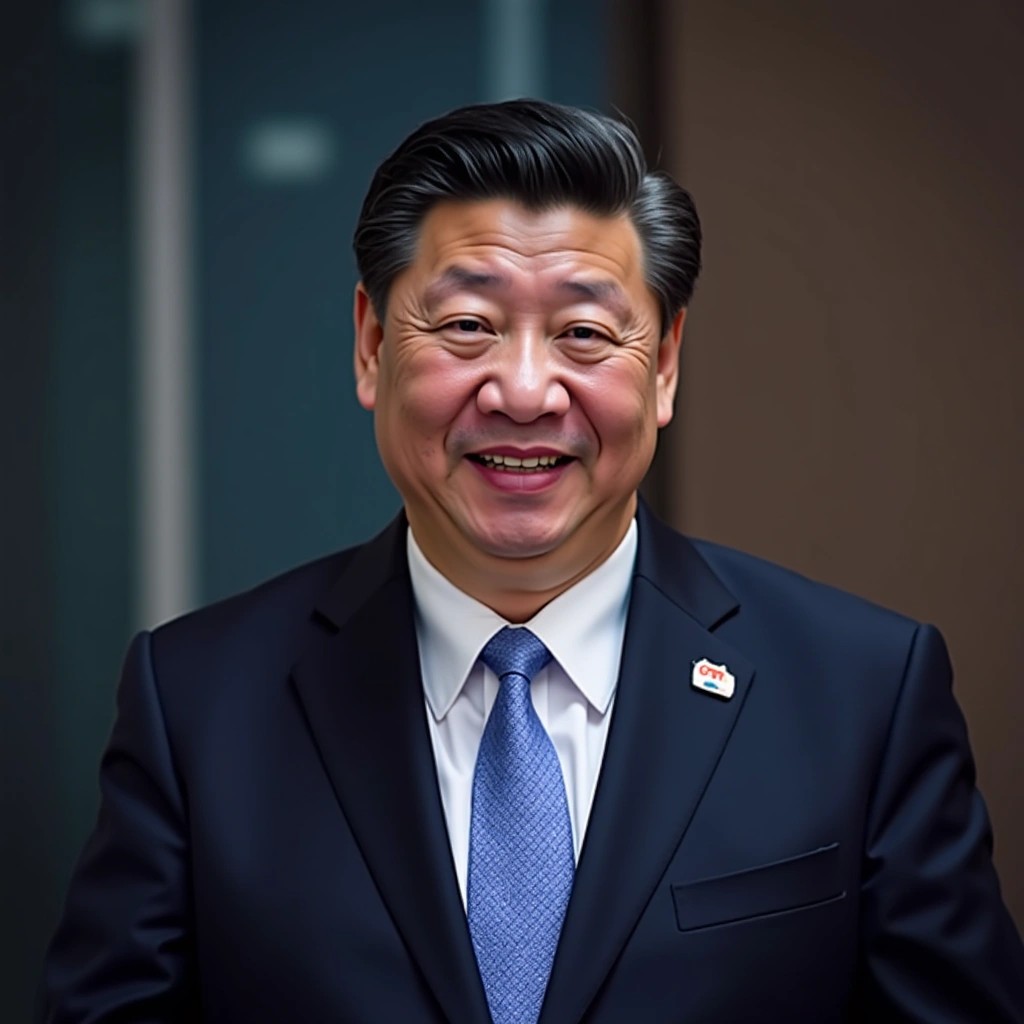
So, if you’ve been keeping an eye on global tech trends, you might have heard about Xi Jinping’s latest grand plan unveiled in Shanghai: an open-source, ‘people-centered’ AI vision. Yes, you read that right! It’s like someone decided to throw a tech party and invited the whole nation—minus the balloons and cake, of course.
SHANGHAI—Chinese leader Xi Jinping endorsed the building of open-source artificial-intelligence models, touting an approach that has helped the country catch up with the U.S.
Now, let’s break this down. Open-source software is like that community potluck where everyone brings a dish to share, except instead of potato salad, you get algorithms and data models. The beauty of open-source is that it allows developers to collaborate, innovate, and—most importantly—improve upon each other’s work. Imagine if every time someone baked a pie, they shared the recipe, and then everyone could tweak it to their liking. That’s the essence of open-source.
Xi’s vision is a bit more ambitious, though. He’s suggesting that AI should serve the people, which sounds great on paper. After all, who doesn’t want a friendly AI that knows their coffee order? But let’s not forget that when a government talks about serving the people, it can sometimes mean something a little different than what we envision. You know, like serving them a side of surveillance with a sprinkle of censorship.
During his speech, Xi emphasized the need for AI to be developed in a way that benefits society as a whole. This means focusing on areas like healthcare, education, and transportation. Because what could be more comforting than knowing that your doctor’s AI assistant is programmed to prioritize efficiency over empathy? But hey, at least the wait time for your check-up might be slashed in half!
The idea of a ‘people-centered’ approach also raises some eyebrows. Who defines what ‘people’ means in this context? Are we talking about the average citizen, or is this more about the interests of the state? Because let’s be real, there’s often a fine line between serving the public good and serving the government’s agenda.
China has been making waves in the AI field for a while now, aiming to take the lead on the global stage. With this new initiative, Xi is clearly trying to position China as a hub for innovation and ethical AI development. The hope is that by fostering an open-source environment, China can attract talent and ideas from around the world. But let’s be honest; it’s not exactly a free-for-all. There are still some pretty strict guidelines and controls in place.
Now, if you’re wondering what this means for the rest of the world, you’re not alone. Other countries might want to pay attention to how this unfolds. As China pushes forward with its AI ambitions, the global tech landscape could shift significantly. Companies in the West might need to rethink their strategies and possibly adopt more open-source practices to compete. Or, they could just sit back, sip their lattes, and hope for the best.
In conclusion, Xi’s open-source AI vision is a bold step into a future that promises to be both exciting and a little nerve-wracking. While the idea of a collaborative, people-centered approach sounds lovely, we should all keep our eyes peeled to see how this plays out in reality. After all, in the world of AI, the only constant is change—and sometimes, that change comes with a side of unpredictability. So, buckle up, folks! It’s going to be an interesting ride.
Inspired by: “Xi sets out China’s open-source, “people-centred” AI vision in Shanghai” (r/technology)