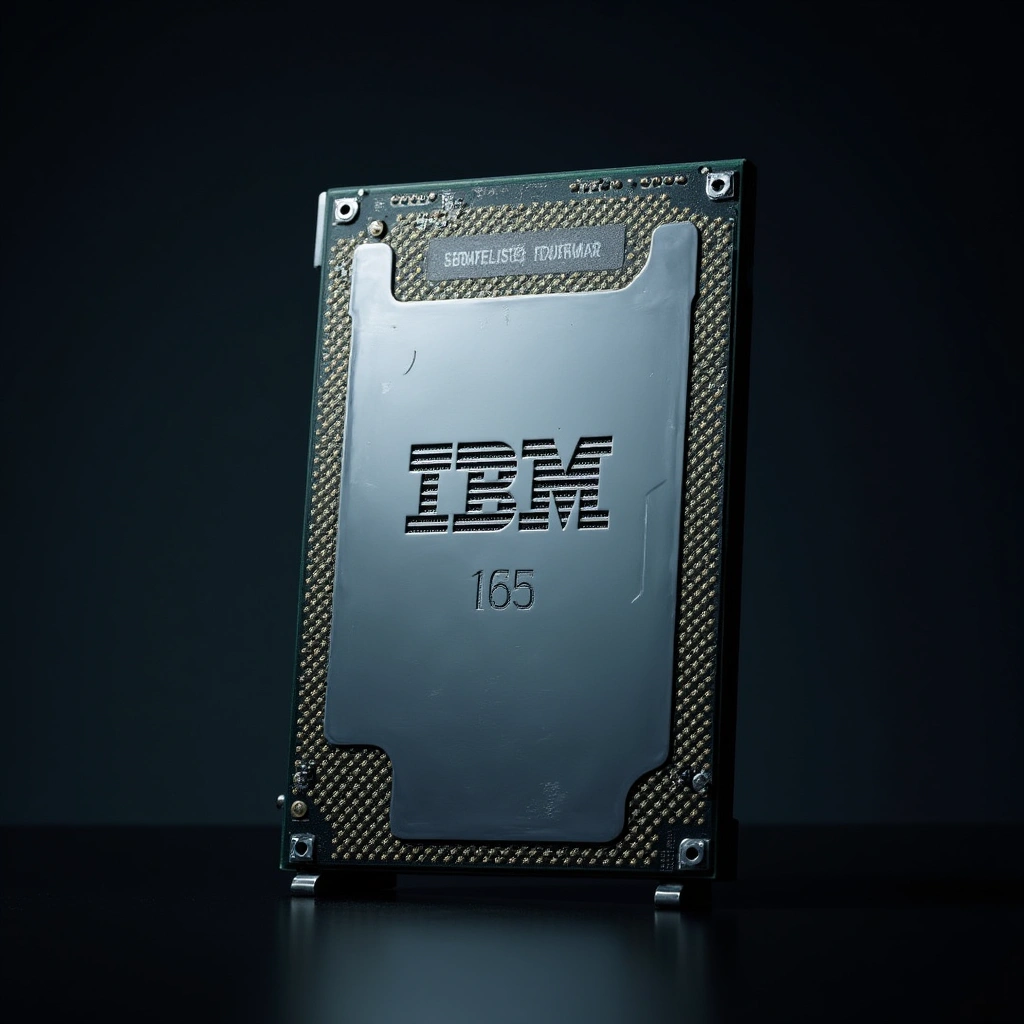
IBM manufactured magnetic disk storage devices from 1956 to 2003, when it sold its hard disk drive business to Hitachi. Both the hard disk drive (HDD) and floppy disk drive (FDD) were invented by IBM and as such IBM’s employees were responsible for many of the innovations in these products …
Ah, the late 1990s—a time when we were all blissfully unaware of how quickly technology would outpace our wildest dreams. Enter IBM’s Microdrive, a miniature marvel that packed the power of a hard drive into a compact package barely larger than a quarter. This was no ordinary feat of engineering; it was like cramming a full Thanksgiving dinner into a lunchbox. But, as it turns out, not even the most impressive turkey can compete with a flash memory dessert.
So, what exactly was the Microdrive? Launched in 1999, this tiny wonder boasted capacities of 170MB and 340MB, which, let’s be honest, sounds more like the size of a modern-day Instagram filter than an actual hard drive. Measuring in at just 1.69 x 1.43 x 0.20 inches and weighing a feather-light 0.56 ounces, it was essentially the engineering equivalent of a cute puppy. It had a spinning platter, a motor, and a moving read/write head—all the classic components of a hard drive but miniaturized to the point where it could practically fit between two fingers.
IBM made sure the Microdrive was compatible with existing technology, allowing it to plug into CompactFlash Type II slots, which were already being used by cameras and laptops. So, for a brief moment, it seemed like IBM had cracked the code to portable storage. But, as we all know too well, technology has a way of turning the tables faster than you can say “data transfer speed.”
While IBM was busy making its adorable Microdrive, flash memory was quietly doing push-ups in the corner, getting ready to take over the world. Flash memory improved at a pace that made mechanical drives look like they were stuck in molasses. It wasn’t long before flash memory became the go-to storage solution, largely because it offered more storage capacity, faster access speeds, and—let’s not forget—no moving parts to break down.
Imagine you’re at a party, and you bring a fancy cheese platter, but then your friend shows up with a pizza that’s not only cheaper but also has all the toppings you love. That’s basically what happened here. Flash memory was the pizza that everyone wanted, while IBM’s Microdrive was left in the corner, still trying to explain why it was a great idea to use spinning platters.
IBM initially explored using microelectromechanical systems (MEMS) for components like the motor and actuator, but eventually decided that traditional designs were more reliable and cost-effective. It’s a bit like choosing to build a house out of bricks instead of candy. Sure, candy is fun, but you probably don’t want to live in a gingerbread house when it rains.
In the end, the Microdrive was a clever solution to a problem that flash memory would soon solve with ease. Early digital cameras needed more storage than most people could afford, and for a hot minute, the Microdrive looked like the hero of the story. But as flash memory became more affordable and capable, the Microdrive’s days were numbered.
So, what’s the takeaway from this tale of technological triumph and tragedy? Well, it’s a reminder of how fast the tech landscape can shift. One moment you’re the star of the show, and the next you’re headlining a museum exhibit on “Obsolete Technologies.” IBM’s Microdrive was undoubtedly an impressive engineering feat, but when it comes to tech, it’s not just about being innovative; it’s about being adaptable. And sometimes, even the cutest little hard drives can’t compete with the relentless march of progress.
So, here’s to you, Microdrive! You may have been outpaced by flash memory, but you’ll always be remembered as the adorable underdog of portable storage. Cheers!
Inspired by: “How Flash Memory Obliterated IBM’s Quarter-Sized Hard Drive in Record Time”