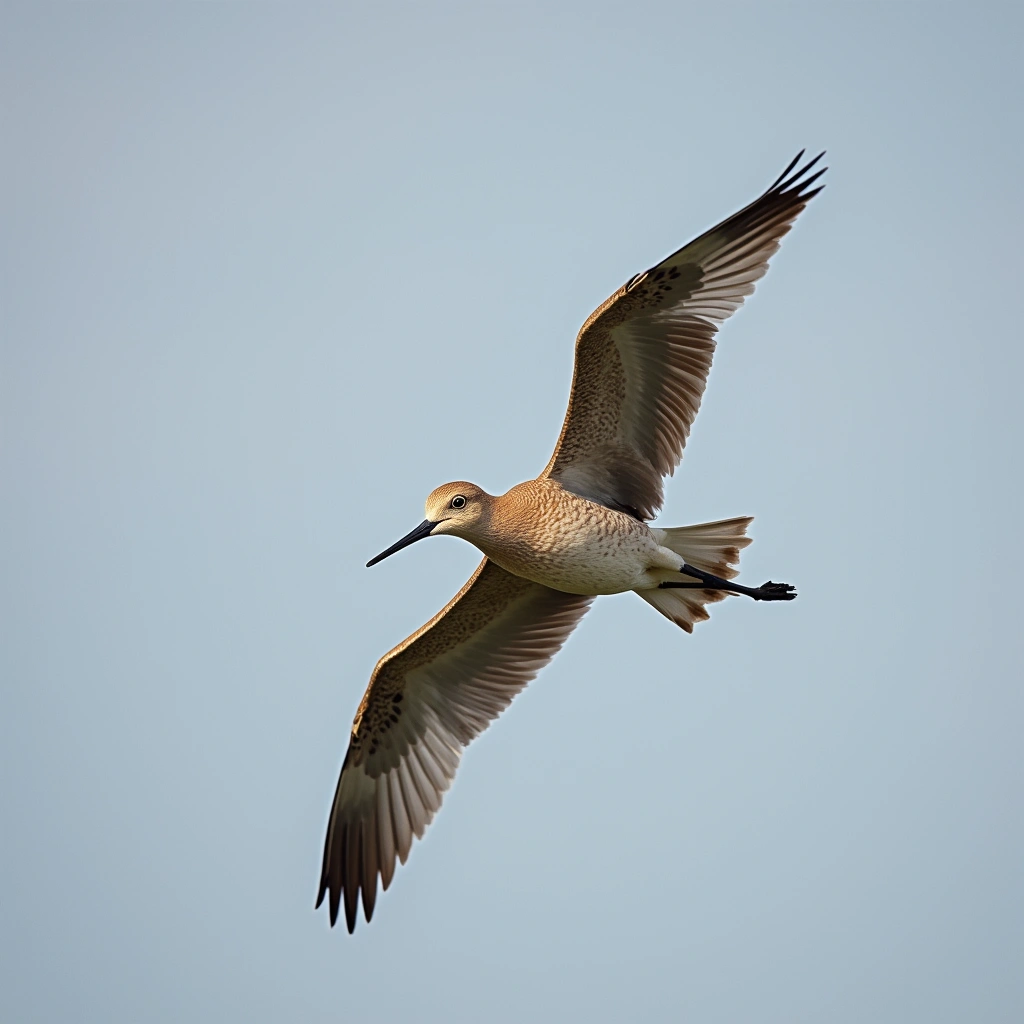
Aided by strong tailwinds, they average speeds of 56 km per hour. In 2007, one female (“E7”) completed her 11,680 km journey in just over 8 days, setting the world record for the longest recorded non-stop flight of any bird (Gill et al.
Have you ever thought about what it would be like to fly 7,250 miles without a pit stop? Well, the bar-tailed godwit has, and it’s not just a casual daydream for this little bird; it’s a reality! In a feat that would make even the most seasoned frequent flyer envious, a female bar-tailed godwit set a record by flying nonstop from western Alaska to New Zealand. And get this—it took her 8.1 days to do it, all while completely ignoring the concept of eating or drinking. That’s right, no snacks, no hydration breaks, just pure, unadulterated flying.
This remarkable journey, documented by researchers back in 2009, was no one-off event. A total of seven satellite-tagged female godwits participated in this extreme migration, covering distances ranging from 8,117 to 11,680 kilometers. To put that in perspective, the previous record holder, a far eastern curlew, flew a measly 6,500 kilometers. The godwits nearly doubled that distance, and they did it over the vast, unwelcoming expanse of the ocean. Talk about an overachiever!
Preparing for Takeoff: The Godwit’s Transformation
Now, before you start thinking that godwits are just nature’s version of a jet plane, let’s break down how they prepare for such a monumental flight. First off, these birds need to pack on the pounds—literally! In the weeks leading up to their departure, they feast on the delightful clams and worms of the Yukon-Kuskokwim Delta. By the time they’re ready to take off, they’ve become walking fuel tanks, with fat making up about 55% of their body mass. Who knew that being a bird could be so much like preparing for a Thanksgiving feast?
But that’s not all. In a move that sounds like something out of a sci-fi movie, the godwits actually shrink their digestive organs before takeoff. Yes, you heard that right! They effectively trade a portion of their gut for fuel because, let’s face it, they won’t be dining in-flight. I mean, can you imagine a godwit struggling to find an open food court mid-air? Talk about awkward!
The Energy Burn
Flying for over eight days burns energy at a staggering rate—about eight to ten times their resting energy level. That’s like running a marathon every day for over a week, but without the water stations or cheering crowds. Researchers noted that the combination of intensity and duration in these flights is essentially unmatched in the animal kingdom. Who knew being a bird could be so exhausting?
The Art of Timing
But hold your horses, or in this case, your birds! It’s not just about packing on the pounds and taking off; timing is everything. Godwits are not the type to just wing it (pun intended). They wait for the right weather conditions, specifically the tailwinds from the Aleutian low-pressure systems that sweep into the Gulf of Alaska in autumn. It’s like waiting for the perfect moment to catch a wave if you’re a surfer—except the wave is a gust of wind, and the board is a bird.
The Return Journey
When these intrepid travelers finally touch down in New Zealand, they’re not just landing as they were when they took off. They arrive with their fat reserves depleted and their digestive systems in need of a serious reboot. It’s a transformation that runs in reverse: from a fuel tank back to a functional bird. Talk about a post-vacation glow!
Conclusion
So, the next time you find yourself grumbling about a long flight or the lack of snacks on board, just remember the bar-tailed godwit. It’s a little bird that takes on the ocean like a champ, proving that sometimes, the journey is indeed the destination—especially when you’re flying nonstop for over a week. Nature sure knows how to put on a show, doesn’t it? Who needs a first-class ticket when you can be a bar-tailed godwit?
Inspired by: “The Incredible Journey of the Bar-Tailed Godwit: Nature’s Nonstop Aviator”