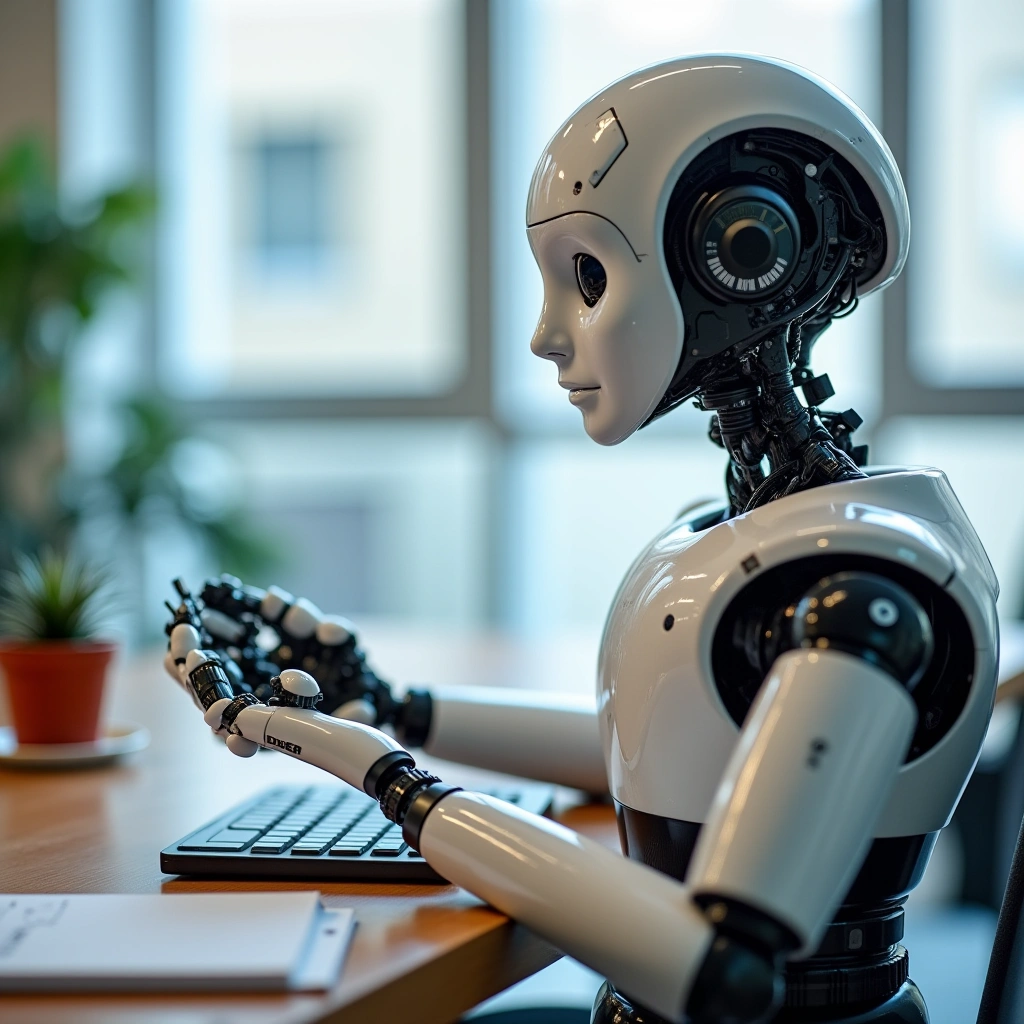
In a move that can only be described as both groundbreaking and slightly terrifying, an upstate New York school district has decided to deploy a humanoid robot teacher this fall. Yes, you heard that right. A robot. Teaching children. In a classroom. It sounds like the plot of a sci-fi movie, but here we are, living in the future!
This oversight role of teaching may be supported by the robot's ability to collect and maintain information about each child, and even to recommend what may be needed next, but the teacher will need to defend that data from illegitimate access. Given the speed at which AI is developing and is realized in robot form, it is surprising how little attention is being given to it by those who concern themselves with “the future of education” (e.g., BERA, 2016; DeArmond et al., 2018).
Now, before you start imagining a classroom full of students staring wide-eyed at a metal figure reciting Shakespeare, let’s break down what this actually means. The robot, named “Mr. TeachBot 3000” (okay, I might have just made that name up, but it has a nice ring to it, don’t you think?), is designed to assist teachers rather than replace them. So, no need to panic just yet. Your child’s favorite teacher isn’t being swapped out for a robot with a personality akin to a toaster.
The school district claims that this innovative approach is aimed at improving student engagement and providing personalized learning experiences. Because, let’s be honest, sometimes kids just don’t listen when a human tries to explain algebra for the 47th time. But maybe, just maybe, if Mr. TeachBot 3000 delivers the same lesson in a robotic monotone, they’ll finally pay attention. Who knew that a lack of human emotion could be the key to unlocking the mysteries of math?
But wait, there’s more! The robot is equipped with artificial intelligence that allows it to adapt to students’ learning speeds. This means if your child is struggling with long division, Mr. TeachBot can slow down and offer additional help without getting frustrated, unlike that one substitute teacher who threw a chalkboard eraser at Timmy for not paying attention. (Just kidding, that didn’t happen… or did it?)
Of course, there are those who are skeptical about this whole robot-teacher thing. Some parents are wondering if this means their kids will start referring to their teachers as “Unit 47” or if there will be a classroom uprising led by the most rebellious fifth grader. And let’s not forget the classic question: what happens when the Wi-Fi goes down? Will Mr. TeachBot just stand there, frozen in time, while students start panic Googling how to fix him?
Moreover, there’s also the ethical debate about the role of technology in education. Are we slowly replacing human interaction with robots? Will our children grow up only knowing how to engage with machines rather than actual people? It’s a valid concern, especially when you consider the fact that kids are already spending way too much time on their devices as it is.
But, for now, let’s keep an open mind. The robot teacher is an experiment, and like all good experiments, it might blow up in our faces… or it could be the best thing since sliced bread. Who knows? Maybe in a few years, we’ll all be reminiscing about how we were once taught by a robot while sipping our lattes in a fully automated coffee shop.
So, as the school year approaches, let’s keep our fingers crossed for Mr. TeachBot 3000. May he bring knowledge, engagement, and a little bit of humor to the classroom. And if he starts trying to teach kids how to take over the world, well, that’s when we might have to intervene. Until then, let’s embrace this brave new world of education—one robot at a time!
Inspired by: “Upstate NY school district will deploy a humanoid robot teacher this fall” (r/technology)