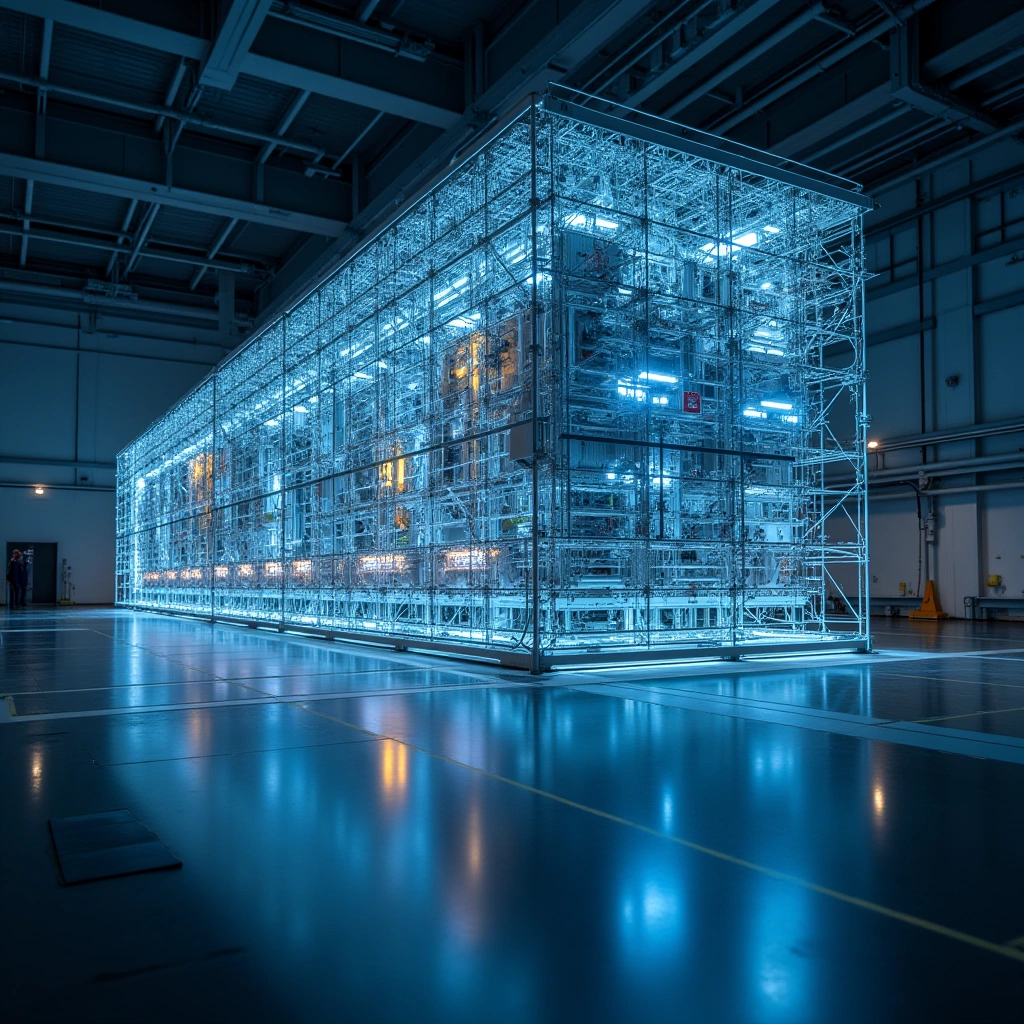
Alright folks, gather ’round because we’re diving into some electrifying news. No, I’m not talking about the latest TikTok dance challenge or the new flavor of kombucha. We’re talking about the U.S. testing its very first digital nuclear reactor. Yes, you heard that right! Digital. Nuclear. Reactor. It sounds like something out of a sci-fi movie, but it’s very much real and happening right now.
The control room will also house the digital twin of the Purdue University Multidimensional Integral Test Assembly (PUMA), a scaled-down model of an advanced light-water reactor. PUMA will be upgraded with digital instrumentation and controls and used for research toward small modular reactor and other advanced reactor technologies. The development of these digital twins and control room is funded by the Department of Energy’s Office of Nuclear Energy as part of a consortium led by Purdue.
Now, before you start imagining a giant glowing green mushroom cloud, let’s get a few things straight. This isn’t your average reactor. The digital nuclear reactor is designed to be more advanced, efficient, and, dare I say, less prone to dramatic meltdowns. And by meltdowns, I mean the kind that can lead to catastrophic events and not just a bad day at work.
So, what exactly is a digital nuclear reactor? In simple terms, it utilizes advanced digital technologies to enhance operations and safety. Think of it as giving the good old nuclear reactor a tech upgrade. Instead of relying solely on traditional, sometimes outdated methods, this reactor is equipped with smart systems that can analyze data in real-time, predict potential issues, and improve overall performance. It’s like putting your grandparent’s old flip phone on a diet of protein shakes and kale smoothies — suddenly, they’re a lot more spry and capable of keeping up with the times.
The testing phase is crucial. This is where the reactor will undergo a series of trials to ensure it can handle the pressures of real-world operations. Imagine a high-tech version of a gym session, where the reactor is sweating it out on the treadmill, trying to prove it can lift the heavy weights of energy production without collapsing under pressure. And let’s be honest, we all know how hard it can be to keep up a good workout routine, especially when you’re tempted by the couch and a bag of chips.
One of the main goals of this project is to pave the way for safer and cleaner energy production. Nuclear energy has always been a hot topic (pun intended). It’s efficient and produces low carbon emissions, but the risks have made it a controversial subject. By incorporating digital technologies, the hope is to minimize those risks and make nuclear power a more viable option in our fight against climate change. Because let’s face it, we could all use a little less carbon in our lives — unless it’s in the form of a well-cooked steak.
The implications of successful testing are enormous. If this digital reactor can pass the tests with flying colors, we might be looking at a future where nuclear energy is more widely accepted and utilized. This could lead to a significant shift in how we power our homes, businesses, and perhaps even that elusive flying car we’ve all been promised.
In conclusion, the testing of the U.S.’s first digital nuclear reactor is not just a step forward in technology; it’s a leap towards a cleaner, safer energy future. So, as we keep an eye on this exciting development, let’s hope the reactor doesn’t throw any tantrums during testing. Because we all know that when technology gets temperamental, it’s usually the humans who end up with the short end of the stick. Stay tuned, folks, because the future of energy is about to get a whole lot more interesting!
Inspired by: “US’ first digital nuclear reactor begins testing for advanced action” (r/technology)