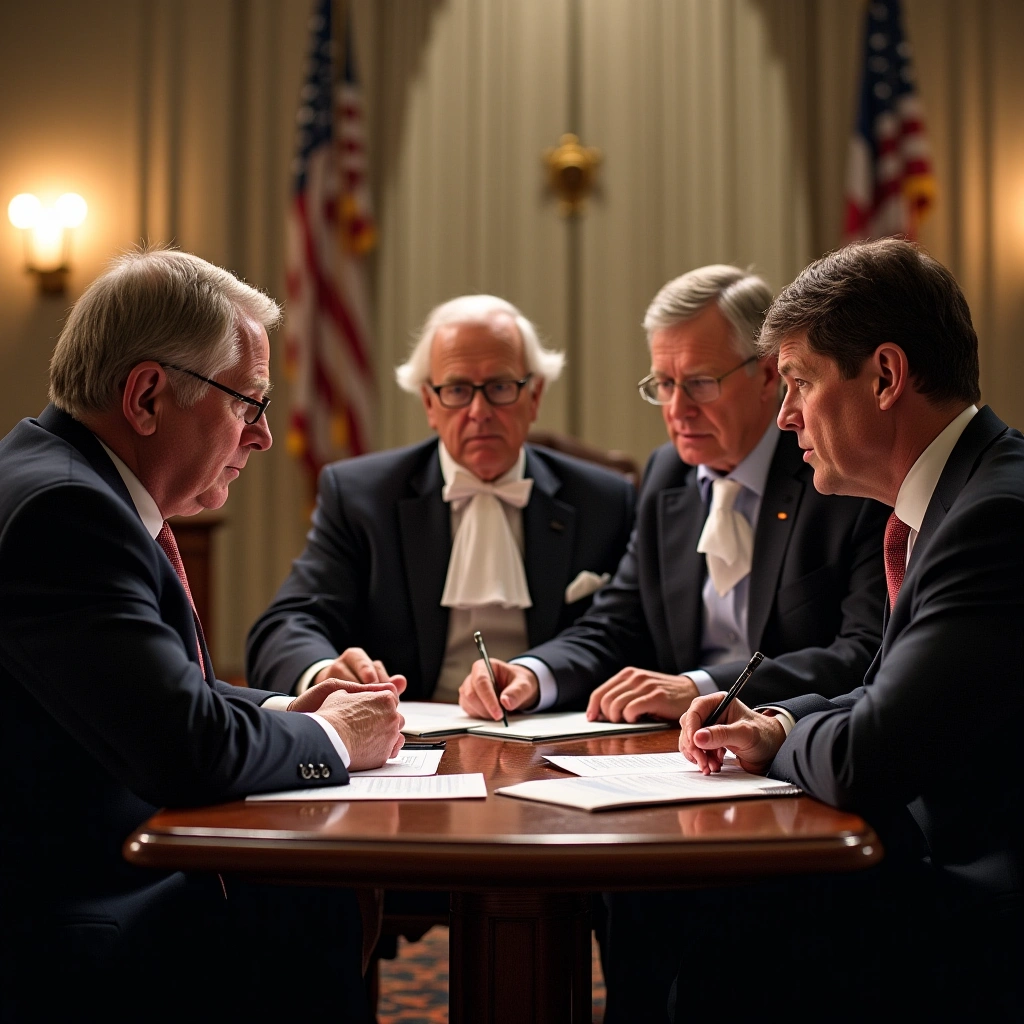
Ah, the Federal Communications Commission (FCC) – that esteemed body that regulates our airwaves and ensures we don’t accidentally tune into a 24-hour channel dedicated to cat videos (not that we’d complain). Recently, the FCC’s General Counsel decided to channel the spirit of the Founding Fathers to argue that the First Amendment allows for banning pornography. Yes, you heard that right. Apparently, the dudes who wrote the Constitution had a strong opinion on what goes on behind closed doors in the digital age.
Another senior Trump administration … regulation. From the Founding through most of American history, courts allowed the legislature to control pornographic material….
Let’s take a quick stroll down memory lane. The First Amendment is often cited as the gold standard of free speech, protecting everything from your neighbor’s rant about the government to your cousin’s questionable TikTok dance videos. So, it’s a bold move to suggest that this sacred amendment could be used to justify banning something as ubiquitous as porn.
Now, before we dive deeper into this, let’s clarify: the Founding Fathers weren’t exactly sitting around in their powdered wigs discussing the implications of the internet. They were more concerned with things like taxation without representation and whether to put a wig on a dog. So, it’s a bit of a stretch to assume they had a comprehensive plan for regulating adult content in 21st-century America.
The FCC’s General Counsel argument seems to hinge on the idea that the First Amendment was meant to protect the public from harmful content – you know, the same logic that’s used to justify not letting kids watch R-rated movies. But here’s the catch: banning pornography is a slippery slope. Today it’s porn; tomorrow it’s your favorite raunchy comedy. Next thing you know, we’re all stuck watching reruns of ‘The Andy Griffith Show’ on loop.
It’s important to note that the FCC doesn’t have the authority to outright ban pornography. That power lies with Congress and the courts. So, when the General Counsel makes these claims, it’s a bit like me saying I can fly because I believe in myself. Inspirational? Maybe. Viable? Absolutely not.
Critics of this argument have pointed out that using the First Amendment to justify a ban on adult content is like trying to use a sledgehammer to drive in a nail – it’s messy and you’ll probably end up hurting yourself. The beauty of free speech is that it’s messy! It allows for all kinds of ideas, even the ones we don’t like.
And let’s be real: trying to ban porn is like trying to ban the sun from shining. It’s just not going to happen. People are resourceful, and the internet is vast. If you think a ban is going to stop someone from accessing adult content, I’ve got a bridge to sell you.
In conclusion, the FCC General Counsel’s claim might have been an attempt to ride the coattails of the Founding Fathers, but it’s clear that the spirit of free speech is very much alive and kicking (and probably watching some questionable content). While the debate about regulating adult content continues, one thing is certain: the Founding Fathers would probably be more interested in how to get a Wi-Fi signal in their wooden houses than in banning porn. And let’s hope they stay that way.
Inspired by: “FCC General Counsel Channels Founding Fathers To Falsely Claim First Amendment Allows Banning Porn” (r/technology)