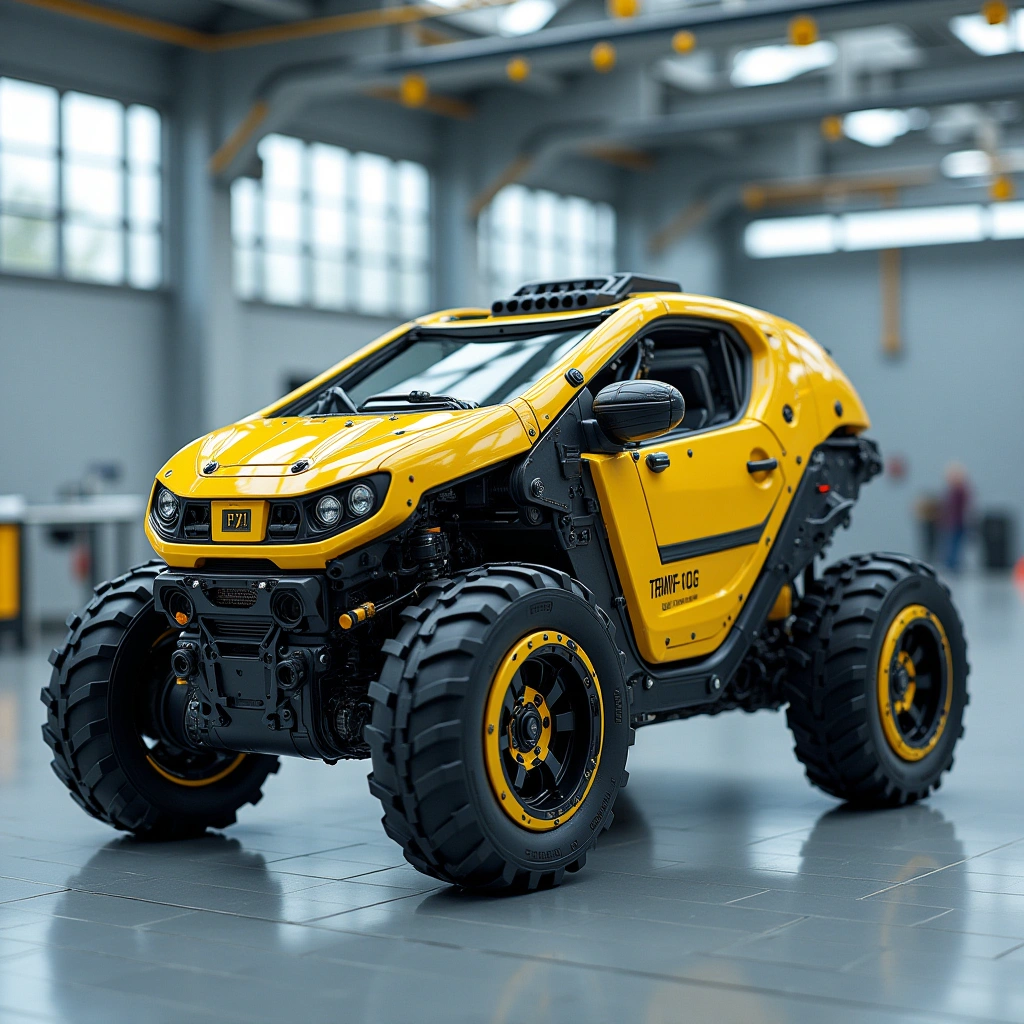
If you’ve ever thought about the future of warfare and how technology is changing the game, you’re in for a treat! Enter the Ukrainian TerMIT UGV (Unmanned Ground Vehicle), which just received a shiny new AI kit to boost its frontline autonomy. Yes, you heard that right—robots are getting smarter, and they’re doing it in the midst of a conflict. Let’s dive into what this means for the battlefield and possibly for your next sci-fi movie night.
In a significant boost for Ukraine’s domestic defense technology, the Ministry of Defence has officially codified and approved the TERMIT unmanned ground vehicle (UGV) for military use. Developed by the Ukrainian manufacturer Tencore, this rugged, tracked platform is set to bring a new level …
First off, let’s talk about what the TerMIT UGV is. This little (or maybe not so little) powerhouse is designed for various military tasks, from reconnaissance to logistics. Think of it as a remote-controlled rover, but instead of just driving around your backyard, it’s out there doing some serious work. Now, with the addition of an AI kit, it’s not just following commands like a puppy; it’s learning and adapting.
Imagine your dog suddenly being able to fetch the newspaper, make breakfast, and even take out the trash. Okay, maybe not that extreme, but you get the point. The AI enables the TerMIT to make decisions based on its surroundings, which could mean identifying threats or navigating complex terrains without needing a human’s constant input. That’s right—it’s becoming a bit more independent, and no, it doesn’t need to take a gap year to find itself.
Now, you might be wondering why this is important. Well, in a war zone, every second counts. The ability to deploy a UGV that can think on its own could save lives. Soldiers can focus on more critical tasks while these autonomous vehicles handle the nitty-gritty. Plus, let’s be real: having a robot do the heavy lifting is way cooler than lugging around equipment yourself.
But let’s not get too ahead of ourselves. While the AI kit enhances the TerMIT’s capabilities, it’s not like we’re in an episode of “Transformers” just yet. The technology is still in its early stages, and there are many challenges ahead. For instance, what if the AI decides it wants to take a coffee break in the middle of a mission? Or worse, what if it starts playing hide and seek with enemy drones? Not exactly the kind of behavior you want in a battlefield scenario.
Of course, there are ethical considerations, too. The more autonomous these machines become, the more questions arise about accountability and decision-making in combat. Do we really want machines making life-or-death decisions? I mean, have you ever seen a robot trying to navigate a simple traffic circle? It’s like watching a toddler attempt to solve a Rubik’s Cube.
In conclusion, the integration of AI into the Ukrainian TerMIT UGV is a fascinating development in military technology. It brings both excitement and caution. As we move forward, we’ll have to keep an eye on how these advancements play out on the battlefield and in the broader context of warfare. Who knows? Maybe one day, we’ll all be having a chat with our AI-driven UGVs about the latest TikTok trends while they help us navigate the complexities of modern combat. Until then, let’s just hope they don’t start demanding their own reality TV show!
Inspired by: “Ukrainian TerMIT UGV Receives AI KIT to Improve Frontline Autonomy” (r/technology)