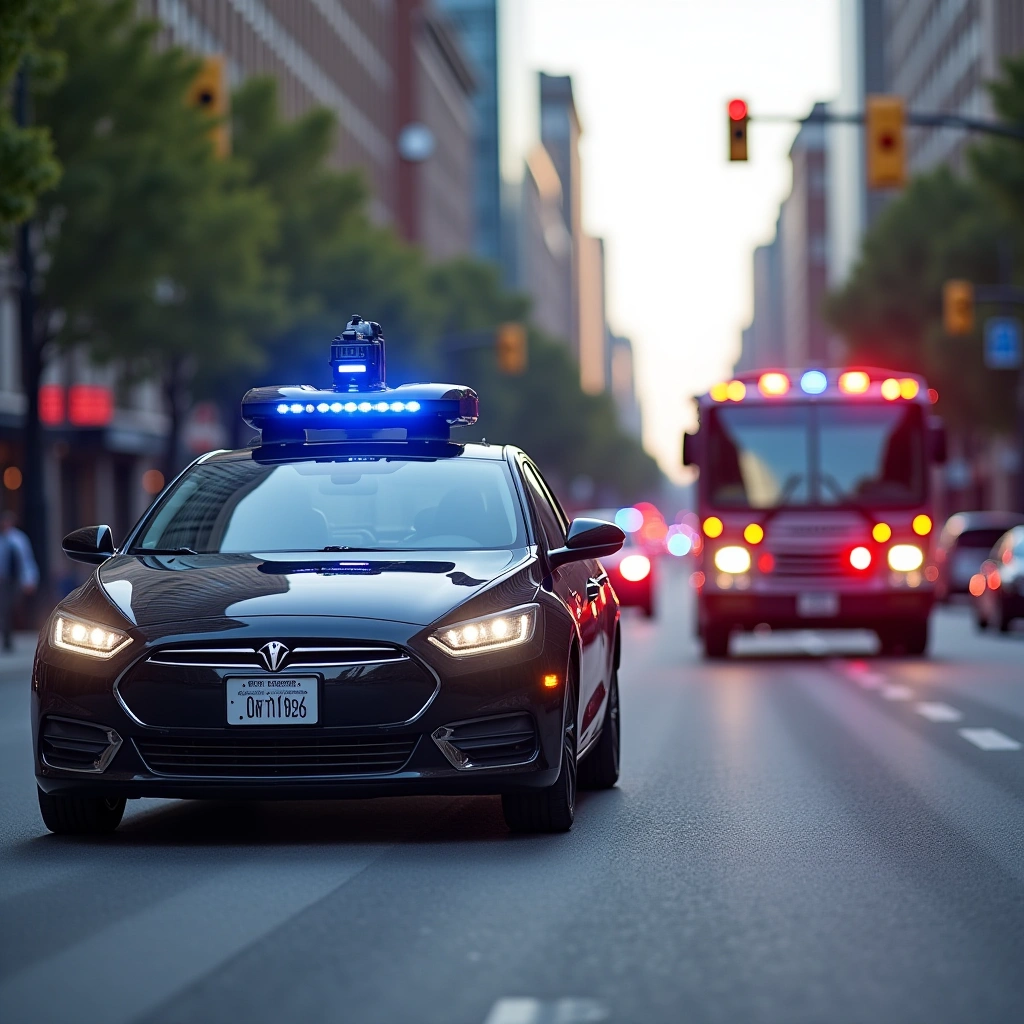
In a world where we’re all eagerly waiting for our flying cars (or at least self-driving ones that don’t try to take us for a joyride into a tree), a new twist has emerged in the saga of autonomous vehicles. The U.S. government has taken a firm stance, urging companies to get their act together regarding one particularly important aspect of self-driving technology: how these cars interact with emergency vehicles. Because let’s face it, if your car can’t recognize a police car with lights flashing, we might need to rethink that whole ‘robot overlords’ future.
Autonomous vehicle companies are required to report their crash data to the NHTSA as of June 2021. The first reported incidents are from August 2019, and the data has been updated through June 17, 2024.
So, what’s the deal? As it stands, self-driving cars are designed to navigate roads and avoid obstacles. However, when an emergency vehicle zooms by, sirens blaring, it seems some of these high-tech machines are still trying to figure out what to do. Do they stop? Do they pull over? Or do they just freeze like a deer in headlights? Spoiler alert: if your self-driving car is anything like my uncle at a family reunion, it might just stand there awkwardly, unsure of its next move.
The National Highway Traffic Safety Administration (NHTSA) has raised concerns about the potential for self-driving cars to interfere with emergency response efforts. Imagine a scenario where an ambulance is racing to save a life, and a self-driving car decides that now is the perfect time to take a leisurely detour through the nearest drive-through. Not exactly what we want to see on our evening news, right?
The call to action from the government is not just a suggestion; it’s a necessity. With the increasing number of self-driving vehicles on the road, we must ensure they are programmed to recognize and yield to emergency vehicles. It’s not rocket science, folks – it’s just basic human decency, or in this case, basic robot decency.
Companies like Tesla, Waymo, and others need to step up their game. They should be developing algorithms that prioritize the safe passage of emergency vehicles. This means that when that ambulance is barreling down the road, the self-driving car should know to pull over faster than a teenager hearing their parents come home early from work.
Of course, there are those who might argue that self-driving cars are still in their infancy and that we shouldn’t expect perfection right away. But let’s be real – if they can navigate through rush hour traffic without turning into a scene from a demolition derby, they should definitely be able to figure out how to let an ambulance pass without causing a traffic jam of their own.
It’s also worth noting that addressing this issue isn’t just about keeping emergency responders happy. It’s about saving lives. When emergency vehicles can’t get to their destinations quickly, the consequences can be dire. Every second counts, and if a self-driving car is holding up an ambulance because it can’t make up its mind, that’s a problem we need to fix – and fast.
So, what’s the takeaway here? Self-driving cars need to be equipped with the right tech to prioritize emergency vehicles. Otherwise, we might as well be handing out licenses for bumper cars instead of cars that are supposed to drive themselves. Let’s hope the companies behind these vehicles take this seriously because the last thing we need is a self-driving car that thinks it’s the star of a bad reality show where the stakes are lives.
In conclusion, while we’re all excited about the future of self-driving technology, let’s remember that the road ahead isn’t just about convenience and cutting-edge gadgets. It’s also about ensuring that our emergency services can do their job without being held up by a car that can’t figure out whether to stop or go. So here’s to hoping that the tech companies, in their quest for innovation, don’t forget the one simple rule: when in doubt, let the sirens through.
Inspired by: “Companies must address self-driving car interference with emergency vehicles, US says” (r/technology)