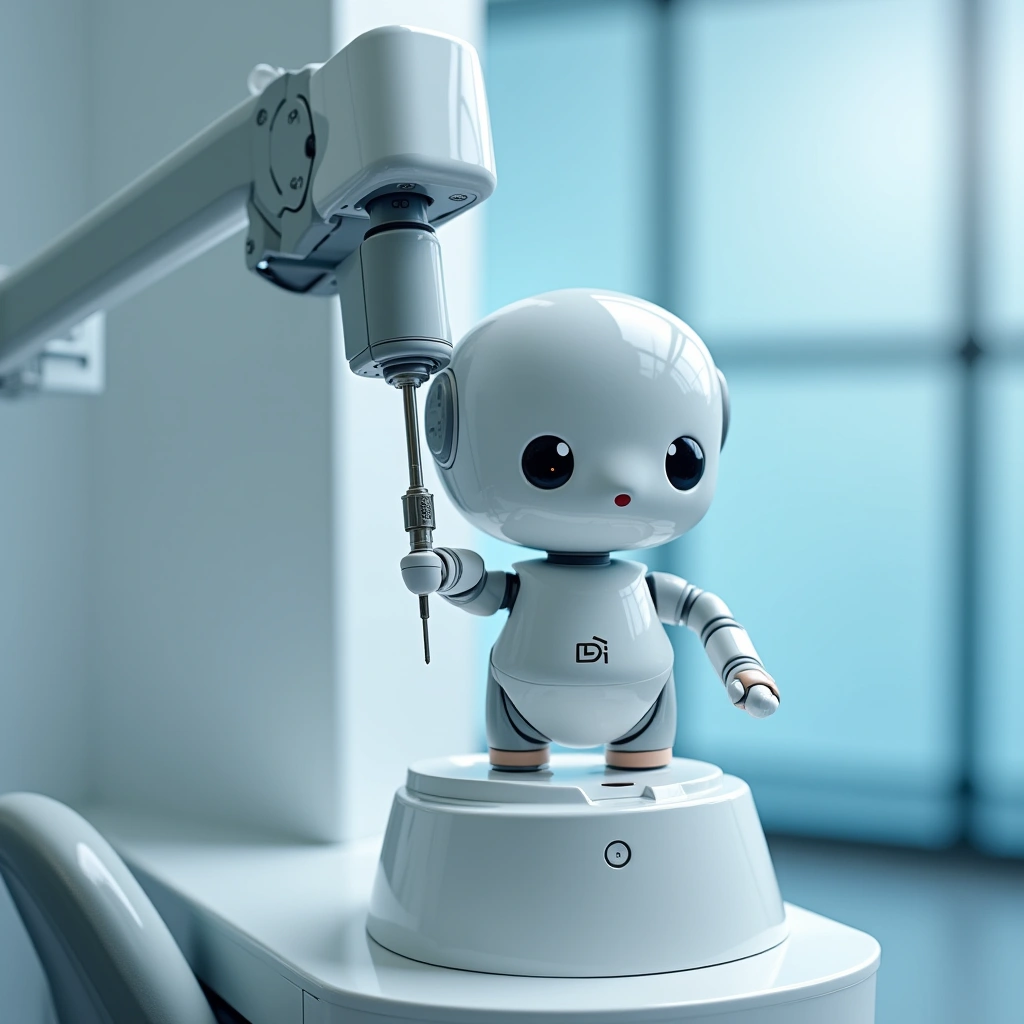
Imagine sitting in the dental chair, the smell of antiseptic in the air, and the sound of that dreaded drill buzzing in your ears. Now picture this: instead of your dentist wielding that drill, it’s a robot. Yes, you read that right! A new dental robot has been developed that attaches directly to your teeth for drilling. Talk about a new twist in the age-old battle between humans and machines!
The motors and control hardware remain outside the patient’s mouth near the dental chair. Flexible shafts, cables, and tubes transfer movement and power to the miniature device. This arrangement allowed the team to keep the robot small enough to fit within the limited space available during treatment while still providing the mechanical motion needed for drilling. The robot is designed to be attached to a custom-made splint created from a digital scan of the patient’s teeth.
So, what’s the deal with this new dental robot? For starters, it’s designed to make your dental experience more efficient and perhaps, just maybe, less terrifying. The robot can precisely drill into your teeth, reducing the chances of human error. Let’s face it, we’ve all had that moment when the dentist hits a nerve, and all of a sudden, you’re considering a career change just to avoid that pain. With a robot doing the drilling, you might just avoid those cringe-worthy moments.
But how does it work? The robot attaches to your teeth—yes, you’ll be sporting a shiny new accessory for your next dental appointment. Once attached, it uses advanced technology to locate cavities and drill them out. It’s like having a mini mechanic for your mouth. Just make sure to ask the dentist if you can keep the robot as a pet afterward. I mean, who wouldn’t want a robot that drills instead of a dog that digs?
Now, let’s talk about the elephant in the room: the fear factor. Many people already have anxiety about visiting the dentist, and the thought of a robot taking over the drilling process might seem like something straight out of a sci-fi horror movie. But fear not! The developers assure us that the robot is designed to be safe and effective. Think of it as a friendly assistant rather than a menacing overlord. If anything, it’s probably just as nervous about drilling your teeth as you are about sitting in that chair.
Of course, there’s the question of what this means for dentists. Will they be replaced by robots? Well, not quite. Dentists still play a crucial role in diagnosis and treatment planning. The robot is more of a tool in their toolbox, much like that fancy laser they like to show off. So, don’t worry; your dentist isn’t going to be out of a job anytime soon. They’ll still be there to hold your hand (or at least talk to you about your weekend plans) while the robot does the dirty work.
In conclusion, while the idea of a dental robot drilling into your teeth might sound like something out of a futuristic movie, it’s actually a step towards making dental care less painful and more efficient. Just remember to ask your dentist if you can take a selfie with the robot after your appointment. Because let’s be honest, who wouldn’t want to show off their new robotic dental buddy on Instagram? Just make sure to tag it—who knows, it might just go viral!
Inspired by: “New Dental Robot Attaches to Patient’s Teeth for Drilling” (r/technology)