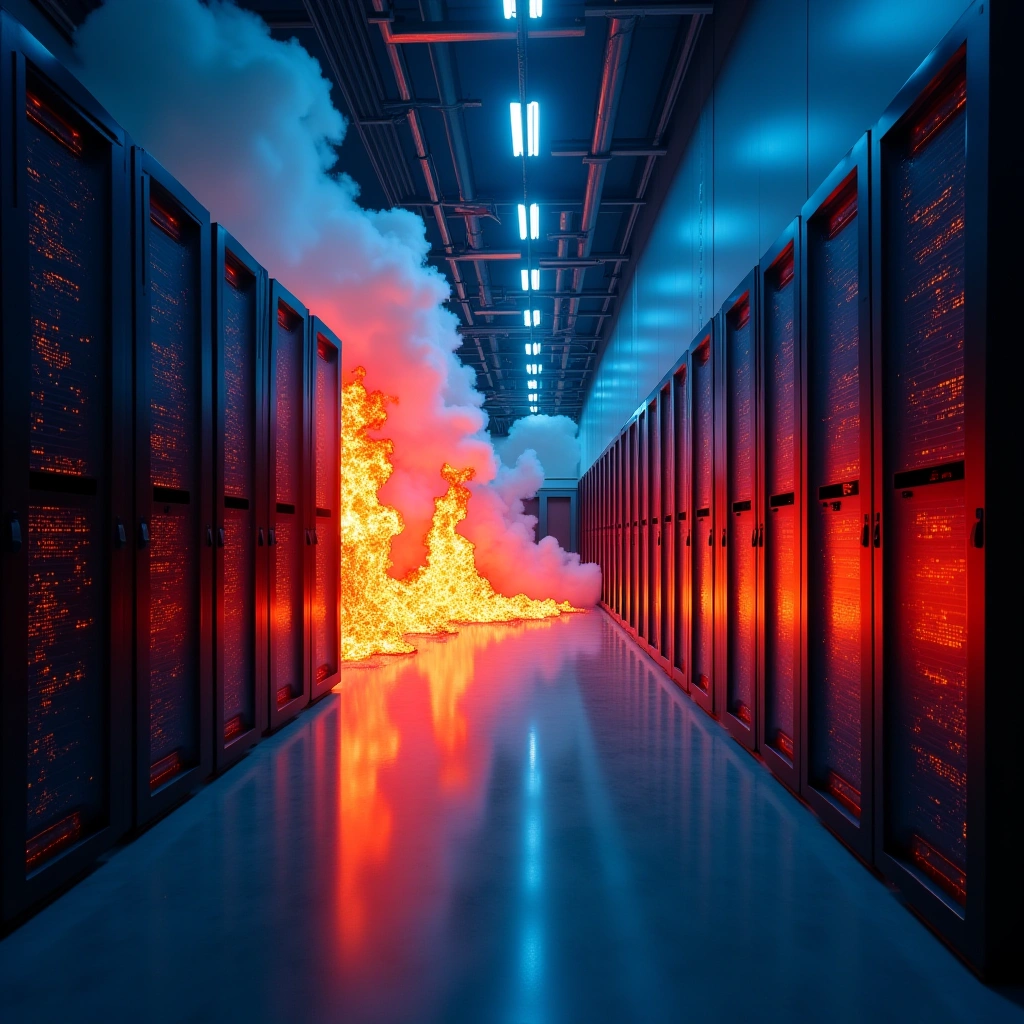
As summer rolls in with its sweltering heat waves, it seems like everyone is preparing for a little fun in the sun—or perhaps a little too much fun, as the case may be. But for those living near data centers, the excitement is a little more like impending doom. A recent Reddit post from user /u/Lotus532 captures the sentiment perfectly: “We are screwed.” And honestly, who can blame them?
Heat waves critically endanger data centers by triggering cooling system failures and power outages, as seen in recent events where record temperatures in London and Texas caused major outages for Google, Oracle, and Twitter. The situation is compounding due to AI workloads, which generate intense, dense heat that strains traditional air-cooling infrastructure and increases demand on already stressed electricity grids. Consequently, operators are racing to adopt liquid cooling and efficient power management to prevent equipment damage and ensure service continuity.
Let’s break it down. Data centers, those sprawling facilities filled with rows of servers and blinking lights, are like the overzealous relatives of the tech world. They consume a staggering amount of energy, and when the temperature rises, they crank it up even more. It’s like they’re trying to win a gold medal in energy consumption Olympics—except nobody asked for this competition.
When the heat wave hits, data centers don’t just sit back and sip iced tea. No, they ramp up their cooling systems to keep those servers from turning into molten piles of silicon. This is where the pollution comes into play. The increased energy demand often means more fossil fuel consumption, which, spoiler alert, isn’t great for the environment. So while you might be sweating it out at the beach, the folks living near these data centers are wondering if they should invest in a gas mask instead of sunscreen.
Residents near these tech behemoths are rightfully concerned. They’re not just battling the heat; they’re also dealing with the fallout from the pollution generated by these facilities. Air quality can take a nosedive, leading to respiratory issues and other health problems. It’s like a double whammy: you’re hot, and now you might be coughing up a lung just for living in proximity to a bunch of computers that are working harder than your cousin at a family reunion trying to impress everyone with his new job at a startup.
And let’s not forget about the glorious irony of it all. We rely on data centers for everything—from streaming our favorite shows to storing our cat videos. But as we bask in the glow of our screens, the people living near these data centers are left to deal with the consequences. It’s like a bad relationship: we take, take, take, and leave them to clean up the mess.
So, what can be done? Well, it’s a complex issue that requires a multi-faceted approach. Perhaps we could start by investing in renewable energy sources for data centers. Imagine a world where data centers are powered by solar panels instead of fossil fuels. It sounds idyllic, right? We could save the planet while still binge-watching our favorite shows.
In the meantime, it’s important for those of us not living in the shadow of a data center to be aware of the impact our tech habits have on our neighbors. Next time you’re about to stream that new show, maybe think about how your entertainment choices could be affecting someone else’s air quality.
In conclusion, let’s not leave our neighbors out in the heat. We can enjoy our digital lives without turning their world into a pollution-filled sauna. Maybe it’s time we all started caring a little more about the environment—and a little less about that next episode of whatever we’re binging. After all, what’s the point of a great show if you can’t breathe while watching it?
Inspired by: “‘We are screwed’: People near data centers dread heat wave pollution.” (r/technology)