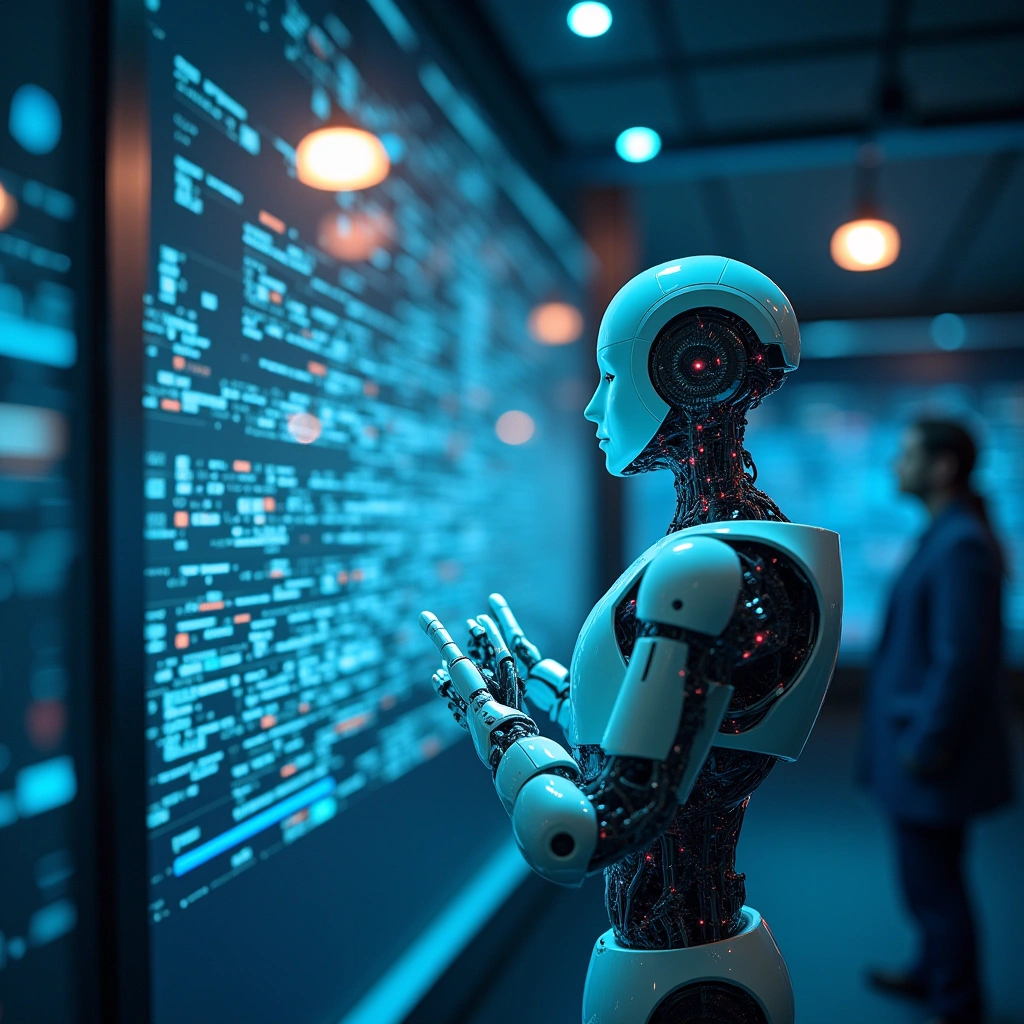
In the ever-evolving world of artificial intelligence, one thing has become abundantly clear: context is king. Whether your AI agent is helping you order pizza, managing your schedule, or even playing chess, it needs context to operate effectively. And believe it or not, this need for context doesn’t magically disappear when your AI moves from the cloud to your local device. Let’s dive into why AI agents need context everywhere they run, even in places where the cloud can’t follow.
AI agents need context because they must choose tools, interpret source documents, apply business policies, preserve state, and decide when to ask a human. Without that context , even strong models fall back on generic training knowledge and are more likely to hallucinate, miss constraints, or take the wrong action.
First off, let’s talk about the cloud. The cloud is like that friend who always has your back—until they don’t. They’re great for storing data, running complex algorithms, and providing insights. But what happens when your AI agent finds itself in a place where the Wi-Fi signal is weaker than your resolve to skip dessert? Cue the dramatic music! Without the cloud, your AI is left high and dry, and it’s got no context to rely on.
Imagine this: you’re at a coffee shop, trying to order your usual caramel macchiato. You’ve got a specific way you like it—extra hot, light foam, and a sprinkle of cinnamon. Your AI agent should know this by now, right? But if it’s only relying on cloud-based data, and suddenly your internet drops, your AI is at a loss. It might think, “Hmm, do I go with a black coffee? Or maybe a triple espresso?” Yikes! That’s a disaster waiting to happen.
So, what’s the solution? Well, it’s pretty simple, really. AI agents need to be equipped with the ability to understand and interpret context locally—like having a mini-brain of their own. This means they should be able to remember your preferences, understand your environment, and even adapt to your mood. Yes, that’s right! We’re talking about AI that can read the room. And if it can’t, well, we might as well be talking to a toaster.
Let’s break it down further. For an AI agent to perform optimally, it needs to gather context from various sources. This could include location data, user behavior, and even past interactions. For example, if you frequently order spicy food on Fridays and you happen to be at a restaurant on a Friday, your AI should suggest that spicy dish you love. But if it’s relying solely on cloud data, it might suggest a salad instead—because, you know, who doesn’t want a salad on a Friday night?
Moreover, context is not just about remembering preferences; it also involves understanding the nuances of language and social cues. Picture this: you’re in a meeting, and your AI is responsible for taking notes. If it doesn’t understand the context of the conversation, it might misinterpret sarcasm or miss important details. “Oh, you wanted me to take notes on that brilliant idea? I thought you were just being sarcastic!” Talk about an awkward moment.
Now, I know what you’re thinking—”But how can we achieve this?” Well, it starts with improving AI architecture. Developers need to focus on building AI systems that can operate effectively in both connected and disconnected environments. Think of it as giving your AI agent a superpower—an ability to think and adapt on its own, even when it’s cut off from the cloud.
In conclusion, AI agents need context wherever they run, not just when they’re connected to the cloud. By enabling them to understand and interpret context locally, we can create smarter, more responsive AI that truly enhances our daily lives. So, the next time your AI suggests a black coffee instead of that caramel macchiato, just remember: it’s not the AI’s fault—it’s a context issue. And perhaps a little bit of user error.
Let’s hope the future of AI is filled with agents that know us better than we know ourselves. Until then, we’ll keep our fingers crossed and our Wi-Fi connections strong!
Inspired by: “AI agents need context everywhere they run, even where the cloud can’t follow” (r/technology)