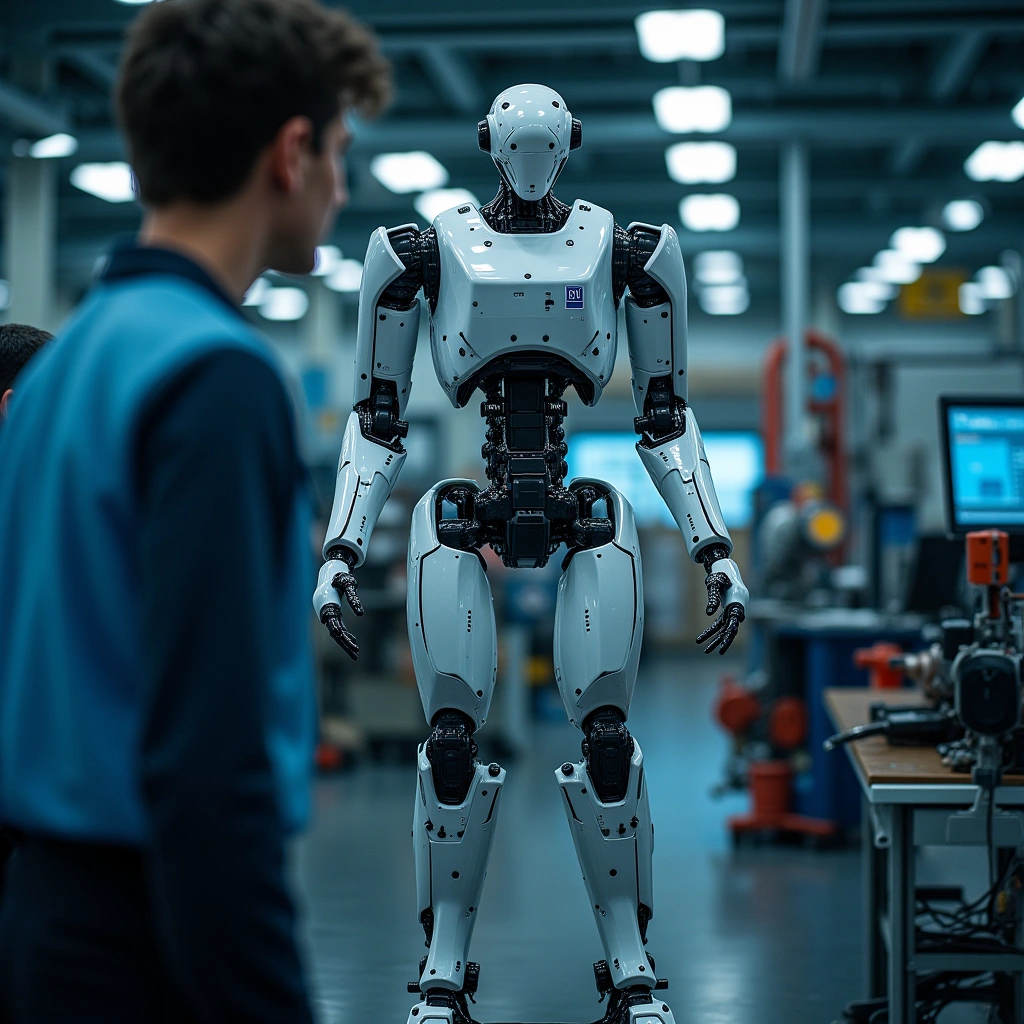
Ah, the age-old tale of man versus machine. In the latest chapter of this riveting saga, General Motors (GM) has made headlines for swapping out 1,000 hardworking Detroit workers for a mere 50 robots. And what’s the payoff for this bold move? A cool $4.25 billion check, of course! Because who doesn’t want to make a fortune while simultaneously sending a thousand people into the job market?
Collaborative robots are specifically designed to assist workers with demanding jobs while operating in close proximity to people on the factory floor. The introduction of the new equipment has drawn criticism from the United Auto Workers. Local 22, which represents Factory Zero employees, has filed grievances related to the installation of the robots. Union leaders argue that workers are understandably concerned when automation arrives shortly after significant job cuts.
Let’s break this down, shall we? GM, once a titan of American manufacturing and a symbol of Detroit’s bustling economy, decided that investing in a few shiny robots was the way to go. I mean, who needs human labor when you can have a robot that won’t complain about the temperature of the break room coffee or take a sick day?
These robots, equipped with all the latest technology, can perform tasks with precision and speed that would make even the most skilled worker blush. They don’t have to worry about getting stuck in traffic, they don’t need bathroom breaks, and they definitely don’t require a vacation—unless you count the occasional software update as a trip to the beach.
But let’s talk about the human cost here. With 1,000 jobs disappearing, it’s hard not to feel a bit sorry for the folks who are now left wondering how they’re going to pay their bills. Sure, automation can lead to increased efficiency and lower production costs, but at what price? The reality is that these workers were not just cogs in the machine; they were people with families, dreams, and, dare I say it, a love for the occasional office potluck.
Now, GM can sit back and admire their shiny new robots while cashing that hefty check. But let’s not forget the societal impact of such a move. As more companies turn to automation to cut costs and boost profits, we might find ourselves in a situation where the number of jobs available is shrinking faster than you can say “robot uprising.”
So, what’s the solution? Are we doomed to watch as robots take over the world, one assembly line at a time? Not necessarily. The key lies in adapting to the changes and investing in retraining programs for displaced workers. Maybe it’s time to teach them how to fix those robots or, even better, how to program them to do their old jobs.
In the end, while GM might be celebrating their financial windfall, it’s important for all of us to consider the broader implications of automation. After all, the future may be bright and shiny, but it’s also a little bit cold and metallic. And let’s be honest, a world run by robots is probably going to lack a certain warmth—and a lot of good office snacks.
So here’s to the brave new world of automation, where we’ll need to find new ways to work, live, and, most importantly, eat cake at the office. Because if the robots take over, who else is going to bring the dessert?
Inspired by: “GM Swapped 1,000 Detroit Workers for 50 Robots, Then Cashed a $4.25 Billion Check” (r/technology)