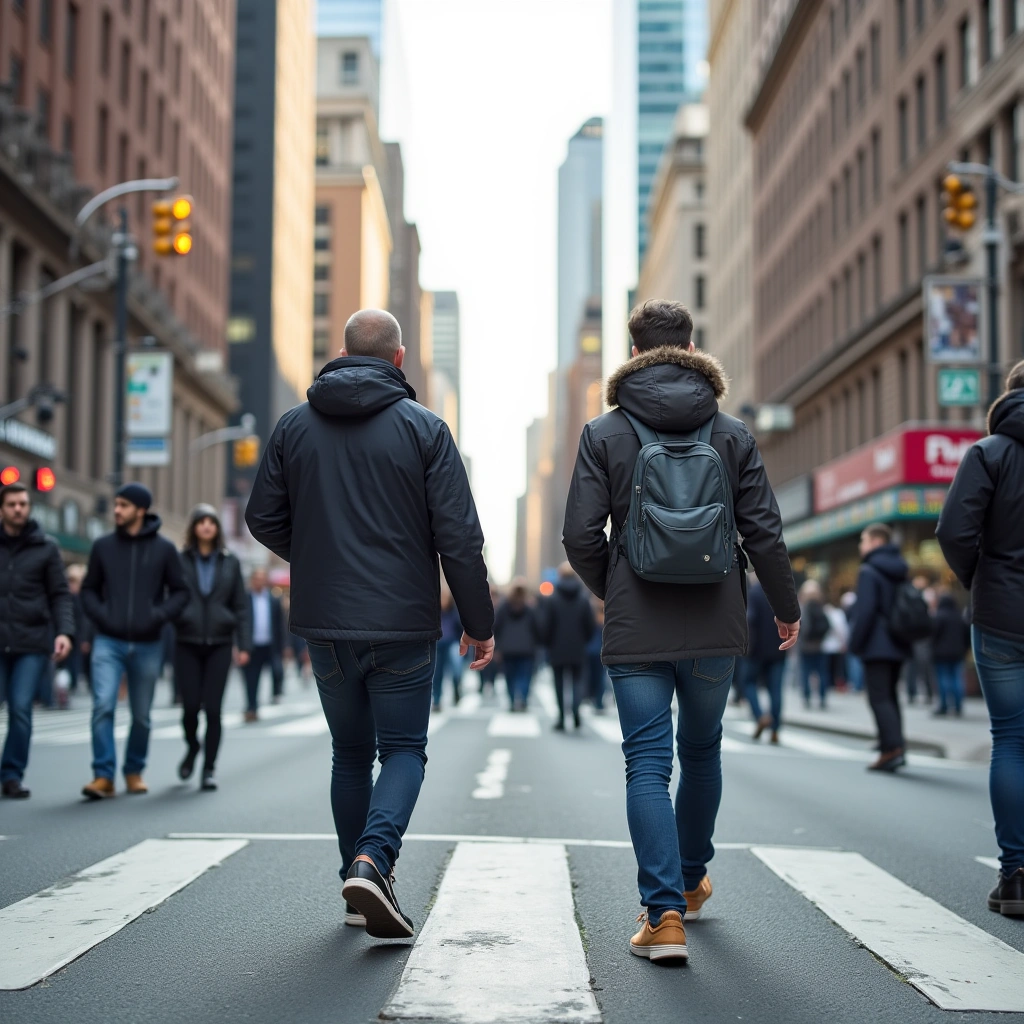
We’ve all seen it: a pedestrian, blissfully scrolling away on their phone, completely oblivious to the world around them. It’s like watching a modern-day zombie apocalypse, but instead of brains, these folks are after the latest TikTok dance or a meme that just can’t wait. But here’s the kicker—why does it seem that this phenomenon is more pronounced in America than anywhere else? Let’s dive into the digital rabbit hole and see what’s going on.
Contrary to popular belief, most pedestrian fatalities do not occur at intersections. FARS data shows that roughly 73% of pedestrian deaths happen at non-intersection locations — typically on multi-lane arterial roads with high speed limits, infrequent crosswalks, and poor lighting. These "stroads" (a planning term for roads that try to function as both streets and highways) are the deadliest pedestrian environments in America. They combine high-speed traffic with land uses that generate pedestrian trips — strip malls, bus stops, and apartment complexes — without providing safe crossing infras
First off, let’s acknowledge the elephant in the room: the sheer number of smartphones in the U.S. According to recent stats, around 85% of Americans own a smartphone. That’s a lot of people with their faces buried in screens! It’s almost like we collectively decided that looking at our phones is more important than avoiding cars. I mean, who needs situational awareness when you have a cute cat video waiting to be watched?
Then there’s the question of urban design. Many American cities are notorious for their car-centric layouts. Sidewalks? Optional. Crosswalks? Only if you’re lucky. This means pedestrians often have to navigate a maze of vehicles while trying to dodge that incoming notification. In contrast, cities in other countries tend to prioritize pedestrian safety, with well-marked crosswalks and traffic calming measures. So, while the rest of the world is busy making it easier to walk, we’re busy making it a real-life version of Frogger.
Let’s also not forget about the culture of multitasking in America. We pride ourselves on being busy, busy, busy! If you’re not doing three things at once, are you even living? So, it’s no wonder that people feel the need to catch up on social media while walking. Who has time to stop and smell the roses when you can scroll through other people’s roses instead?
Now, you might be wondering, “But what about other countries? Surely they have their share of distracted pedestrians too!” And you’d be right! But here’s the catch: in many places, the consequences of being distracted are more severe. In countries with stricter traffic laws and enforcement, pedestrians are more likely to pay attention to their surroundings. Meanwhile, in America, it seems like the only thing we enforce is the right to remain oblivious.
Another factor to consider is the difference in public transportation use. In many countries, people rely heavily on public transit, which encourages walking and, consequently, greater awareness of their environment. In contrast, the car culture in America often leads to fewer people walking, which means those who do venture out on foot are often less experienced in navigating traffic. It’s like sending a toddler into a lion’s den and expecting them to know the rules of engagement.
So, what can be done? Well, first off, maybe we should start by educating people on the dangers of walking and texting. A simple “Hey, watch where you’re going!” might suffice, or perhaps we could invest in the equivalent of a pedestrian safety campaign. Think of it like the seatbelt campaign but for your feet. Maybe we can even take a page from the “Don’t Text and Drive” playbook and create “Don’t Text and Walk” ads. Picture it: a serious-looking pedestrian staring into the camera, while behind them, a car swerves to avoid them. Dramatic, right?
In conclusion, while distracted walking isn’t exclusive to America, the combination of smartphone saturation, urban design, multitasking culture, and pedestrian habits certainly makes it a more prominent issue here. So next time you see someone walking and scrolling, maybe give them a gentle reminder that the world is not just a giant screen. Or you know, just hold your breath and hope for the best. After all, survival of the fittest, right?
Inspired by: “If Phones Are Killing Pedestrians, Why Is It Only Happening in America?” (r/technology)