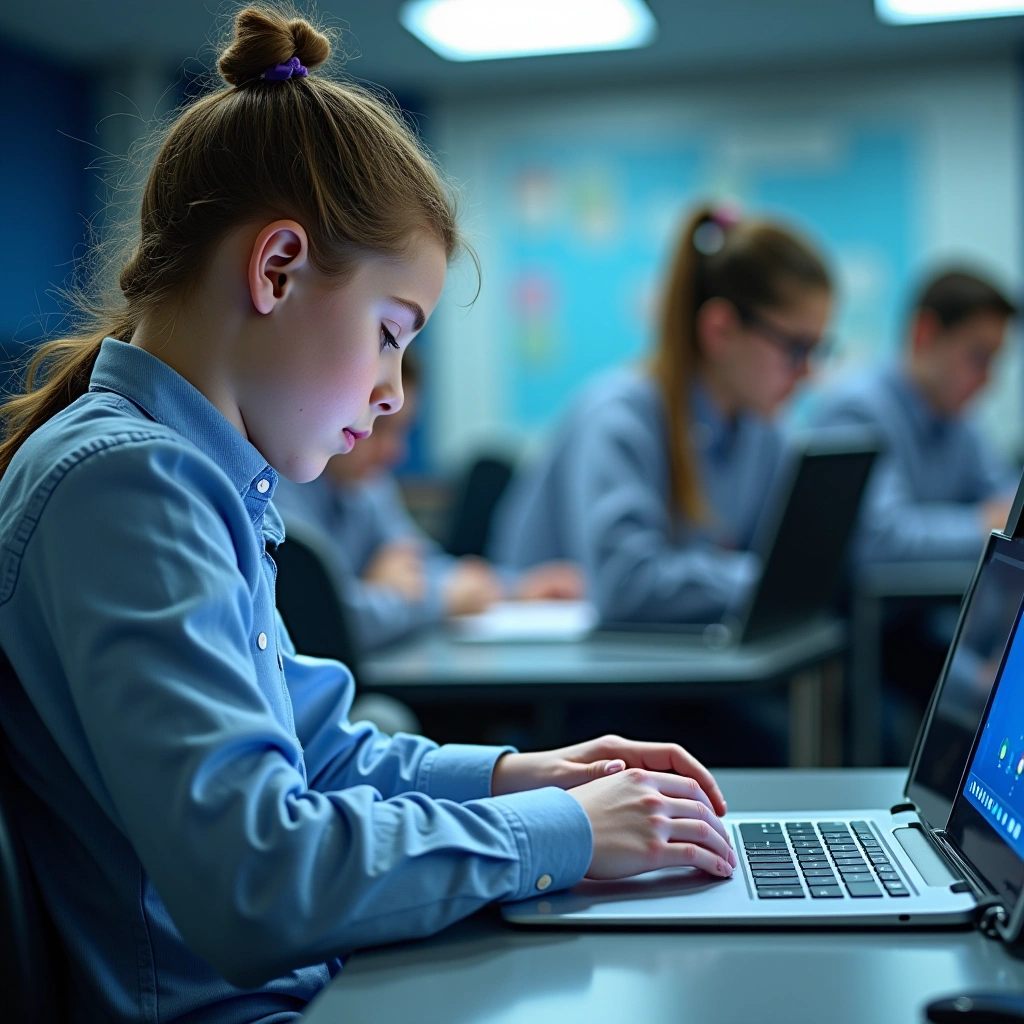
Artificial Intelligence (AI) has been making waves in various fields, and education is no exception. As schools across the United States begin to adopt AI tools to enhance learning experiences, a growing chorus of concern is being raised by parents and experts alike. Let’s dive into this bubbling cauldron of excitement and anxiety, shall we?
With the new school year started, one of the growing challenges facing students, parents, and teachers is how to address the classroom uses of AI, which has become a double-edged sword in the education process.
First off, let’s acknowledge the elephant in the room: the idea of AI in the classroom sounds like something straight out of a sci-fi movie. We can picture it now—students sitting in front of sleek, shiny screens while a friendly robot teacher, perhaps named Mr. Bot, guides them through their studies. Sounds great, right? Well, not everyone is on board with this futuristic vision.
Many parents are worried about how AI will affect their children’s education. Will their kids become overly reliant on technology? Will they lose the ability to think critically and solve problems on their own? These are valid concerns, especially when you consider how quickly technology can change and evolve. One minute you’re learning about the Pythagorean theorem, and the next you’re asking your AI assistant to do your homework for you. No pressure, right?
Experts in education are also raising their eyebrows at the rapid integration of AI tools. They argue that while AI can provide personalized learning experiences and help identify students’ strengths and weaknesses, it also risks dehumanizing the educational process. After all, there’s something to be said for a good old-fashioned teacher-student relationship where students can ask questions, engage in discussions, and maybe even share a laugh or two. Let’s be honest; no AI can replace the joy of a teacher’s sarcastic remark when you ask if you can turn in your assignment late because your dog ate it.
Moreover, there are concerns about data privacy. AI systems often require access to a plethora of student data to function effectively, and that raises questions about who gets to see that information and how it’s being used. Parents are understandably wary about their children’s data being collected and potentially misused. I mean, do we really want our kids’ academic performance being analyzed by a mysterious algorithm that could very well be plotting world domination? Just kidding…sort of.
On the flip side, proponents of AI in the classroom argue that these tools can truly revolutionize education. From adaptive learning platforms that tailor lessons to individual students to AI tutors that provide extra help outside of school hours, the potential benefits are significant. Imagine a world where every student gets the attention they need, and teachers are freed up to focus on fostering creativity and critical thinking rather than grading endless papers. Sounds like a dream, right?
So, what’s the solution? Balance, my friends. As with most things in life, moderation is key. Schools should embrace AI technology, but not at the expense of human interaction and traditional teaching methods. It’s essential to find a middle ground where AI serves as a helpful assistant rather than a replacement for teachers.
In conclusion, while AI in the classroom can be a game-changer, it’s crucial to address the concerns of parents and educators. By fostering open discussions and ensuring that technology enhances rather than detracts from the learning experience, we can navigate this brave new world together. After all, we’re all in this educational journey, whether we like it or not—AI included!
Inspired by: “AI in the classroom prompts tide of concern from US parents and experts” (r/technology)