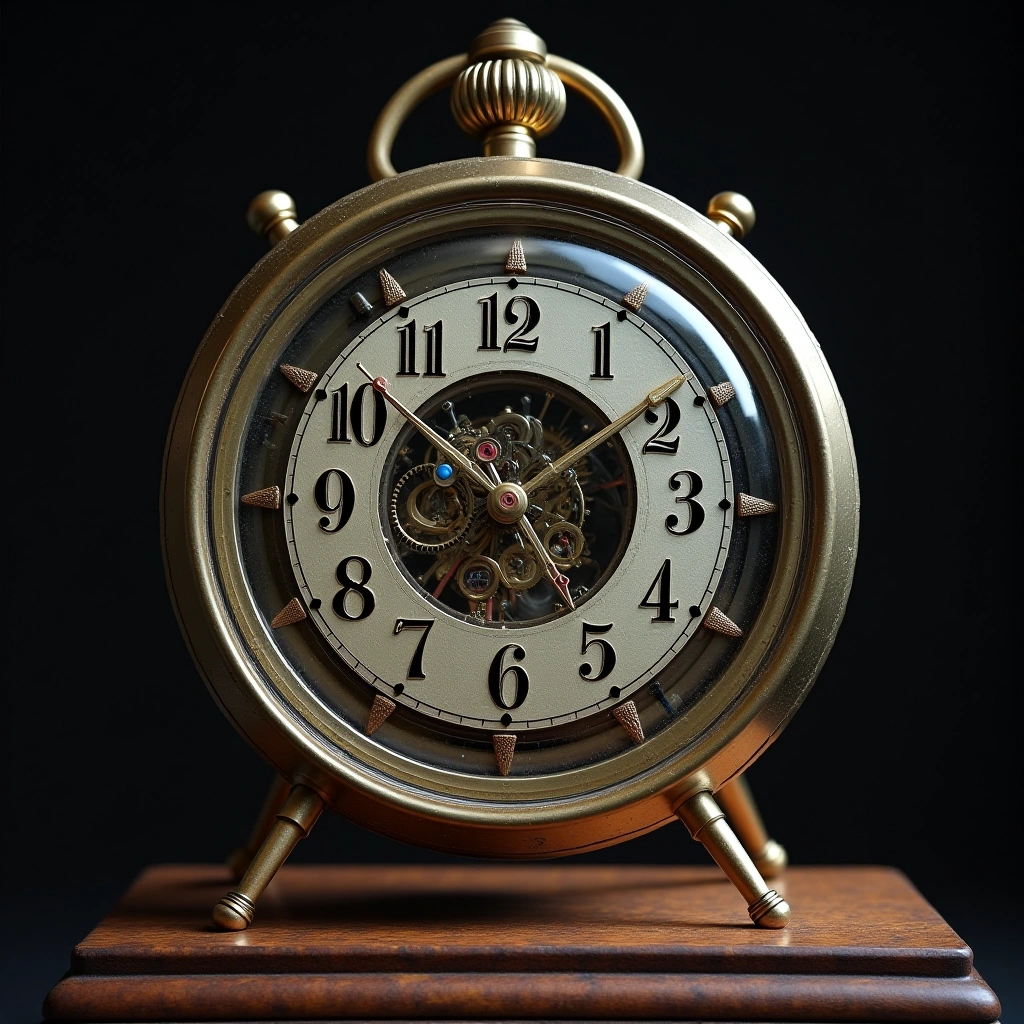
Have you ever found yourself wondering how accurate your wristwatch really is? Well, if you’ve been keeping up with the latest in the world of physics, you might want to set your sights a bit higher than your trusty old Casio. Physicists have recently achieved a groundbreaking milestone by creating the world’s first clocks powered by atomic nuclei. Yes, you read that right—atomic nuclei! Suddenly, your watch seems a little less impressive.
The transition from mechanical to atomic clocks revolutionized timekeeping by using the precise oscillations of electrons to define the second, achieving accuracy within one second every hundred million years. This extreme precision is critical for modern infrastructure, underpinning GPS navigation, global communications, and high-frequency financial trading. Future optical and nuclear clocks promise even greater accuracy, potentially enabling new scientific discoveries in dark matter detection and tests of general relativity.
So, what does this mean for the average Joe? First off, let’s talk about the implications for timekeeping. Traditional atomic clocks, which are already incredibly precise, use the vibrations of atoms to measure time. But this new technology takes it a step further by harnessing the properties of atomic nuclei. Think of it as upgrading from a flip phone to the latest smartphone—it’s all about that next level of precision.
Now, you might be asking, “Why should I care?” Well, my friend, if you’ve ever had a friend who’s late to everything (we all know one), imagine how much easier it would be to call them out if you had a clock that was accurate to the atomic level. You could practically time travel with that kind of precision! Or, at the very least, you could finally prove that they owe you a coffee for that one time they made you wait an hour.
The research team behind this innovation has been working tirelessly to develop these atomic nucleus-powered clocks, and the results are nothing short of extraordinary. These clocks could potentially measure time with an accuracy that’s a million times better than current atomic clocks. For context, that’s like being able to tell the difference between a second and a billionth of a second. If only they could develop a clock that makes people punctual, right?
But wait, there’s more! The implications of this research extend far beyond your late friends. These atomic nucleus clocks could revolutionize GPS technology, improve telecommunications, and even enhance our understanding of fundamental physics. Who knew that timekeeping could be so… well, timely?
In addition, this innovation could lead to advancements in various scientific fields, including quantum computing and fundamental physics. Imagine a world where scientists can conduct experiments with unprecedented accuracy. You could finally settle the debate on whether pineapple belongs on pizza (it does, by the way).
Now, before you start imagining a future where everyone is walking around with atomic clocks strapped to their wrists, let’s keep in mind that this technology is still in its infancy. It’s not like you’ll be buying one at your local electronics store anytime soon. But who knows? In a few years, we might find ourselves in a world where atomic clocks are as common as smartphones.
In conclusion, the development of clocks powered by atomic nuclei is a fascinating leap forward in the world of timekeeping. While your current watch might not be worried just yet, it’s safe to say that the future of accurate time is looking bright. So, the next time you find yourself late for an appointment, remember: it’s not about the clock; it’s about the person wearing it. But hey, at least now you can blame it on the atomic revolution!
Inspired by: “Success! Physicists Build The World’s First Clocks Powered by Atomic Nuclei” (r/technology)