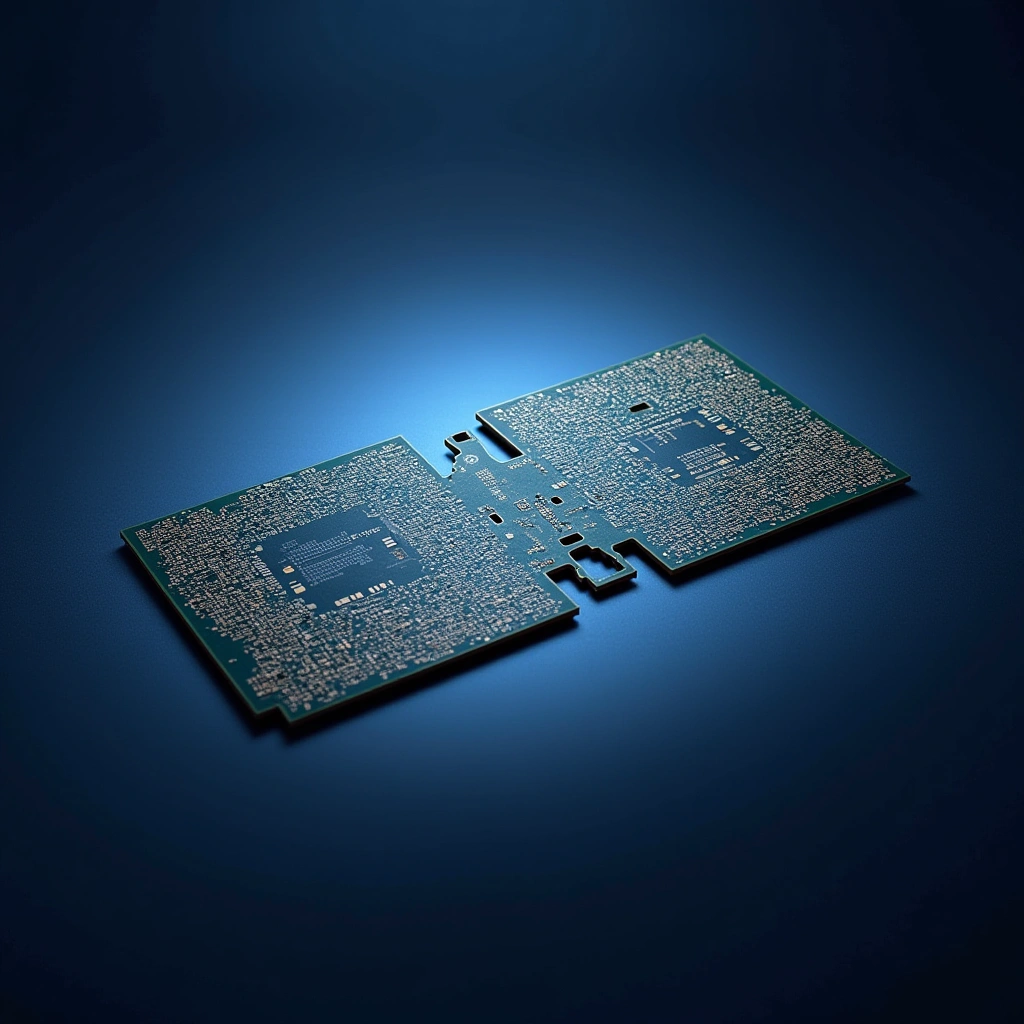
In the ever-evolving world of semiconductor manufacturing, there’s always a new trend or technology trying to steal the spotlight. Recently, TSMC (Taiwan Semiconductor Manufacturing Company) made some waves by announcing that panel packaging is not going to replace CoWoS (Chip on Wafer on Substrate) anytime soon, especially when it comes to the heavyweight champions of AI processors. So, what does this mean for the future of AI tech? Let’s dive into this intriguing topic.
TSMC’s CoWoS (Chip-on-Wafer-on-Substrate) remains the critical bottleneck and gold standard for AI processors, with capacity ramping to 120,000–140,000 wafers per month in 2026 to meet overwhelming demand from Nvidia and AMD. While TSMC is piloting next-generation panel-level packaging (CoPoS) to overcome wafer size limits, this technology is not expected to reach mass production until 2028, ensuring CoWoS retains its dominant role for the foreseeable future. The industry is currently transitioning from CoWoS-S to CoWoS-L to stitch larger chiplets together, as AI chips continue to exceed the physical reticle limits of traditional round wafers.
First off, let’s break down what we’re talking about here. CoWoS is a packaging technology that allows multiple chips to be integrated into a single package, which is essential for high-performance computing tasks, like those that AI requires. Think of it as a very sophisticated sandwich where each layer has its own specialty, combining forces to create something truly powerful. On the other hand, panel packaging is a newer technology that aims to scale up the number of dies you can fit into a single package. TSMC claims that this method can accommodate up to 58 massive dies. That’s a lot of chips in one space!
Now, you might be wondering why TSMC is so adamant about CoWoS holding its ground. The answer lies in performance. While panel packaging sounds great on paper (or should I say, on the silicon wafer?), the reality is that it still has some hurdles to overcome before it can match the performance of CoWoS. For the largest future AI processors—those that are basically the brains behind your favorite AI applications—reliability and efficiency are paramount. If panel packaging can’t deliver that, it’s going to sit on the sidelines, watching CoWoS do its thing.
Let’s not forget the implications of this for AI development. We’re talking about processors that need to crunch numbers faster than a caffeine-fueled accountant during tax season. CoWoS allows for superior thermal management and better electrical performance, which is crucial when you’re dealing with the immense computational requirements of AI tasks. So, while it might be tempting to jump on the panel packaging bandwagon, it looks like CoWoS is still the MVP in this game.
Of course, the tech world is no stranger to change. Panel packaging could evolve and improve over time. Perhaps one day, it will become a serious contender and help push the boundaries of what AI processors can do. But for now, it seems like TSMC is sticking to its guns, and who can blame them? After all, why fix what isn’t broken?
In conclusion, while panel packaging can boast impressive numbers, it appears that CoWoS will continue to reign supreme for the time being, especially when it comes to the largest and most powerful AI processors. So, for all you tech enthusiasts out there, keep your eyes peeled. The semiconductor race is far from over, and who knows what surprises lie ahead? Until then, let’s give a little nod to CoWoS for holding the fort while panel packaging gets its act together!
Inspired by: “TSMC says panel packaging won’t replace CoWoS anytime soon for the largest future AI processors — w…” (r/technology)