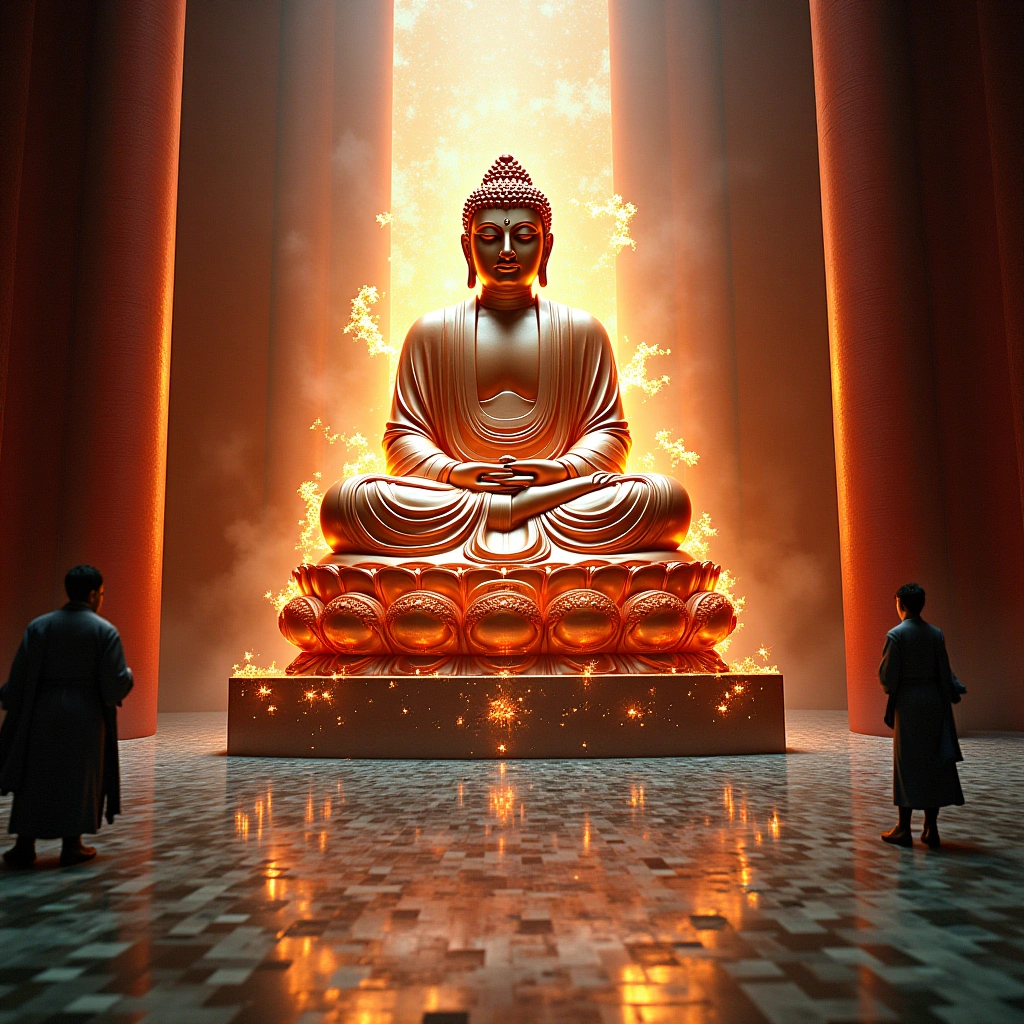
Hey there, history buffs and curious souls! Grab your virtual diving gear because we’re diving deep into the submerged secrets of Fuzhou, China, where a remarkable relic from the Ming Dynasty decided to pop up for a cameo in 2017. Yes, you heard that right—a giant Buddha, carved into a riverside cliff, emerged from the depths like a surprise guest at a party. And no, it didn’t bring chips and dip.
Related reading: The Hidden Buddha
So, what’s the story here? The submerged Buddha was revealed when water levels dropped due to a construction project. It’s like the universe conspired to give us a sneak peek at this ancient marvel! Can you imagine the construction workers’ faces when they unearthed a colossal statue instead of just more mud? Talk about an unexpected twist—like finding out your quiet neighbor is actually a retired rock star!
Now, let’s rewind the clock to around 1400, during the Ming Dynasty. This was a time when China was all about expanding its horizons, both culturally and geographically. The Ming Dynasty is often regarded as a golden age for the arts and architecture. So, naturally, they went big—like, “let’s carve a massive Buddha into a cliff” big. The purpose? To protect travelers, of course. Because what’s better than a giant stone figure keeping watch over you while you try to navigate the treacherous waters of life (and rivers)?
But hold on to your hats—there’s more! The Buddha, known as the “Buddha of the Nine Dragons”, was not just a pretty face. This colossal figure was intricately carved and symbolizes peace and protection. It’s like the ancient version of a highway sign saying, “Hey, you’re safe here, buddy!” Talk about a spiritual GPS!
Now, let’s talk about the implications of this discovery. Some people might see it as just another archaeological find, but let’s be real—this is a cultural jackpot! The resurgence of interest in the Buddha has not only brought tourists flocking to Fuzhou but has also sparked conversations about heritage preservation. You know, the kind of discussions that usually involve people shaking their heads and saying, “We should have taken better care of it!”
And while we’re on the topic of preservation, let’s address the elephant in the room—or should I say, the submerged Buddha. Some folks argue that the construction projects that led to the Buddha’s reveal are a double-edged sword. Yes, we want progress, but at what cost? Are we willing to sacrifice our history for modern conveniences? It’s like trading your grandma’s antique vase for a shiny new blender. Yikes!
But back to the Buddha! As the world watched in awe, the sight of this re-emerging relic reminded us that history has a way of resurfacing, whether we like it or not. It’s a gentle nudge (or a not-so-gentle push) from the past to remind us of our roots. Plus, it gives those Instagram influencers a fantastic backdrop for their next travel post!
In conclusion, the submerged Buddha of Fuzhou isn’t just a sculpture; it’s a symbol of resilience, a reminder of the past, and a spark for conversations about our future. So, next time you find yourself near a body of water, keep your eyes peeled—you never know what might be lurking beneath the surface, waiting for its moment to shine!
Inspired by: “A submerged Buddha revealed in 2017, when the water level was lowered by a construction project. Ca…” (r/interestingasfuck)