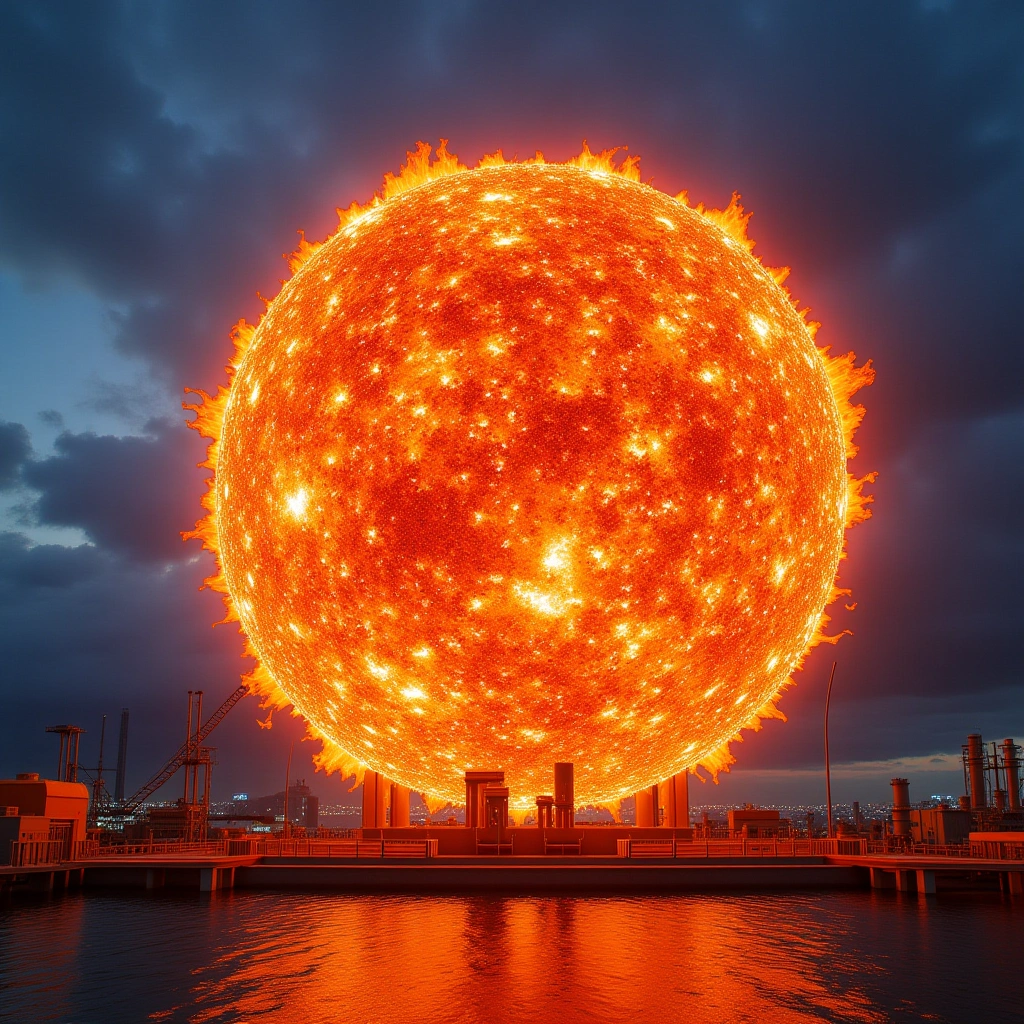
Hey there, energy enthusiasts and casual readers alike! Gather around because we’ve got a sizzling hot topic that’s brighter than your neighbor’s Christmas lights: South Korea’s artificial sun. Yes, you heard that right! This isn’t some sci-fi movie plot; it’s happening in real life, and it ran for a whopping 102 seconds! What could that possibly mean for the future of energy? Let’s dive in!
Related reading: Original source
First off, let’s talk about what this artificial sun is all about. This isn’t just a glorified light bulb that you can buy at your local hardware store. Nope! We’re talking about a fusion reactor called K-STAR (Korea Superconducting Tokamak Advanced Research). This bad boy is designed to replicate the same nuclear fusion processes that power our actual sun. And if you think about it, that’s both fascinating and slightly terrifying—like if your blender could also make smoothies and launch missiles.
Now, why did it run for 102 seconds, and why is that significant? Well, it’s not like they set a world record for the longest hot dog cooking time at your local state fair. This 102 seconds represents a significant breakthrough in nuclear fusion technology. In fusion, you need to sustain a reaction long enough for it to be useful, and 102 seconds is a giant leap from previous attempts. It’s like going from a toddler’s first steps to Usain Bolt in a matter of moments.
So, what does this mean for energy? Well, if we can harness fusion power effectively, we could be looking at a future where energy is abundant, clean, and, let’s face it, downright magical. Imagine a world where energy is so cheap it’s practically free! You could run your air conditioner during a heatwave without feeling like you’re paying for a small country’s worth of electricity. Plus, no more fossil fuels! That’s right; we could wave goodbye to those pesky carbon emissions that have been wreaking havoc on our planet.
But let’s not get ahead of ourselves. Nuclear fusion isn’t just going to happen overnight. It’s like trying to find a unicorn in your backyard—sure, it sounds lovely, but it’s going to take time and some serious effort. The technology needs to improve, and we need to learn how to scale it up to make it commercially viable. It’s a process, folks! And just like training for a marathon, you can’t expect to run 26 miles if you can barely jog to the fridge.
Now, here comes the controversial part. Some skeptics might argue that pouring money into fusion research is like putting all your eggs in a basket made of glass. What if it doesn’t work out? What if we’re just chasing a dream? But let’s not forget that every great innovation faced skepticism at first. Remember when people thought the internet was just a fad? Or that the idea of electric cars was as ridiculous as a cat wearing a sweater? Fast forward to today, and we can’t imagine life without them!
In conclusion, South Korea’s artificial sun running for 102 seconds is no small feat. It’s not just a scientific breakthrough; it’s a beacon of hope for clean energy in our future. So, let’s keep our fingers crossed and our eyes peeled for what comes next. Who knows? Maybe one day, we’ll be flipping the switch on our very own fusion-powered homes, and we’ll all be living like futuristic rock stars! Until then, keep dreaming big and stay curious, friends!
Inspired by: “South Korea’s artificial Sun ran for 102 seconds and it could change the future of energy” (r/technology)