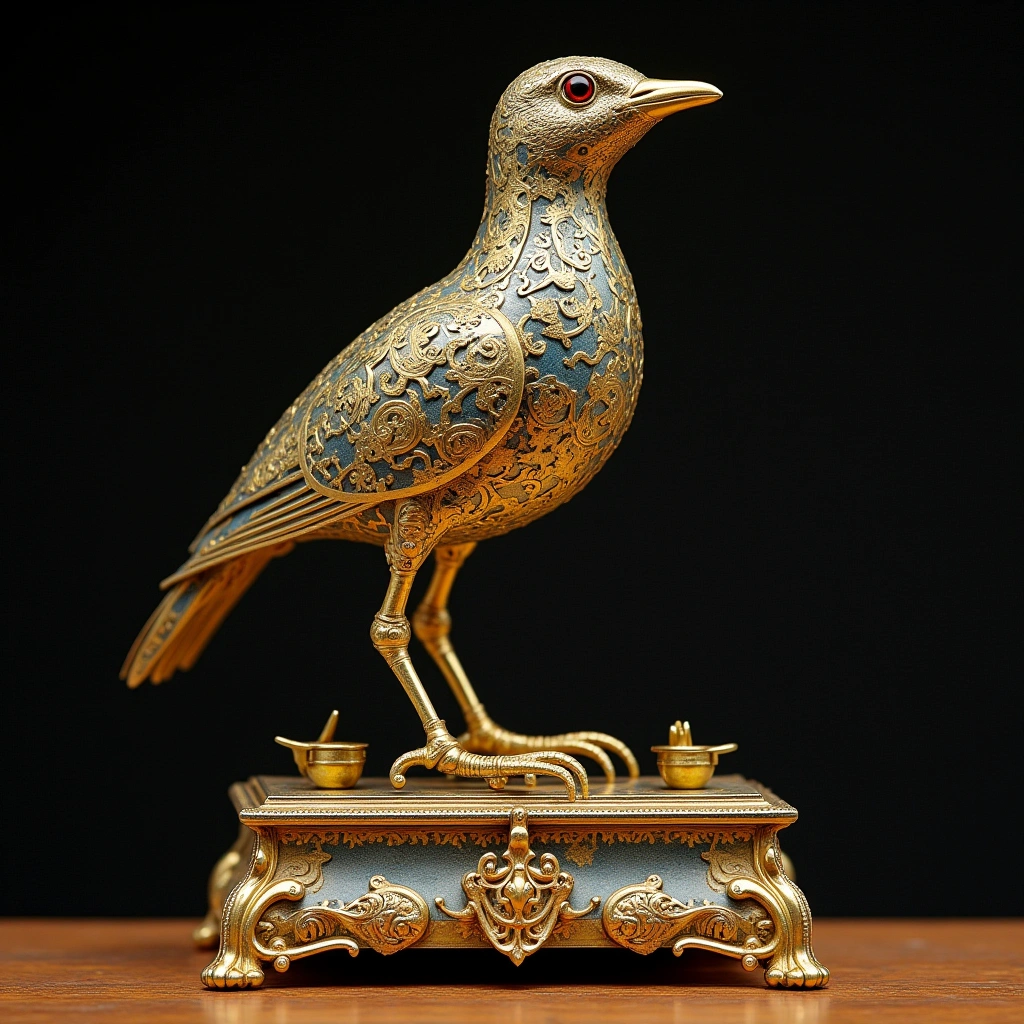
Ah, the 19th century! A time when people were either busy inventing stuff or trying to figure out how to keep their giant mutton chops from getting caught in their gears. Among the most fascinating inventions of this era were the mechanical singing bird automatons. Yes, you heard that right! We’re talking about clockwork birds that flap their wings and serenade you like a tiny feathered diva.
Related reading: The Enchanting World
Now, let’s dive into the enchanting world of these Swiss marvels. Picture this: a beautifully ornate gold box, glistening in the light like a pretentious piece of jewelry that your rich aunt would insist you admire. Inside, a mechanical bird, engineered with the precision of a Swiss watchmaker, prepares to take flight. Okay, maybe not literally, but you get the point!
These automatons were not just toys; they were the epitome of craftsmanship. The Swiss took their reputation for precision seriously, and these little wonders were packed with intricate gears and levers, all designed to create a lifelike performance. Imagine the kind of ingenuity it took to make a bird sing and flap its wings without getting a single feather out of place! It’s like trying to teach a cat to fetch—virtually impossible.
The singing bird automatons often featured a variety of designs and styles. Some were dressed to the nines, adorned with jewels and intricate patterns, while others were more modest, focusing on the mechanics of the bird itself. It’s like going to a fancy dress party where half the guests are in tuxedos and the other half are in sweatpants. Who knew birds had such diverse fashion choices?
What’s even more fascinating is how these mechanical birds captured the imagination of the elite. People marveled at the thought of nature being replicated in such an artificial way. It was like watching a magician pull a rabbit out of a hat, only the rabbit had a built-in stereo system. The automatons became a status symbol, a way for the wealthy to flaunt their taste for the finer things in life—like having a miniature bird that could sing “Twinkle, Twinkle, Little Star” better than any opera singer.
Now let’s address the elephant in the room: the controversy surrounding these mechanical creatures. Some purists argued that no machine could ever replicate the beauty of a real bird. They were probably the same people who insisted that vinyl records were better than streaming music. But let’s be real—if you had a mechanical bird singing in your living room, you could still enjoy real birds outside without feeling guilty about it!
In conclusion, the 19th-century Swiss mechanical singing bird automaton is a remarkable testament to human innovation and creativity. They remind us of a time when things were made to last, and a little whimsy was part of the daily grind. So, the next time you find yourself admiring a fancy gadget or a singing bird, remember the Swiss artisans who made it all possible. And who knows, maybe you’ll be inspired to create your own mechanical masterpiece—just don’t forget to give it a good name!
Inspired by: “19th-Century Swiss Mechanical Singing Bird Automaton: Clockwork Bird in Ornate Gold Box Flaps Wings…” (r/interestingasfuck)