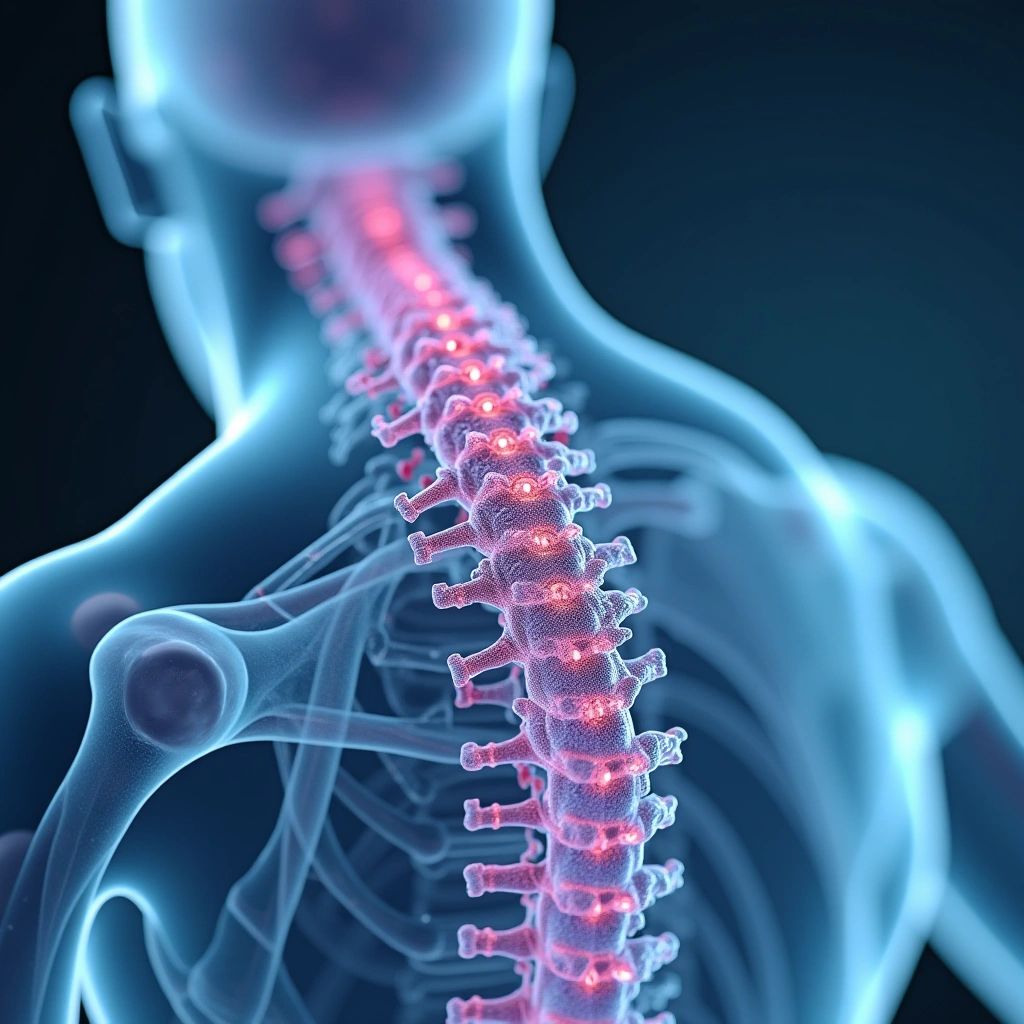
Hey there, fellow science enthusiasts! Grab your lab coats and get ready for a wild ride into the world of biohybrid microrobots. Yes, you heard that right! We’re diving into a blend of stem cells and magnetoelectric nanoparticles that’s making waves in the medical field, particularly when it comes to spinal cord injuries. Spoiler alert: it’s cooler than your average sci-fi movie.
Related reading: Original source
Imagine a tiny robot, smaller than a grain of sand, zooming around your body like a tiny superhero. Sounds like something out of Honey, I Shrunk the Kids meets Iron Man, right? But this isn’t fiction; it’s the next frontier in regenerative medicine!
So, what exactly are these biohybrid microrobots? Well, they’re essentially miniature machines that combine the best of both worlds: the regenerative capabilities of stem cells and the precision of magnetoelectric nanoparticles. Think of them as the perfect blend of Batman and Robin, but with fewer capes and more cellular repair.
By utilizing magnetoelectric nanoparticles, scientists can control these microrobots using magnetic fields. Yes, folks, we’re talking about using magnets to guide tiny robots! If that’s not a reason to channel your inner mad scientist, I don’t know what is. These nanoparticles generate electrical signals that help the stem cells grow and differentiate into the types of cells needed to repair the spinal cord. It’s like giving the cells a personal trainer, but instead of pumping iron, they’re pumping out neural tissue!
Now, let’s address the elephant in the room: spinal cord injuries. These injuries can be as devastating as finding out your favorite TV show has been canceled. They can lead to loss of movement and sensation, and currently, treatments are limited. Enter our heroes—biohybrid microrobots to the rescue! They aim to bridge the gap where traditional medicine falls short, potentially restoring function and improving the quality of life for those affected.
Now, you might be thinking, “This all sounds amazing, but how do we know it’s going to work?” Well, the science is still in its infancy, but preliminary studies have shown promising results. Research teams are tinkering away in labs, conducting experiments that would make even your high school science teacher proud. And while the road to clinical application is long and winding, the potential is there.
Of course, not everything is sunshine and rainbows. There are ethical considerations to navigate, and we all know science doesn’t always play nice with public opinion. The idea of using stem cells—especially those derived from embryos—can spark heated debates. So, let’s just say that while the science is cool, the discussion around it can get a bit… sticky.
But hey, we’re here to look to the future! If these biohybrid microrobots can deliver on their promises, we could be looking at a world where spinal injuries are no longer a life sentence. Imagine the possibilities! People could return to activities they love, like running marathons or, you know, just being able to pick up the remote without a struggle.
In conclusion, while we’re still in the early stages of this revolutionary technology, the potential impact of biohybrid microrobots on spinal cord repair is undeniably exciting. So, keep your eyes peeled for updates, because who knows? The future might just be a whole lot brighter for those with spinal cord injuries! And if not, at least we’ll have some pretty cool science stories to tell at parties.
Inspired by: “Biohybrid microrobots repair spinal cord by combining stem cells with magnetoelectric nanoparticles” (r/technology)