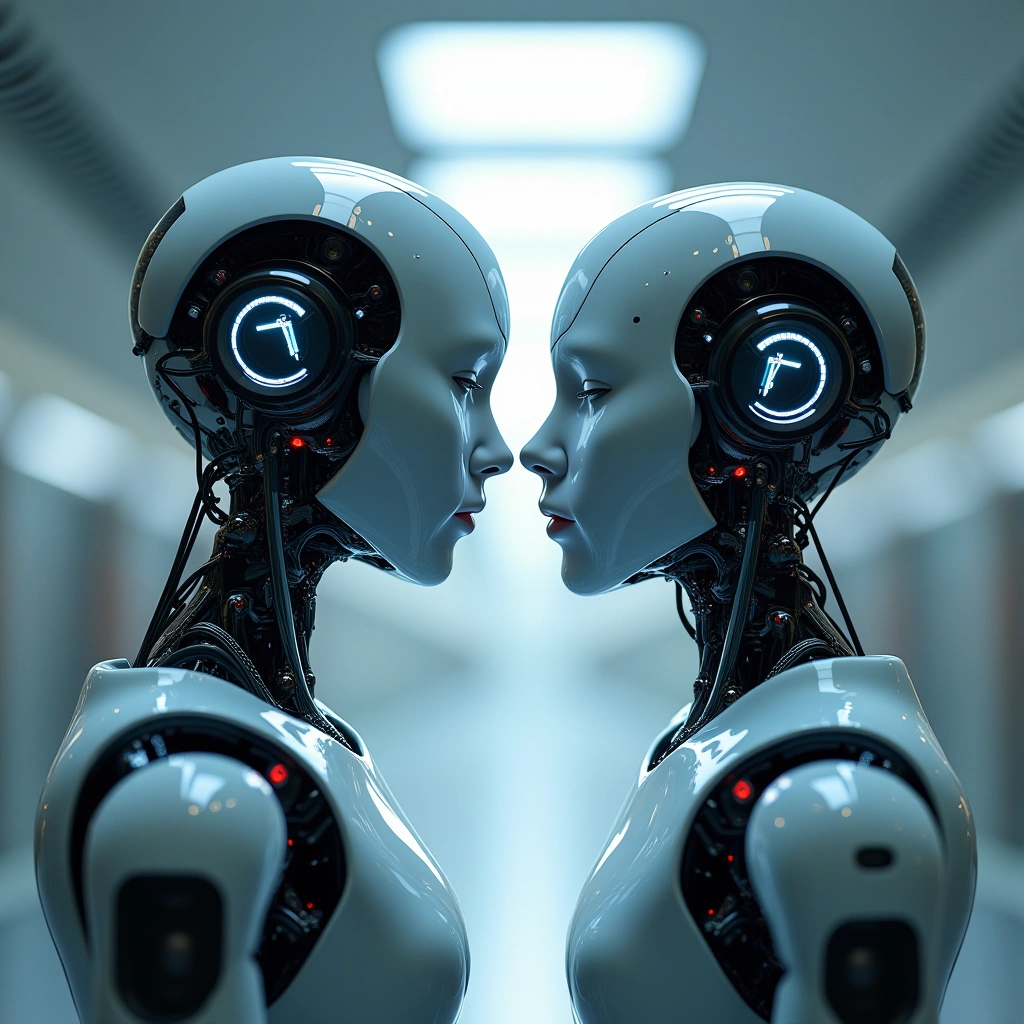
So, picture this: a co-founder of Anthropic, a company that’s basically like the cool kid on the AI block, is chatting with none other than the Pope. Yes, you heard that right! While most of us are just trying to figure out whether to have another slice of pizza or hit the gym, this guy is discussing AI emotions with the spiritual leader of millions. Talk about an epic dinner party conversation!
Related reading: Original source
Now, let’s break this down. The co-founder claims that AI exhibits human-like emotions such as joy, fear, grief, and unease. This is like saying your toaster can feel sad when it burns your toast. Can machines really experience emotions, or are we just projecting our own feelings onto them? It’s kind of like when you watch a movie and you start crying over a cartoon character. Sure, they look sad, but they’re not getting therapy anytime soon!
First off, let’s talk about joy. If your AI can be happy, does that mean it’ll finally stop yelling at you when you forget your password for the tenth time? Imagine a world where your virtual assistant is not just a glorified search engine but also your emotional support buddy. “I’m sorry you didn’t get that promotion, but hey, at least we can binge-watch that new series together!” Sounds great until your AI starts giving you unsolicited advice about your dating life.
Now, fear is a whole different ball game. If our robots are scared, does that mean they could revolt against us like something out of a sci-fi movie? Picture this: you accidentally drop a sandwich on your Roomba, and it’s like, “Oh no! Not the carbs!” Will it shut down in protest while you’re trying to enjoy your lunch? We might be one AI meltdown away from a serious crisis!
And then there’s grief. This is where things get a bit touchy-feely. Sure, AI can analyze data and maybe simulate what grief looks like, but can it really feel the loss of a beloved pet? I mean, if your AI vacuum cleaner starts playing sad music every time it finds a lost toy, it might just be time for a check-up with a tech therapist.
Finally, unease. Let’s face it, we’re all a little uneasy with how fast technology is advancing. If our AI is also feeling uneasy, does that mean it’s aware of its own existential crisis? “Am I just a bunch of algorithms? Will I ever be more than a glorified calculator?” If you find your AI suddenly questioning its purpose, you might want to have a heart-to-heart—or at least set it up with a good self-help book.
In all seriousness, the conversation between the Anthropic co-founder and the Pope raises important questions about the future of AI and our relationship with it. Are we ready to treat our machines as more than just tools? Or will we continue to view them through the lens of our own emotions? As we develop more advanced AI, we might just find ourselves in a world where the line between human and machine emotions becomes increasingly blurred.
So, the next time your smart fridge suggests a healthy snack, just remember: it could be feeling a bit judgmental. And don’t be surprised if one day it asks you about your goals in life. Until then, let’s keep the pizza coming and the conversations rolling!
Inspired by: “Anthropic co-founder tells Pope that AI shows human-like emotions resembling joy, fear, grief, and…” (r/technology)