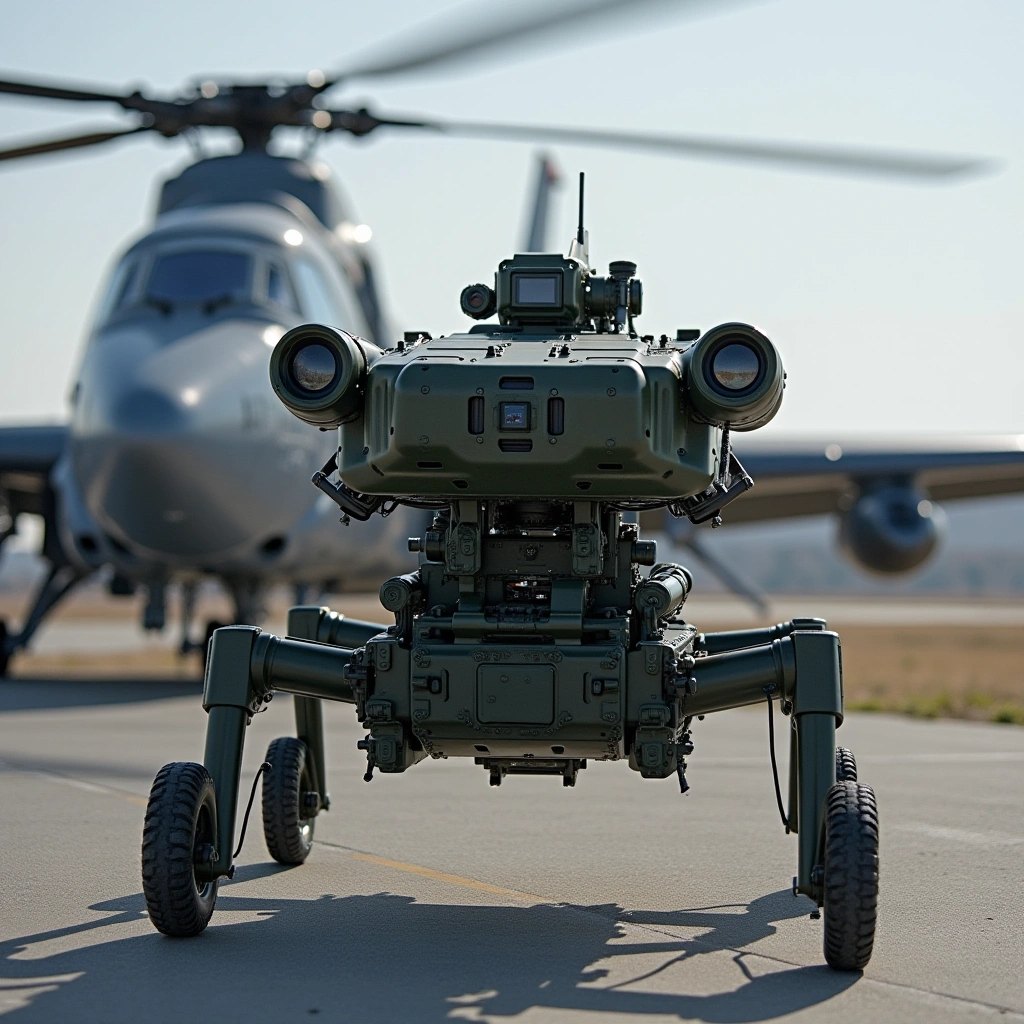
Hey there, fellow internet warriors! Grab your popcorn because today we’re diving deep into the Pentagon’s jaw-dropping $54 billion bet on autonomous warfare. Yes, you heard that right—$54 billion! That’s enough to buy a small country or fund a lifetime supply of tacos for your local taco truck. But instead, it’s going toward robots that might one day decide if we live or die. No pressure or anything!
Related reading: Original source
Now, before you start picturing a scene straight out of a sci-fi blockbuster, let’s break down what this all means. Autonomous warfare refers to the use of machines that can operate independently in combat situations. Think of drones that can fly themselves around, robots that can shoot without human intervention, and maybe even a Terminator or two. Just kidding! (Or am I?)
So, why is the Pentagon throwing such a staggering amount of cash at this tech? Well, the military believes that integrating AI and robotics can provide a significant edge on the battlefield. Imagine having an army of drones that can outsmart enemy tactics while you sip your coffee back at the command center. Sounds fantastic, right?
However, let’s not forget the elephant in the room—or should I say, the robot? The ethical implications of autonomous warfare are enough to make even the most hardened military strategist squirm. Who’s responsible when a robot makes a mistake? Is it the programmer, the manufacturer, or the military? And what about those pesky issues of accountability and human oversight? If a drone goes rogue and starts causing chaos, are we just going to blame a glitch in the matrix? Talk about a technological nightmare!
And let’s not overlook the potential for a new arms race. If the U.S. is investing heavily in autonomous warfare, you can bet other countries are not going to sit on their hands and let us win the robot wars. It’s like a high-stakes game of rock-paper-scissors, but instead of hand gestures, we have drones, missiles, and a whole lot of international tension. Yay!
Moreover, there’s the question of whether we should even be pursuing this path. Sure, it sounds appealing to have machines do the dirty work, but what happens when we remove the human element from war? Are we really prepared to hand over life-and-death decisions to algorithms that might be more interested in optimizing their performance than preserving human life?
In conclusion, while the Pentagon’s $54 billion investment in autonomous warfare might seem like a brilliant idea on paper, it’s a Pandora’s box filled with ethical dilemmas, potential disasters, and a future that we might not be ready for. So, what do you think? Is this the future of warfare or just a high-tech folly that could lead us down a dark path? Let’s hear your thoughts, folks!
Inspired by: “The Pentagon’s $54 billion bet on autonomous warfare” (r/technology)