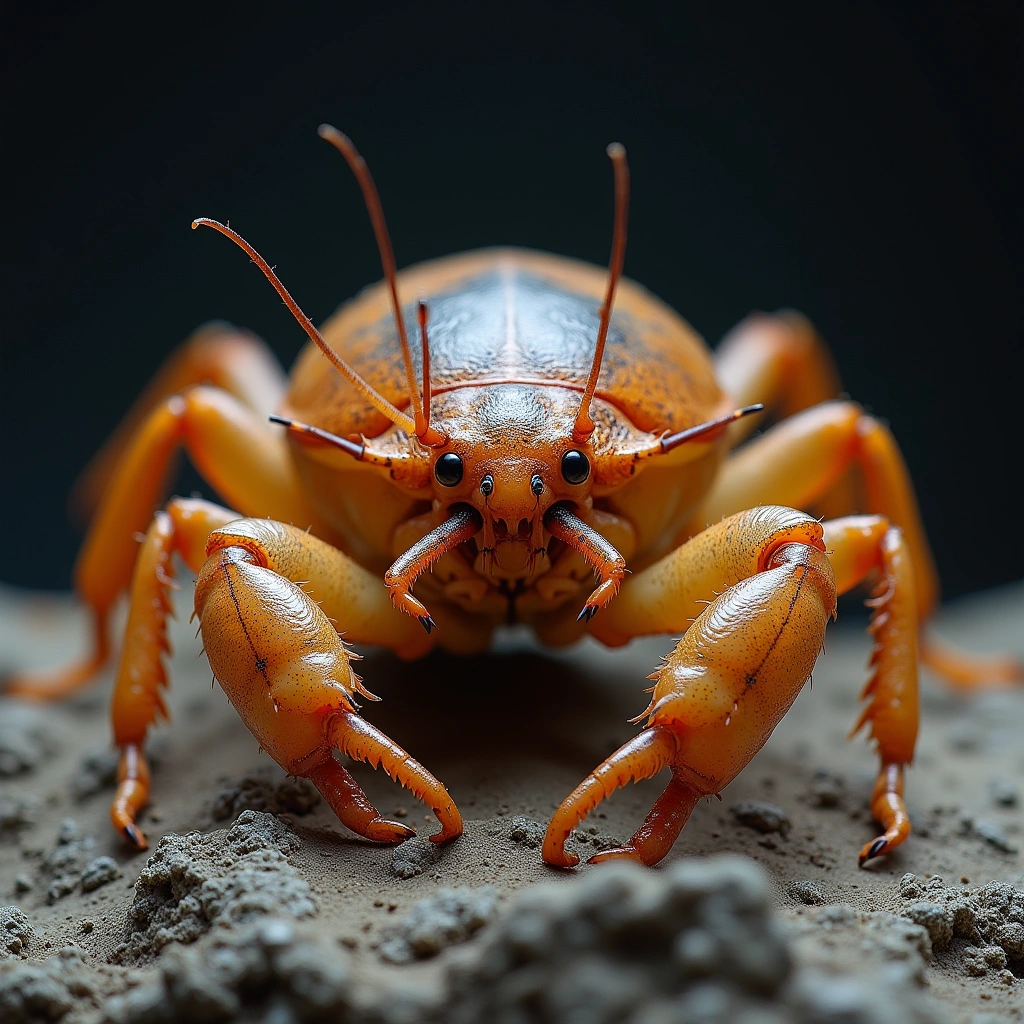
Alright, grab your time-traveling gear and let’s take a trip back 100 million years to a time when dinosaurs roamed the Earth and bugs were not just your annoying backyard intruders, but rather, terrifyingly cool creatures with crab-like claws! That’s right, folks! Scientists have stumbled upon a fossilized true bug that’s got claws so flashy, they could star in their own K-pop music video.
Discovered in the amber of Myanmar’s Kachin region, this little critter has been dubbed Carcinonepa libererrantes. Yes, that’s a mouthful, but it’s a name that honors the popular K-pop group Stray Kids. Why? Because the insect’s claw pose is reminiscent of those signature K-pop dance moves! Talk about a bug with style!
Now, let’s get into the nitty-gritty. This ancient bug isn’t just another run-of-the-mill insect; it has claws that would make even the toughest crab green with envy. These claw-like appendages, scientifically known as chelae, are incredibly rare among insects. In fact, they’ve only been seen in three other insect groups prior to this discovery. So, what’s the deal? This fossil represents the fourth time these structures have evolved independently in insects. Evolution must have been having a wild day when this one popped up!
Researchers from Ludwig Maximilian University of Munich, along with partners from the University of Rostock and the University of Oulu, took a deep dive into studying this fossil. Utilizing micro-computed tomography, they created 3D images that revealed the bug’s anatomy in astounding detail. It’s like the bug version of a high-definition reality show—but with less drama, and thankfully, no one throwing chairs.
What did they find? Well, the claws of Carcinonepa libererrantes are not just a pretty face; they are more akin to those of crabs and lobsters than any other insect. Imagine an insect that looks like it’s ready to fight for the last slice of pizza, and you get the idea. This means that it probably had a predatory lifestyle, just chilling in the Cretaceous forests and snatching up unsuspecting insect prey.
But wait, there’s more! The morphology of this little predator suggests it was not just a lone wolf; it likely thrived in a vibrant ecosystem filled with all sorts of prehistoric creatures. Picture it: a bustling Cretaceous forest, with our star insect lurking near the coast, ready to pounce on anything that moves. I can just hear it now: “You thought you could escape? Think again!”
Now, let’s talk about the name—Carcinonepa. It’s a clever blend of the Greek word for crab, carcino-, and nepa, which relates to the true water bug group. It’s like the scientists were saying, “Let’s make this name as fancy as possible to impress our peers!” And they did.
So, the next time you’re swatting away a fly or flicking off an ant, just remember that 100 million years ago, there were bugs with claws that could probably take you in a duel. And if they had a favorite band, it would undoubtedly be the Stray Kids. Who knew that ancient bugs could be so stylish and badass?
In conclusion, Carcinonepa libererrantes isn’t just a fossil; it’s a reminder of the wild and wacky world that once existed. It’s proof that evolution is full of surprises, and maybe, just maybe, we should take a few notes from these ancient critters on how to be a little more fierce in our everyday lives. Now, go forth and spread the word about the coolest bug you never knew existed!
Inspired by: “Meet Carcinonepa: The 100-Million-Year-Old Bug with Crab-Like Claws That Makes K-Pop Look Average”