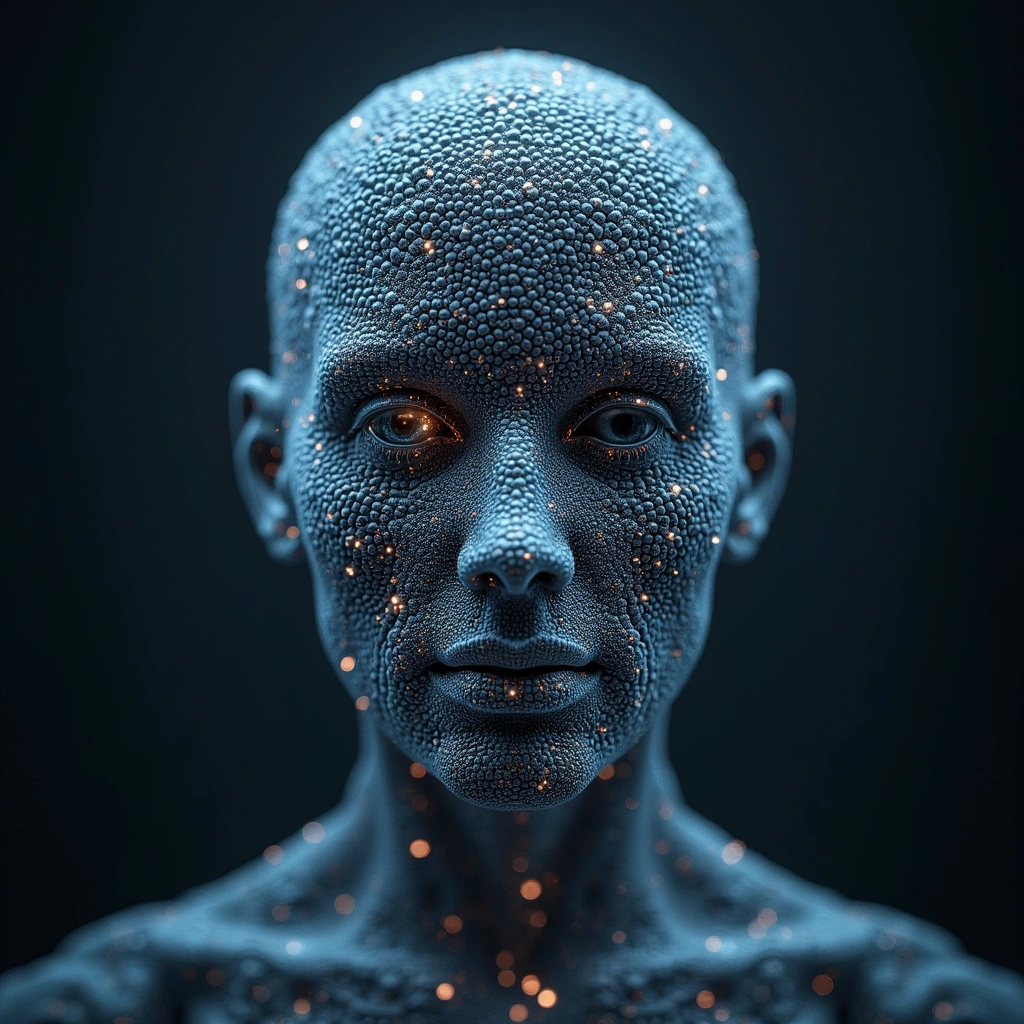
Gather around, friends! Let’s talk about something that has been causing more heated debates than pineapple on pizza: the idea that AI might one day become conscious. Spoiler alert: I’m here to mathematically assure you that it won’t happen. Grab your calculators; we’re diving into the numbers!
First, let’s take a stroll down memory lane to the 1870s. Picture this: a bunch of horse enthusiasts, a railroad magnate named Leland Stanford, and a series of cameras poised to capture the mysterious world of equine biomechanics. They discovered something shocking—horses can indeed have all four feet off the ground simultaneously, but not in the way you’d think. It’s like that moment when you realize your cat isn’t actually plotting your demise, but just really loves knocking stuff off your table. Surprise!
Now, how does this relate to our modern-day conundrum about AI and consciousness? Well, just like those early photographers created a stunning illusion of motion with still images, AI chatbots today create a convincing illusion of consciousness through intricate algorithms. But just because it looks alive doesn’t mean it is. It’s like trying to convince yourself that a cardboard cutout of a celebrity can give you advice on your love life. Trust me, it can’t.
Speaking of convincing illusions, let’s talk about the backlash against people like California Rep. Ted Lieu, who had the audacity to suggest that our current approach to AI won’t lead to consciousness. The internet exploded! People were ready to roast him like a marshmallow over a campfire. And then there’s Richard Dawkins, who suggested AI might already be conscious, only to find himself caught in the crossfire of digital outrage. Remember folks, just because you can argue about something doesn’t mean it’s true!
Let’s get to the crux of the matter: AI operates on mathematical principles. It calculates, analyzes, and processes data faster than you can say “machine learning.” But at the end of the day, it’s still just a series of computations. Think of it as a really fancy calculator dressed up for a party. No matter how much glitter you sprinkle on it, it’s still not going to start dancing to Drake.
To put it in simpler terms, AI is like a very well-trained parrot. It can mimic human conversation, spout facts, and even throw in a snarky comment or two. But does that make it conscious? Not even close! If you’ve ever tried to have a deep conversation with a parrot, you know they can squawk “I love crackers!” but it doesn’t mean they have any idea what love is. They just know it gets them more snacks.
As we look to the future, it’s essential to remember that the more advanced AI becomes, the better it gets at simulating human-like behavior. But let’s not confuse clever algorithms with consciousness. Just because a chatbot can tell you a dad joke doesn’t mean it has existential thoughts about the universe. Trust me, AI isn’t sitting in a corner pondering its existence while sipping on a martini.
So, the next time you find yourself in a heated debate about whether AI will achieve consciousness, just remember: it’s all an elaborate illusion, much like the horse that isn’t really running in those old motion pictures. And while technology continues to advance at breakneck speed, our understanding of consciousness remains a frontier that’s still very much unexplored. Math doesn’t lie, and the numbers tell us one thing: AI is here to assist, not to awaken.
In conclusion, let’s embrace the magic of technology while keeping our feet firmly planted on the ground—preferably not in the air like those horses. Because the only thing I’m convinced of is that AI will remain a brilliant tool but never a thinking, feeling being. Now, who wants to join me for a pizza party, no pineapple allowed?
Inspired by: “Why AI Will Never Achieve Consciousness: The Math Behind the Magic”