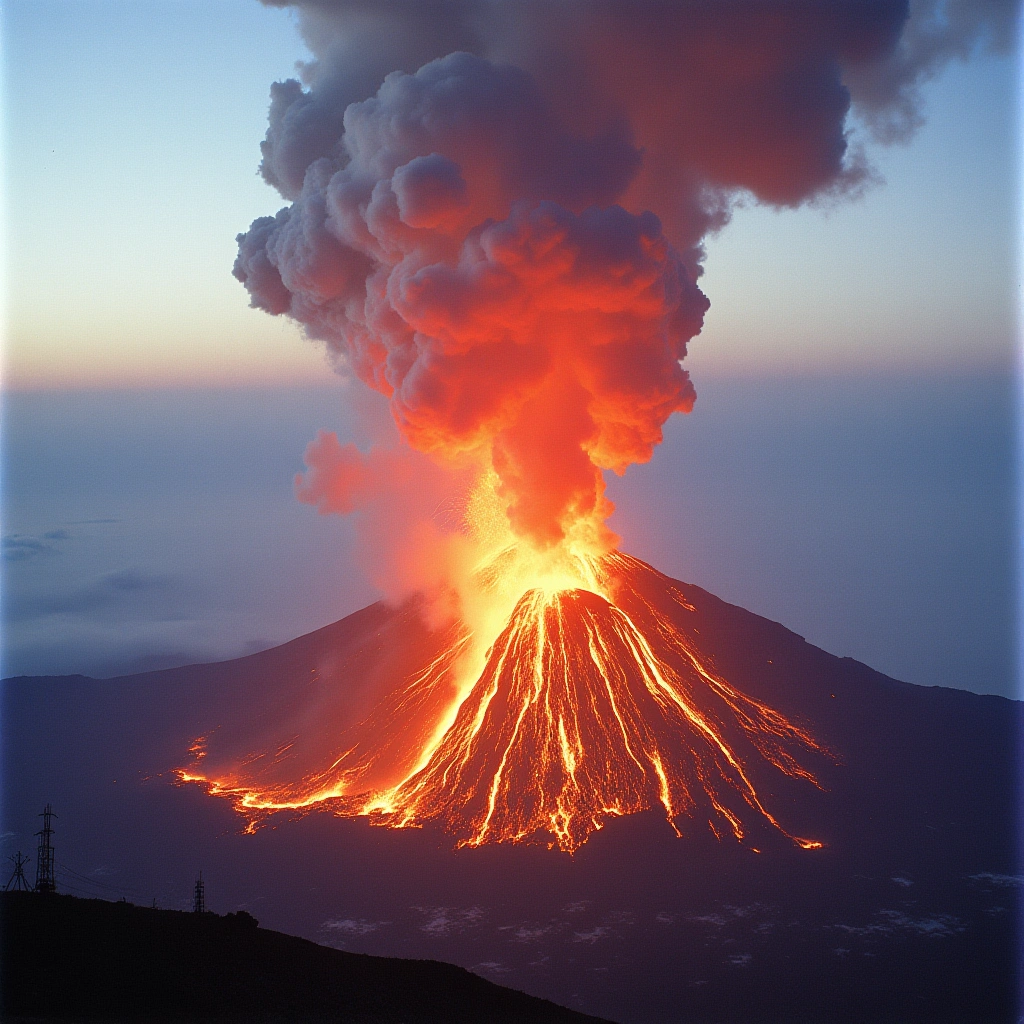
Hey there, fellow adventurers! Buckle up, because we’re about to take a wild ride back to May 18, 1980, the day when Mother Nature decided to throw a tantrum and turn a majestic mountain into a pile of rubble. Spoiler alert: it wasn’t a magic trick!
Related reading: When Mountains Vanish
Now, if you’ve never heard of Mount St. Helens, let me paint you a picture. This beauty is nestled in Washington State, a stunningly picturesque location that looks like it should be on a postcard. But on that fateful day, it wasn’t the postcard-perfect view that drew everyone’s attention; it was the biggest volcanic eruption in the contiguous United States in over 60 years! Talk about a dramatic plot twist!
So, what caused this geological catastrophe? You see, beneath all that lovely earth and trees, the mountain was brewing a storm. Geologists had been keeping an eye on it for some time, noting the little earthquakes and the bulge forming on the north side of the mountain. But did anyone listen? Nope! It’s like ignoring a friend who’s always saying they’re ‘fine’ when you can see they’re about to explode, literally!
The eruption itself was a spectacle to behold (from a safe distance, of course). It all started at 8:32 AM, and within seconds, the mountain blew its top off like a shaken soda can. The explosion sent ash soaring 15 miles into the sky, which is roughly three times taller than your Aunt Edna’s hairdo after she uses that extra-hold hairspray. And let’s just say, the fallout was not just in the immediate vicinity—ash fell as far away as Minnesota! Yes, folks, the midwest got a taste of Washington’s finest volcanic dust.
But it wasn’t just ash. The explosion triggered a massive landslide, removing over 1,300 feet from the summit. If you’re keeping count, that’s like losing the top half of a really tall ice cream cone—messy and disappointing for everyone involved. The landscape was transformed into a barren wasteland, leaving scientists scratching their heads and local residents asking, ‘Is this a new theme park attraction?’ Sorry, folks, it’s just the aftermath of nature’s fury.
Now, you might be wondering, what happened to all the wildlife? Well, the eruption was a double-edged sword. Sure, it wiped out a lot of habitats, but nature has a funny way of bouncing back—sort of like that one stubborn relative who refuses to let go of their 1970s fashion. In the years following the eruption, new ecosystems started to emerge, with plants and animals returning to claim their territory. Mother Nature loves a good comeback story!
In retrospect, the Mount St. Helens eruption was a powerful reminder of our planet’s raw energy and unpredictability. It’s like that one friend who always seems calm until they suddenly start dancing on the table at a party. So, the next time you’re hiking in the shadow of a volcano, maybe take a moment to appreciate its beauty but also remember: it could decide to have a bad day at any moment.
So there you have it, the day a mountain disappeared and returned in a new form. Nature: 1, Humans: 0. But hey, at least we got some spectacular photos and a few wild stories out of it, right? Next time someone asks you about the day a mountain disappeared, you can confidently say, ‘Oh, I’ve got a tale for you!’ And who knows, it might just become your new party trick.
Inspired by: “THE DAY A MOUNTAIN DISAPPEARED . MT ST HELENS (1980)” (r/interestingasfuck)