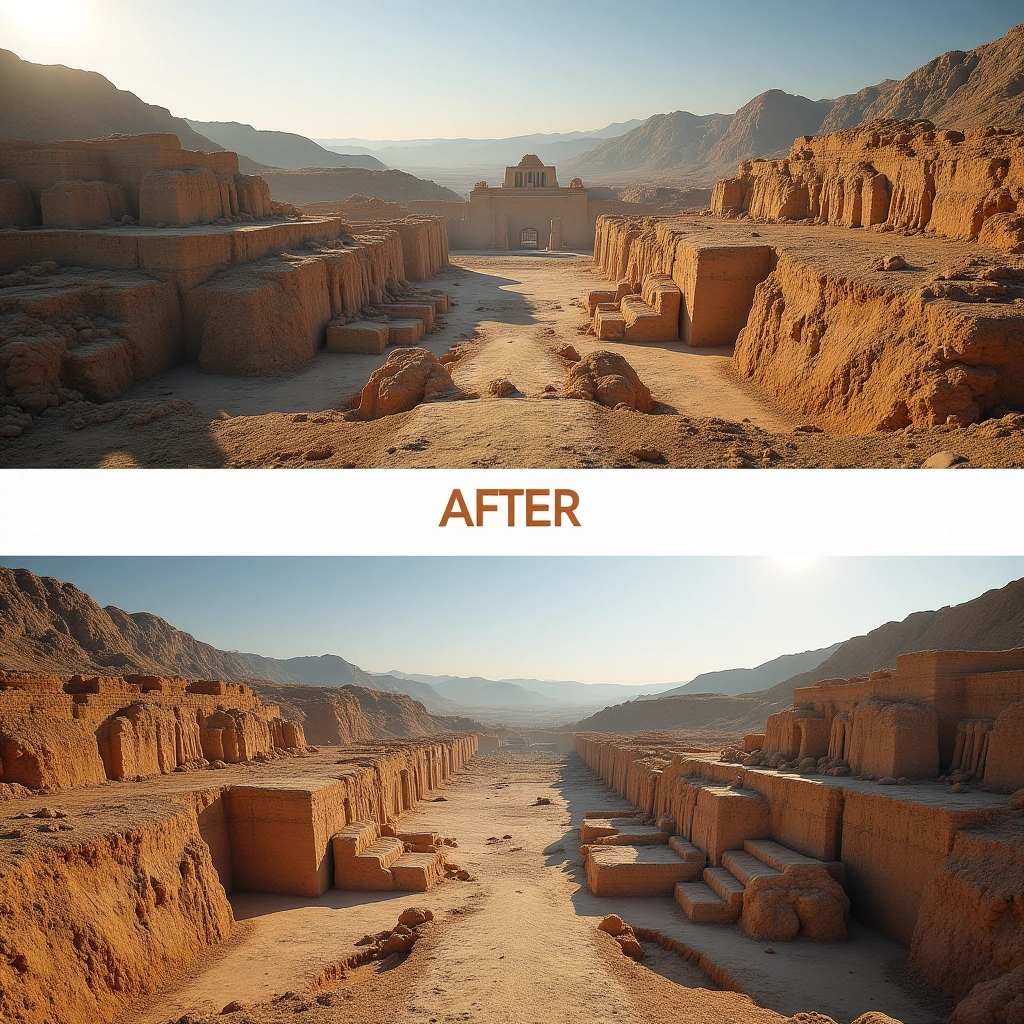
Hey there, fellow history buffs and curious cats! Ever wondered what happens to those dusty old sites before they get the fancy excavation treatment? It’s like a historical makeover show, and trust me, the results can be jaw-dropping!
First off, let’s set the stage. Picture this: a site buried under layers of dirt, weeds, and perhaps a few too many pizza boxes from the local archaeologist’s lunch break. These sites often look like they’ve been hit by a time-traveling tornado, but underneath all that chaos lies the potential for incredible discoveries.
Now, when we dig into the ‘before’ phase (pun absolutely intended), we see remnants of our past that are often overlooked. These sites can look like an overgrown backyard that hasn’t seen a lawnmower in years. But don’t let that fool you! What seems like a pile of rubble might just be a gateway to understanding ancient civilizations.
Excavation is like the ultimate historical spa day. Archaeologists roll up with their trowels and brushes, ready to uncover the secrets hidden beneath the surface. They meticulously remove layers of dirt, like peeling an onion, except instead of tears, we get artifacts that can make us question everything we thought we knew about history.
Let’s talk about some famous examples. The city of Pompeii, for instance. Before excavation, it was just a sleepy little mound. Afterward? A time capsule of Roman life, complete with graffiti that might make even today’s social media influencers blush. Who knew that ancient Romans also had a penchant for cheeky humor?
Then there’s the ancient Egyptian city of Amarna. Prior to excavation, it was like a giant sandcastle waiting for a kid with a bucket and spade. Once uncovered, it revealed a treasure trove of history, including the notorious King Akhenaten and his rather controversial religious reforms. Talk about a royal headache!
Excavations are not without their controversies, though. Some argue that digging up ancient sites can lead to a loss of cultural heritage. I mean, who wouldn’t be a bit peeved if someone started digging up your backyard looking for buried treasure? But on the other hand, these digs can provide invaluable insights into our shared humanity.
After the dust settles, and the artifacts are cataloged, the ‘after’ phase shows us a whole new world. Museums filled with curated pieces that tell stories of civilizations long gone. It’s like an Instagram feed made of history, showcasing everything from pottery to tools that our ancestors used. Who knew they had such great taste?
But here’s the kicker: excavations can also lead to some pretty wild theories. You might end up with a debate about whether ancient humans had contact with aliens because, let’s face it, some artifacts look like they belong in a sci-fi movie. Spoiler alert: they probably didn’t, but it’s fun to imagine!
In conclusion, the journey of historic sites from their excavated state to the polished exhibits we see today is nothing short of miraculous. So next time you’re wandering through a museum or an ancient ruin, remember the hard work, controversy, and a dash of humor that went into bringing history back to life. And who knows? Maybe one day, someone will be digging up your backyard to uncover your secrets. Just make sure to hide the pizza boxes!