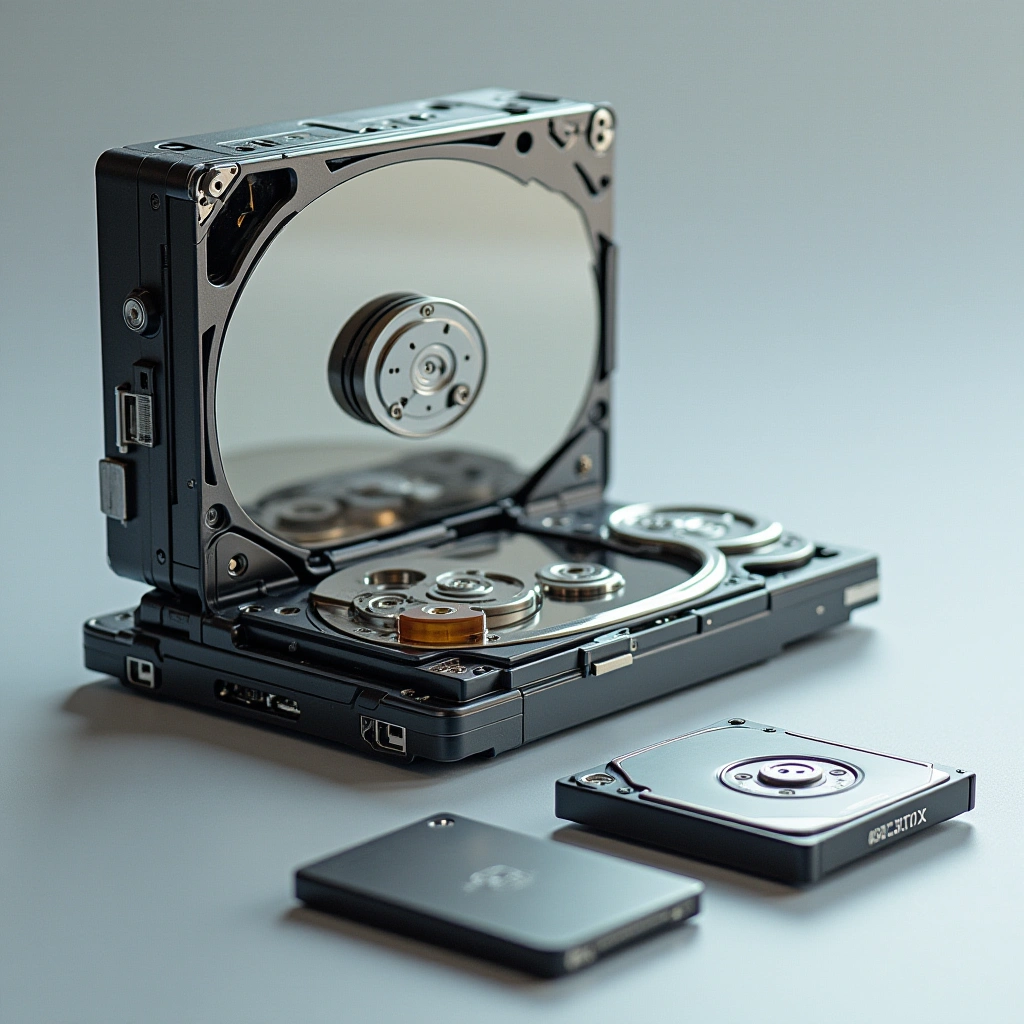
Remember the days when hard drives were so heavy they needed a forklift? Yeah, I know, those days are long gone, but let’s take a moment to appreciate the sheer absurdity of it all. Back in 1956, IBM unleashed a behemoth of technology known as the IBM 305 RAMAC. And guess what? It weighed over a ton and could store a whopping 5 megabytes of data. That’s right, folks, 5MB! Today, your smartphone can hold thousands of times that in your pocket, and it weighs less than your morning coffee.
Imagine ordering a pizza back in 1956 and having to make a decision about your toppings while simultaneously ensuring the delivery guy has a forklift handy. Talk about a complicated dinner plan! Just picture it: “Hey, I’ll take pepperoni, but can you also fit a ton of hard drive in that delivery truck?” The very concept of data storage back then was like trying to fit an elephant in a Mini Cooper.
Now, let’s dive into how we transitioned from needing a cargo plane for a measly 5MB to being able to store hundreds of gigabytes on a device that fits right in your back pocket. First, we had magnetic tapes, which were like the cassette tapes of the computing world. They were great for storing data, but you had to rewind them like you were stuck in an ’80s movie.
Then came the floppy disk—oh, how we loved those little square saviors! Remember trying to save your high school project on a 1.44MB floppy disk? It was like playing a game of Tetris with your data: “Will it fit? Will it fit?” Spoiler alert: most of the time, it didn’t, and you had to start deleting those embarrassing photos from last weekend’s party.
Fast forward to the 2000s, when USB drives entered the scene. Suddenly, you could carry hundreds of thousands of floppy disks in your pocket without breaking a sweat. It was like being handed a magic wand and told, “Go forth and store all your memes!” And just when we thought it couldn’t get better, cloud storage swooped in like a superhero, allowing us to store unlimited data online, and all we had to do was pray that our Wi-Fi didn’t crash during an important upload.
And now, here we are in 2023, where one iPhone photo is larger than an entire hard drive from 1956. If someone from the ’50s time-traveled to today, they’d probably scream, “What is this sorcery?” Not to mention the sheer amount of cat videos we can now store—because let’s be honest, that’s what we’re really here for.
So, what’s next? Quantum storage? Neural data uploads? Who knows! But one thing is for sure: we’ve come a long way from those ton-heavy hard drives, and I, for one, am excited to see where technology takes us next. Just remember, if you ever find yourself in a conversation about the ‘good old days’ of data storage, don’t forget to mention that time you had to hire a moving truck just to save a few files. Cheers to progress, my friend!