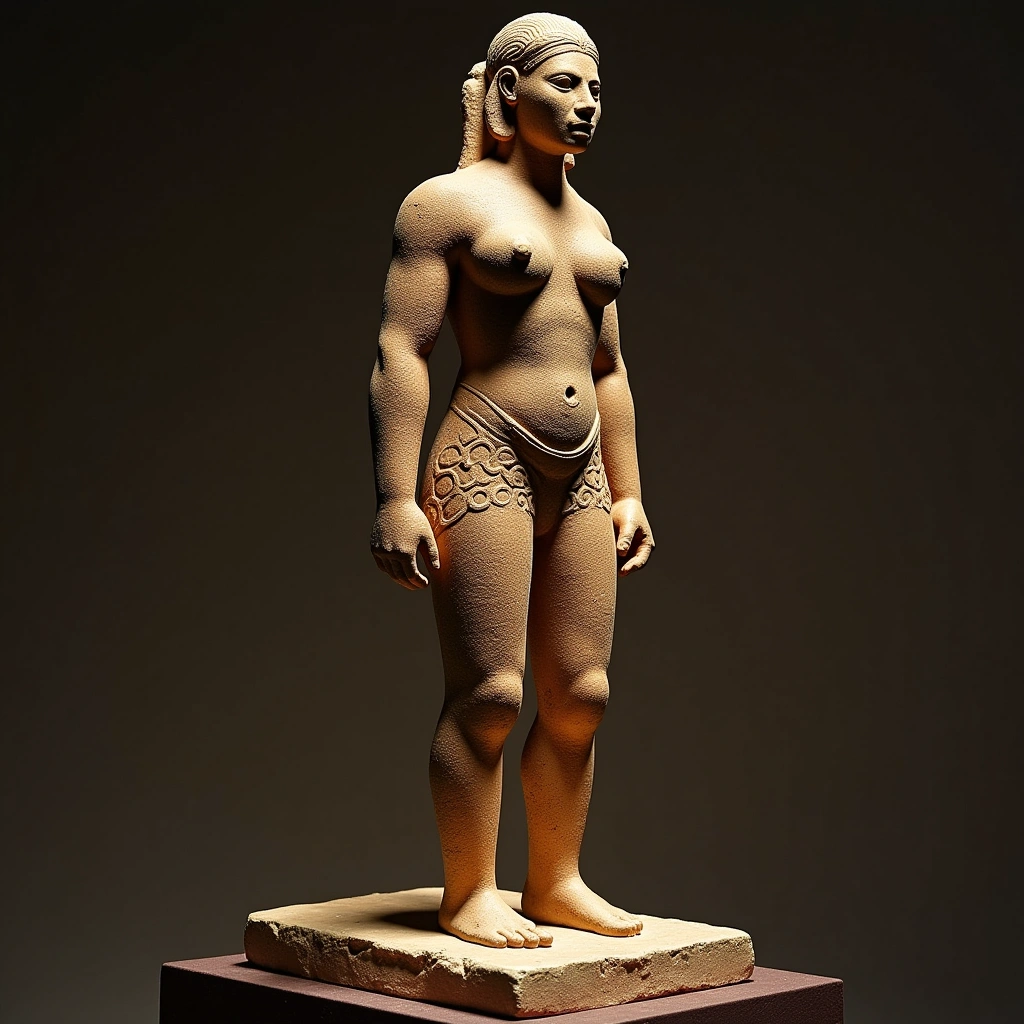
Ah, the Tlatilco Female Figure! This exquisite piece of art from around 1000 BC is like the ancient world’s version of a two-faced drama queen. But instead of gossiping at the water cooler, she was probably involved in some serious shamanistic rituals. So, grab your time machine (or just a comfy chair) as we dive into the fascinating world of this enigmatic artifact.
Discovered in what is now Mexico, the Tlatilco Female Figure is a small ceramic statuette that has captivated archaeologists and art enthusiasts alike. With its dual-faced visage, one can’t help but wonder if this figure was a goddess, a shaman, or maybe just a really indecisive person who couldn’t pick a side. As someone who struggles to choose between pizza toppings, I can relate!
But in all seriousness, this figure probably had a significant role in the spiritual practices of the Tlatilco culture. Archaeological evidence suggests that the people of Tlatilco were deeply connected to their spiritual beliefs, and the duality represented by this figure might indicate a dualistic view of the world—a balance between life and death, male and female, or even the seen and unseen realms. Talk about a balanced diet!
So what about those shamanistic rituals? The Tlatilco civilization existed during a time when shamans were the rock stars of their communities, wielding influence and power. This figure might have been a tool for these spiritual leaders, perhaps used in ceremonies to connect with the spirit world or to engage in some serious soul-searching. Picture it: a shaman, draped in feathers and chanting, while this two-faced figure serves as a bridge to other realms. It’s like the ancient version of an Instagram filter—only less about selfies and more about the afterlife!
Interestingly enough, the Tlatilco Female Figure is also a testament to the artistic prowess of its creators. The intricate details and stylized features showcase a level of craftsmanship that would make any modern artist green with envy. It’s like they had their own version of Pinterest, but instead of DIY home decor, they were creating masterpieces with a spiritual twist.
Now, let’s not ignore the elephant in the room—or should I say the two-faced figure in the museum? Some critics argue that the emphasis on the figure’s duality could lead to oversimplifying Tlatilco culture. Sure, it’s easy to go down the rabbit hole of shamanism and duality, but there’s a whole universe of beliefs and practices that existed in that ancient society. So while the Tlatilco Female Figure is a fantastic conversation starter, let’s not forget that it’s just one piece in a much larger puzzle.
In conclusion, the Tlatilco Female Figure is more than just an ancient trinket; it’s a window into a world of complex beliefs, artistic talent, and perhaps a little bit of mystery. So the next time you find yourself unable to make a decision, just remember: it could be worse. You could have been a shaman in 1000 BC, trying to appease the spirit world with a two-sided figure that can’t make up its mind either. Now that’s a predicament!