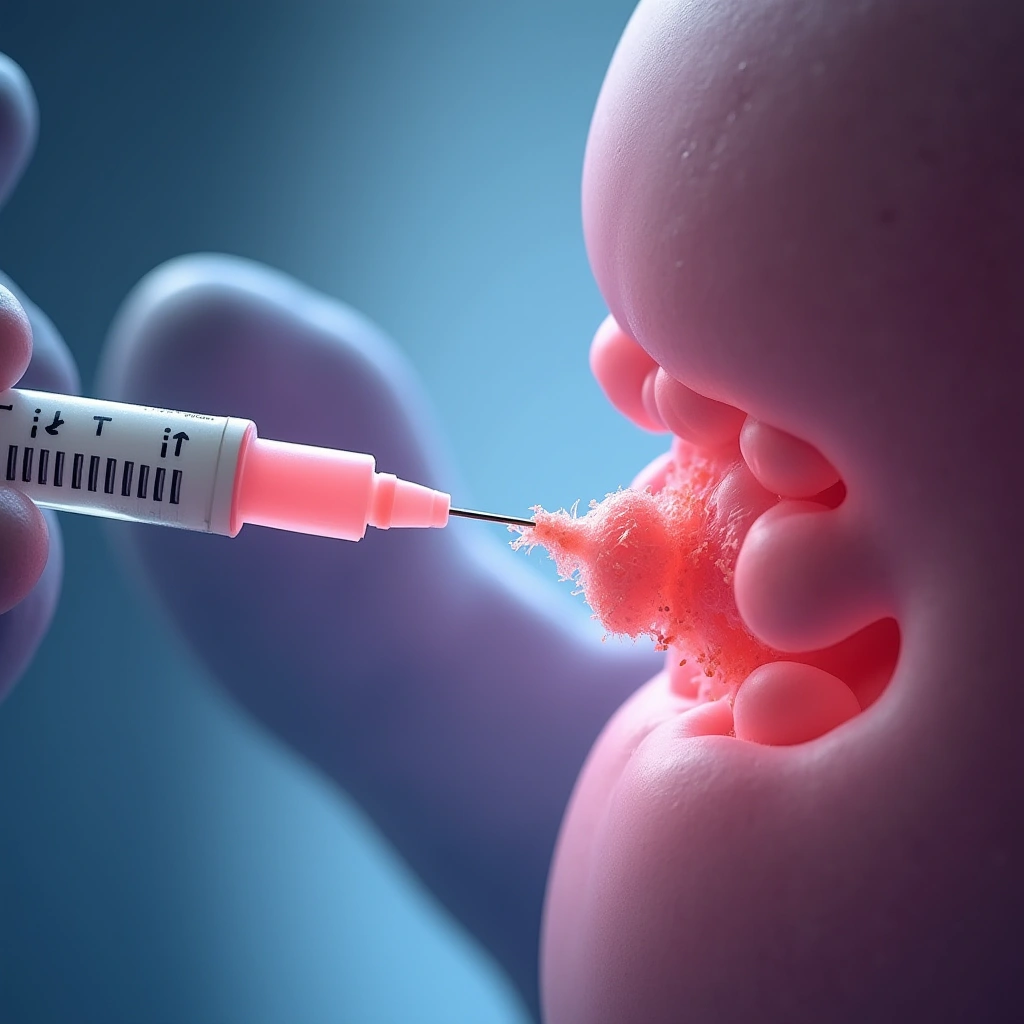
Alright, folks, gather around! Today we’re diving into the world of reproductive technology, specifically the marvel known as ICSI (Intracytoplasmic Sperm Injection). If you thought getting a date was complicated, wait until you hear how scientists handle fertilization these days!
So, what is ICSI, you ask? Imagine a tiny needle, not unlike the ones that come with your favorite take-out condiments, but instead of soy sauce, it’s filled with sperm. Yep, you heard that right! In ICSI, a single sperm is injected directly into an egg using a microinjection needle. This process is like playing darts but with a lot more pressure and a much higher stake – creating life!
Now, let’s break it down. First, doctors retrieve eggs from a woman’s ovaries. It’s not as glamorous as it sounds; it involves some pretty serious poking and prodding. Think of it as an extreme egg hunt, but instead of chocolate, we’re after the good stuff!
Once the eggs are harvested, it’s time for the sperm to strut its stuff. But instead of letting the sperm swim its merry way to the egg (which is like sending a toddler to the candy store unsupervised), the scientists take a more direct approach. They pick one lucky sperm – yes, it’s like The Bachelor but with way less drama – and then they use a fine-tipped needle to inject it straight into the egg. Talk about a VIP treatment!
But wait! There’s more! After the sperm is injected, the egg doesn’t just sit there sipping its drink, waiting for a romantic dinner to happen. No, it has to be carefully monitored for signs of fertilization. If all goes well, we’re looking at a tiny embryo forming, which is basically a mini-me waiting to happen!
Now, some might argue that this whole process sounds a bit too clinical, like putting a salad in a food processor to make a smoothie. But here’s the kicker: ICSI has been a game-changer for couples struggling with infertility. It’s like giving a second chance at love, but instead of a dating app, it’s a lab with microscopes and pipettes.
Of course, not everyone agrees with the methods used in reproductive technology. Some say it plays God, while others feel it’s just good science. But hey, if we can help create life in a lab, why not? After all, if you can make a cake from a box mix, why not a baby from a petri dish?
In conclusion, ICSI is a remarkable blend of science and hope, proving that sometimes, taking a direct approach can yield the best results. So next time you hear about sperm being injected into eggs, just remember: it’s not just biology; it’s a high-stakes game of Cupid’s arrow, equipped with the latest in scientific technology!