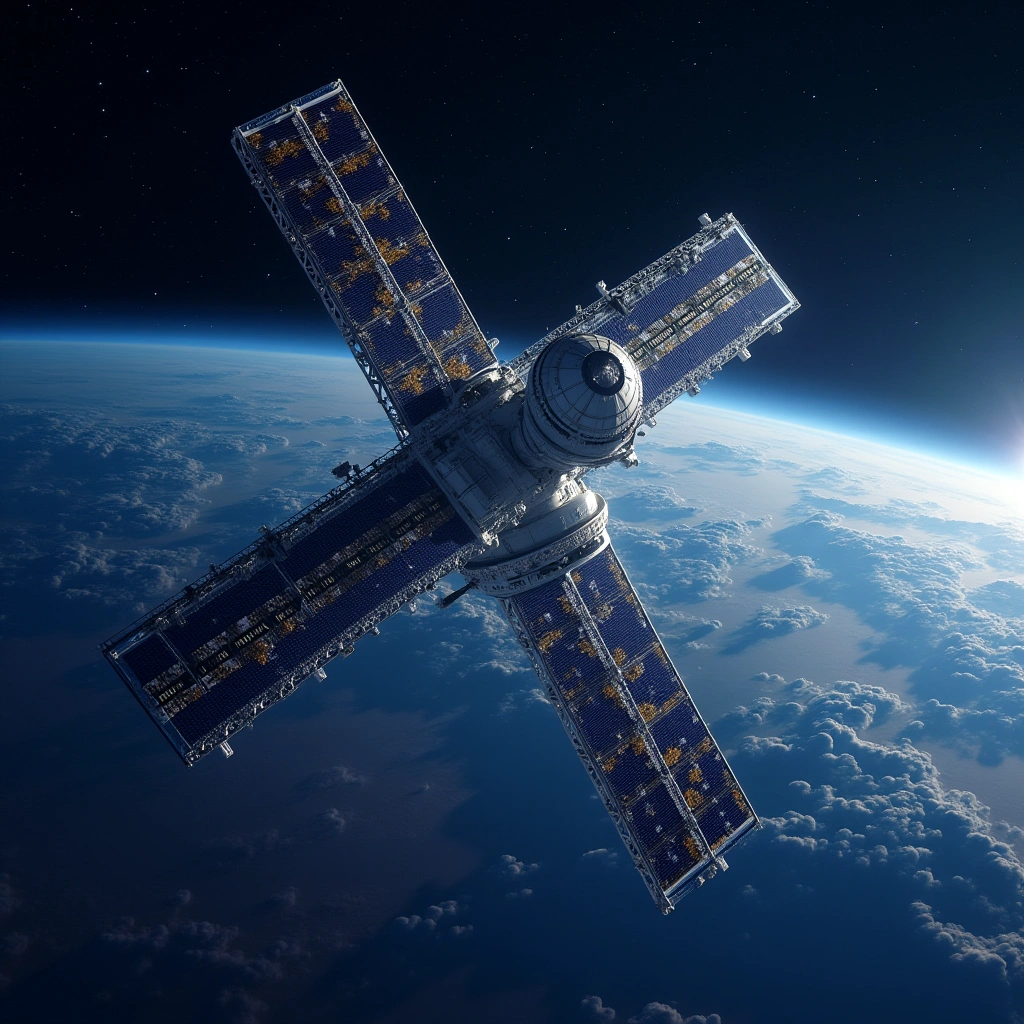
Ah, the age-old rivalry between the US and China – it’s like a never-ending game of ping-pong, but instead of a little plastic ball, we’re dealing with orbital data centers. Yes, folks, while we’re still figuring out our grocery lists, these two giants are planning to house their AI systems in the cosmos. Who needs a fancy data center in Silicon Valley when you can have one floating 300 miles above Earth?
Imagine this: You wake up one morning, pour yourself a cup of coffee, and discover that the latest viral meme was processed in a data center orbiting our planet. It’s like something out of a sci-fi movie, but it’s happening right now! The US and China are racing to establish these celestial homes for their AI systems, and it’s about as exciting as watching a rocket launch – except with fewer explosions and more spreadsheets.
So, why are they doing this? Well, the answer is simple: data. In today’s world, data is the new oil, and just like oil, it’s much easier to extract when you have the right tools. Orbital data centers can provide faster processing times and lower latency, which means AI can make decisions quicker than your buddy can decide where to eat for dinner. In a world where instant gratification reigns supreme, every millisecond counts.
Now, let’s break it down a bit. The US is looking to leverage its existing space infrastructure and technological prowess to dominate the AI landscape. With companies like SpaceX leading the charge, the US is aiming for a moonshot – literally! They want to ensure that their data centers are not only efficient but also secure. After all, what’s the point of having a super-intelligent AI if it’s vulnerable to a cosmic hacker attack?
On the flip side, we have China, which is not one to sit idly by while the US plays space cowboy. They’re investing heavily in their own space program and have ambitious plans to deploy data centers that could rival anything the US puts into orbit. With the government backing their efforts, they’re not just shooting for the stars; they’re aiming for the entire galaxy.
But here’s where it gets juicy. The race isn’t just about technology; it’s about power. Whichever country can master the art of orbital data centers will hold the keys to the AI kingdom. It’s like that scene in every action movie where the hero tries to get the last piece of the puzzle before the villain does. Only this time, the fate of global dominance hangs in the balance.
Of course, this isn’t all sunshine and rainbows. With great power comes great responsibility – and a whole lot of ethical dilemmas. As these two nations ramp up their AI capabilities, questions about surveillance, privacy, and the potential for misuse of technology loom large. Will we end up living in a sci-fi dystopia where our every move is monitored by an all-seeing AI? Or will we finally get those flying cars we’ve been promised since the 80s? Only time will tell!
In conclusion, the US and China are locked in a high-stakes game of cosmic chess, and orbital data centers are just one of the many pieces on the board. As they race to harness the power of AI in the great beyond, we can only sit back, grab our popcorn, and watch the drama unfold. Who knows? Maybe one day we’ll all have our own personal AI assistants that were trained in orbit, helping us navigate life on Earth while floating in the stars.