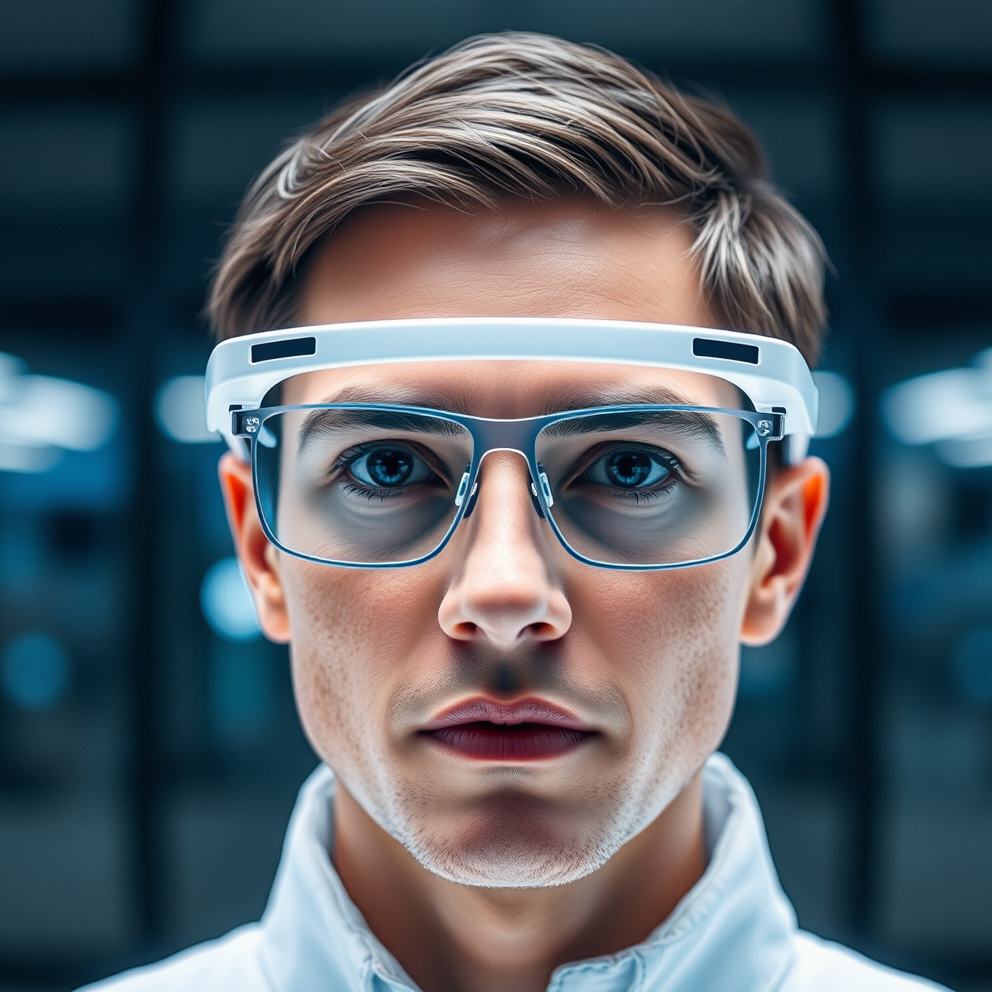
Hey there, tech-savvy pals! So, it looks like ICE (Immigration and Customs Enforcement) is taking a leap into the future—or should I say, a leap into our privacy concerns? They’ve announced plans to develop their own smart glasses to ‘supplement’ their facial recognition app. Yup, you heard that right! It seems like the latest trend in law enforcement tech is ‘wearable surveillance’. What could possibly go wrong?
Now, before you roll your eyes and scroll past, let’s unpack this together. Imagine a pair of glasses that not only make you look like a futuristic dork but also serve as a personal bodyguard, scanning faces and matching them against a database of, oh I don’t know, everyone you’ve ever met? Sounds like a dystopian movie plot, right? Welcome to the 21st century!
According to a DHS official and another whistleblower (because, you know, whistleblowers are the unsung heroes in this tale), these glasses are intended to enhance the agency’s capabilities. But here’s the kicker: How much enhancement do we really need? We’re already living in a world where your phone knows what you had for breakfast before you do. Do we really want a world where our glasses know who we are before we even introduce ourselves? I can hear the awkward introductions now: “Hi, I’m Bob, and yes, I did just get scanned by your smart glasses!”
Now, let’s not forget the elephant in the room—privacy. There’s a fine line between safety and surveillance, and it seems like ICE is ready to hop on that line like a kid on a seesaw gone rogue. Critics are already raising eyebrows (and maybe their voices) about the potential for abuse. Imagine a world where every time you step outside, a pair of these glasses could be watching your every move. It’s like having a nosy neighbor who just won’t quit, but this one has a federal badge!
And yes, while proponents might argue that these glasses could help catch criminals, let’s not ignore the fact that technology has a tendency to be biased. Studies show that facial recognition software can have a harder time recognizing people of color. So, are we just going to equip the agents with high-tech tools that might perpetuate bias? Sounds like a recipe for disaster!
On the flip side, let’s be honest. If I had a pair of smart glasses that could identify my friends at the bar and alert me to potential party crashers, I might just be tempted! But let’s keep that dream in the realm of sci-fi, shall we? This isn’t about making our social lives easier; it’s about surveillance, and that’s where it gets sticky.
So, what’s the takeaway here? While the idea of smart glasses sounds like something straight out of a sci-fi flick, it’s important to keep our eyes peeled (pun intended) on how this technology is developed and implemented. Because let’s face it, we’re all here for a good time, not a long time—especially if it means being watched by a pair of government-issue spectacles!
In conclusion, the future of ICE’s smart glasses may be bright, but let’s hope it doesn’t blind us to the very real implications of such technology. Because if we’re not careful, we might just find ourselves living in a world where our own glasses are giving us the side-eye!