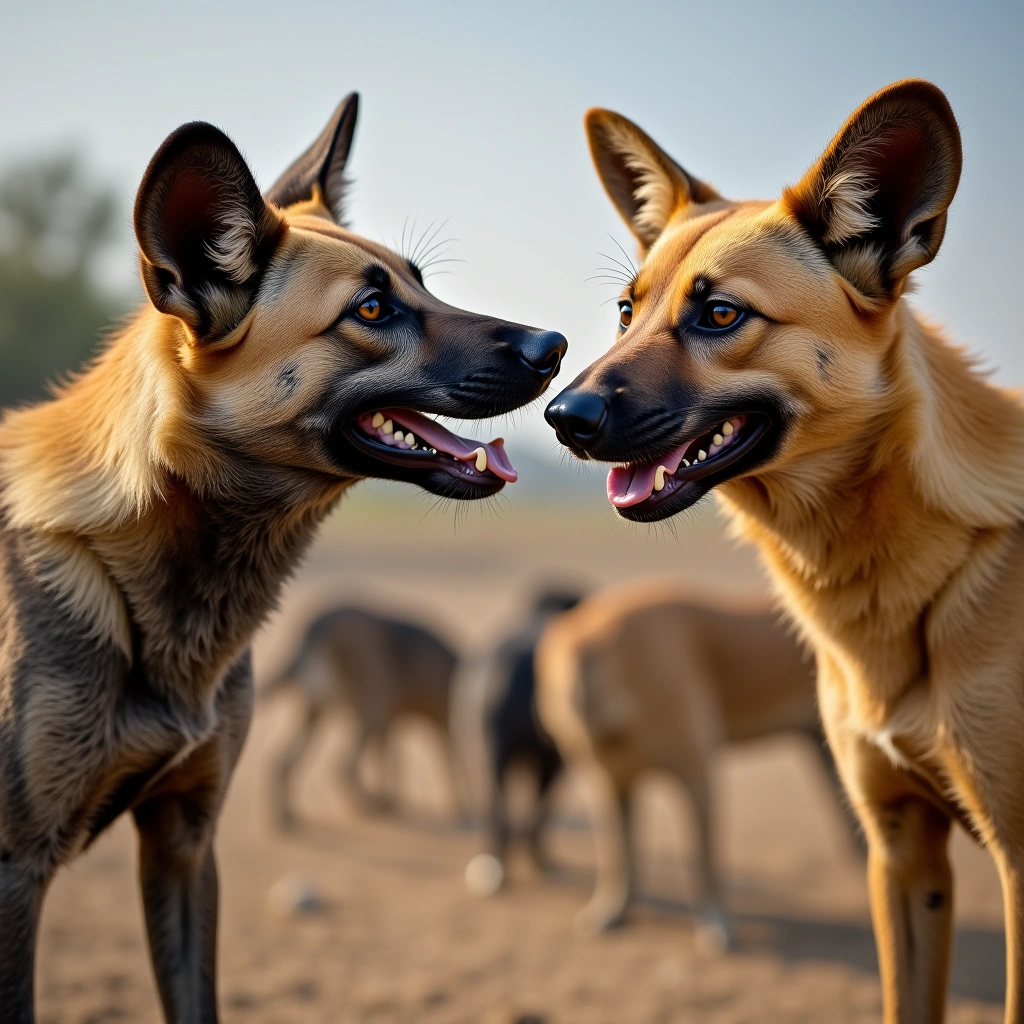
Ah, the age-old clash of canines: wild dogs versus our beloved couch potatoes, aka domesticated dogs. Picture this: a pack of wild dogs, fur wild and free, galloping through the savannah, when suddenly, they spot a fluffy golden retriever lounging on a sunny porch, blissfully unaware of the drama unfolding around him. What happens next could be the plot of a canine soap opera!
First things first, let’s address the elephant—or shall I say, the golden retriever—in the room. Wild dogs, with their fierce survival skills and pack mentality, are the rock stars of the canine world. They hunt, they gather, they have a well-coordinated dance routine when chasing down prey. Meanwhile, our domesticated friends are experts at begging for food and napping on the couch. It’s a classic case of “you had one job.”
Now, imagine the wild dogs approaching the domesticated dog. The wild ones, with their piercing eyes and muscular physiques, are probably sizing up the situation like a group of bouncers at an exclusive club. And what do they see? A dog who has never chased a squirrel in his life, too busy wondering why the mailman is so suspicious. The wild dogs must be thinking, “Is this what they call evolution?”
But let’s take a step back. This encounter is not just a comedy of errors; it’s a fascinating glimpse into how nature works. Wild dogs are social animals. They communicate and strategize, often bonding through their shared experiences. In contrast, domesticated dogs have been bred for companionship, making them more like that friend who can’t decide where to eat—always looking to you for guidance.
So, what happens when these two worlds collide? For starters, the wild dogs might be confused. “Is this a new species? Do we need to teach it how to hunt?” They could be thinking. Meanwhile, the domesticated dog is likely to wag its tail, thinking, “New friends? I hope they bring snacks!”
And here comes the kicker: the wild dogs might try to school the domesticated dog in the art of survival. Imagine them trying to teach him to fetch a stick—not just for fun, but as a means to catch dinner. The domesticated dog, however, is more interested in fetching that tennis ball his human threw last week. “Dinner? I get kibble! I’m living the dream!”
Now, let’s not forget the humor that ensues. The wild dogs might attempt to initiate a game of chase, only for the domesticated dog to plop down on the grass, panting and looking for belly rubs. It’s like inviting someone to an intense workout session, only to find them sprawled out, snoring softly in the sun. The wild dogs must be rolling their eyes, thinking, “This is why we can’t have nice things.”
In a world that often takes itself too seriously, this unlikely meeting of wild and domestic dogs serves as a reminder that while we may come from different walks of life—or in this case, different hunting techniques—we can still coexist, even if it means sharing a confused look and a good laugh. So next time you see your dog staring at the mailman, remember: somewhere out there, a wild dog is probably scratching its head at what we humans have created. And just like that, the circle of life continues in the canine kingdom.