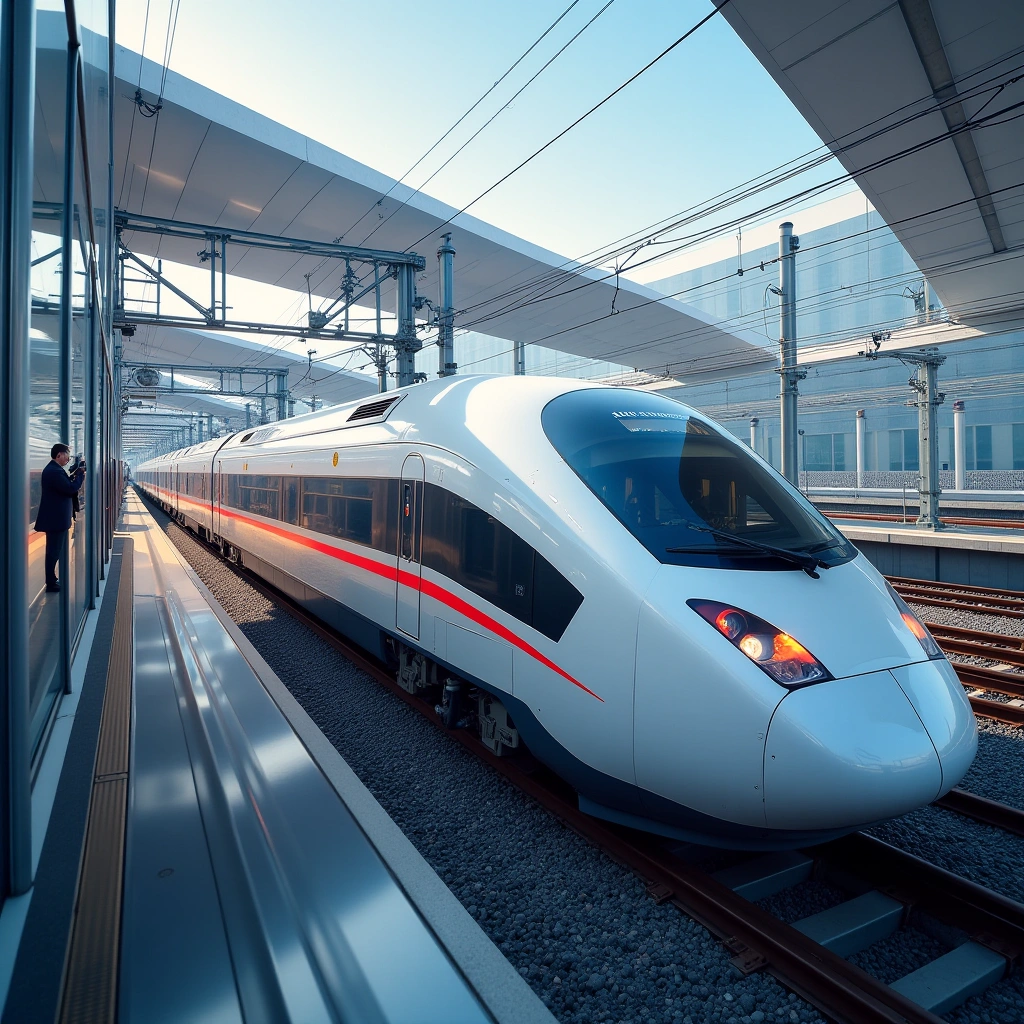
Hey there, fellow train enthusiasts and curious minds! Buckle up, because we’re about to dive into the world of high-speed railways, particularly focusing on China’s incredible journey from 1,300 kilometers of track in 2008 to a jaw-dropping 40,000 kilometers by 2020. Yes, you heard that right! That’s enough track to circle our lovely planet Earth. If you ever thought your commute was long, just imagine taking a ride around the globe!
Now, let’s put on our conductor hats and break this down. Back in 2008, when most of us were still trying to figure out how to connect to Wi-Fi without asking our parents, China was already gearing up for a transportation revolution. The initial 1,300 kilometers of high-speed rail (HSR) was like the toddler version of a high-speed train—adorable but not quite ready for the big leagues. Fast forward to 2020, and we’re in full-on superhero mode with a network that could give the Avengers a run for their money.
But why, you ask? Why build such an extensive rail network? Well, for starters, it’s all about efficiency. China’s population is massive—over 1.4 billion people! Imagine trying to fit that many folks into a subway car during rush hour. Spoiler alert: it doesn’t work out well. The high-speed rail system allows millions to travel quickly and comfortably across vast distances, reducing congestion on the roads and in the air.
And let’s talk about speed. The trains can zip along at speeds up to 350 kilometers per hour (that’s roughly 217 miles per hour for our friends in the U.S. who still think metric is a type of music). It’s like being on a rollercoaster, but instead of screaming children and cotton candy, you’re surrounded by businesspeople working on their laptops and families enjoying snacks. Seriously, if you haven’t tried it yet, you’re missing out on the closest thing to a futuristic ride we’ve got!
But it’s not all sunshine and rainbows. Building such an extensive network comes with its own set of challenges. There are environmental concerns, as well as the not-so-small matter of funding. Some critics argue that the investment in high-speed rail takes away from other critical infrastructure projects. And let’s not even get started on the political debates surrounding it. You can practically hear the arguments echoing through the train tunnels!
And let’s take a moment to appreciate the sheer audacity of it all. While some countries are still debating whether to repair their pothole-infested roads, China went full throttle (pun intended) and built a train network that could literally take a passenger around the Earth. You might say they’ve taken “go big or go home” to a whole new level.
So, what does the future hold for China’s high-speed railway network? If you think they’re done expanding, think again! Plans are already in place to extend the network even further, maybe even to Mars—because why not? If we can send rovers there, surely we can build a train station too! Just imagine ordering a latte while zooming past the Martian landscape.
In conclusion, China’s high-speed railway network is a fascinating phenomenon that combines engineering marvel with a dash of audacity. It’s a testament to how transportation can evolve and adapt to meet the needs of a growing population. So, whether you’re a rail fan or just someone who enjoys a good train journey, you can’t help but be impressed by this colossal achievement. Now, if only they could figure out how to get my train to arrive on time!